GrasshopperNotes.com - Thoughts for inspired living


August 18, 2010

Consume – Create

Filed under: John Morgan's Blog — John Morgan @ 7:41 am

It doesn’t appear at first glance that “Consume” and “Create” are polar opposites, but it seems to be the case.

Sometimes consumption is a precursor to creativity, as in the case of education, but for the most part, you cannot consume and create at the same time. They live on opposite ends of a continuum.

Let’s look on the fringes of each.

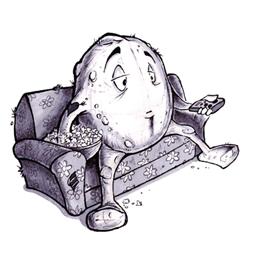
A total consumer displays no creativity. Take the couch potato who consumes countless hours of mindless TV and sups on foods and beverages filled with empty calories. They are stuck in a pattern of consumption from which no creativity can flow.

Take the textbook example of their opposite – they create without consuming. Think of the genius artist who goes hours and days on end producing their masterpiece without consuming anything, except stimulants to keep them going – like coffee, for example.

These examples are easy to imagine, but it gets more difficult to discern as we move away from the edges.

We have to find our own optimum mix of creation and consumption to feel a sense of balance in our lives. Too much of either leaves little room for the other.

We require both for balance.

For the most part, we lean heavily in the direction of consumption. We are a conditioned culture of consumers. Consumers have a need to be stimulated at all times without contributing any creativity. There is no need to think for ourselves and we are easily led.

Advertising loves this.

There is an old business axiom that underscores how consumption lines the pockets of the few. It goes like this: “If you market to the masses, you eat with the classes.”

Simply put, if your product appeals to the majority, you will make enough money to afford a high priced lifestyle.

Marketers know that most of us are consumed by consumption and they count on it to make their handsome living.

This isn’t about advertising and marketing; it’s about you.

How well do you balance consumption and creativity? If you are heavily into one, you are ignoring the other and are out of balance.

I’ve mentioned the term, “Shadow Artist” before, coined by author, Julia Cameron, in her book The Artist’s Way.” It’s someone who lives in the shadow of someone else’s creativity and doesn’t create anything of their own. They are a consumer.

Oftentimes, this is a self image issue where the person believes they are incapable of anything creative, and also believe anything they produce will be dwarfed by others.

The piece they miss is that creativity builds on creativity. Remember: With the exception of The Monkees and a handful of others, all bands with national reputations began as local bands.

That’s another way of saying that small pieces of creativity lead to larger ones.

Notice your amount of consumption and you take the first step towards being more creative. Just by observing that you are engaged in consumptive behavior is often enough to spark creativity. Creativity comes when you create a space for it. When you move consumption aside for a moment, you enter the empty space that produces creativity.

The empty page and the empty canvas won’t fill up on a diet of consumption.

If you are looking to write a new chapter for your life or to paint a different picture, you’ll need creativity. A good start is to reduce your consumption.


All the best,

John

LOSE WEIGHT & KEEP IT OFF
STOP SMOKING FOREVER
SLEEP THROUGH THE NIGHT EVERY NIGHT
IMPROVE YOUR SELF CONFIDENCE
I LOVE MY BODY
RELAX IN 2 MINUTES
FEEL FOREVER YOUNG
VIRTUAL MASSAGE


Be Sociable, Share!


August 17, 2010

R.S.V.P.

Filed under: John Morgan's Blog — John Morgan @ 7:31 am

I’ll admit, I’ve been confused with all things French my entire life, except French Fries.

I actually asked my wife when we were first married, and eating at a restaurant, what was in the French soup that I kept seeing on menus. She asked, “What French soup?” I said, “This one” and pointed to “Soup de Jour.”

I think many people are still confused by how to R S.V P.

If French confuses you too, Answers.com provides this definition:

R.S.V.P. stands for the French phrase, “répondez, s’il vous plaît,” which means ‘please reply’ or ‘respond, please’.

The phrase is used in the sense of an invitation: the sender is asking for a reply indicating whether or not the invitee accepts the invitation.

Many people don’t respond to invitations – especially ones to go deeper.

The offer is made time and again but we ignore it, more often than we do junk mail.

So two natural questions come up:

  1. When do we get this offer?
  2. What exactly is “Deeper”?

Anytime we seek the answers to any of life’s dilemmas, we are being offered a choice – to act on the first reaction we have, or to let it pass and wait for something further down, making its way to the surface.

“Deeper” is that which is not readily on the surface.

We make superficial attempts to solve life’s problems and are always left wanting, thinking we need more of what the surface has to offer.

“More” in the case of superficial attempts results in more of the same. It’s the classic case of the poor lottery winner thinking that the jackpot will solve all of their problems. Now they are rich people throwing money at many of the same issues they had when they were poor. Money is a wonderful thing to have access to but often we use it superficially in an attempt to close a wound.

Remember the purchase that was going to make you feel better? How long did the feeling last before you were seeking some other social salve? That’s the first clue that you have ignored an invitation to R.S.V.P.

We all have access to depth but not many of us go there. We stay on the surface pretending that’s the only place there is. On the surface, we keep manufacturing the same answers in different suits of clothes – the answers that have never filled the hole in our soul and never will. They only scratch the surface.

The invitation to go deeper will continue to be ignored by those who believe they will figure life out. They continue to look for “thee” answer which can’t be found on the surface. Truth be told, there is no one answer, just a series of opportunities to respond to life’s circumstances.

When you react, you re-act the same part over and over again, getting the same results.

When you let your reactions to life go by, you go past the surface and explore the depth of your responses – ones that bring you less of the same.

Consider today’s blog an invitation to go deeper. Respond if you please.


All the best,

John

LOSE WEIGHT & KEEP IT OFF
STOP SMOKING FOREVER
SLEEP THROUGH THE NIGHT EVERY NIGHT
IMPROVE YOUR SELF CONFIDENCE
I LOVE MY BODY
RELAX IN 2 MINUTES
FEEL FOREVER YOUNG
VIRTUAL MASSAGE


Be Sociable, Share!


August 16, 2010

Who You Are

Filed under: John Morgan's Blog — John Morgan @ 7:35 am

I realize that dimes have changed since “A penny for your thoughts” came into the vernacular, but most of them aren’t worth any more now.
Every now and then a worthwhile thought does sneak in. It’s usually in an unguarded moment when your thought machine is quiet. These are the thoughts I attribute to a part of us I call The Grasshopper.

The Grasshopper is the part of you that lets the truth slip out from time to time. Not the relevant truth but the truth that can only come from the one source of everything.

Last night The Grasshopper slipped through my guard and delivered this:

“Who I am rarely makes it into my thoughts; who I’m not, often does.” (I’ve noticed something: The Grasshopper doesn’t care about the proper use of “Who” and “Whom.”)

Did you ever notice that you can have some awful thoughts about yourself in your head? It’s like a political, name calling, series of ads in there. Of course, we’ve learned from the “Positive thinking” group that we’re supposed to replace those names with positive names. I guess they have never noticed that that never works.

Who you are is not a thought. It’s deeper than thought and only manifests briefly, as thought, when there are no thoughts in your mind. Who you are cannot be thought of in thought – it’s too elusive. It’s like the wonderful dream you awaken from that you can’t remember any of the details of moments later.

Who you are not is the collection of thoughts in your head about yourself. They are repetitive thoughts that stick around. Since they are there all the time, we mistake them as valid.

Who you are doesn’t stick around as a thought because as the old saying goes, “Once you label it, you lose it.”

Who you are cannot be named. It’s like the ancient Chinese philosopher, Lao Tzu reminded us in the opening verse of the Tao Te Ching: “The Tao that can be explained with words is not the Tao.” The verse goes on to say, “We desire to understand the world by giving names to the things we see, but these things are the effects of something subtle. When we see beyond the desire to use names, we can sense the nameless cause of these effects.”

Who you are can never be reduced to a name, yet we continue to engage in name calling in a misguided effort to discover who we are.

When the name calling calms down and takes a siesta, who you are arrives in full sombrero, because who you are is much bigger than your head.

You don’t have to take my word for it that the names you are calling yourself are not you; just let the practice pause and notice what shows up in its place – the peace that passes all understanding.

As Rocky the Squirrel may have said, “That’s who you are in a nutshell.”


All the best,

John

LOSE WEIGHT & KEEP IT OFF
STOP SMOKING FOREVER
SLEEP THROUGH THE NIGHT EVERY NIGHT
IMPROVE YOUR SELF CONFIDENCE
I LOVE MY BODY
RELAX IN 2 MINUTES
FEEL FOREVER YOUNG
VIRTUAL MASSAGE


Be Sociable, Share!


August 13, 2010

The Curse of Being Smart

Filed under: John Morgan's Blog — John Morgan @ 8:46 am

There is a downside to everything, including being smart.

My experience is, the smarter you are, the more arguments you make.

That doesn’t necessarily mean you argue a lot; it means you are capable of making more arguments than those less brilliant.

The less brilliant of us tend to make the same arguments over and over again, whereas the real smart folks can produce a plethora of points of view.

Smart or not, we all seem to have the ability to argue for our limitations. The smart person just has more positions from which to defend themselves. Therein lies the rub.

I was talking to my niece last month and found myself spontaneously saying, “I find that smarter people are harder to reach.” That’s when it became apparent to me that they use their enhanced intellect to surround themselves with enough logical positions as to be impenetrable.

I was reminded of a powerful line I read in a Daniel Quinn book called “Ishmael“There is no argument powerful enough to end the argument.”

A more accurate statement on my part would have been, “Smarter people are harder to reach logically.” They have too many defenses and rebuttals for logic to be effective.

The way for arguments to cease is to have no arguments. A smart person is brilliant enough to argue all sides of the argument and can take up all of their intellectual real estate with making arguments, leaving no room for solutions.

The way to stop arguing with yourself is to notice that you are arguing. When you notice more, the arguments become less and less. You are creating space for an answer that will solve your dilemma.

Smart people are used to leaning on their intellect to solve everything. When it comes to changing their life, they’re leaning in the wrong direction. They are not smart enough to know that wisdom comes from a quieter, less educated space.

Matthew 6:28 reminds us: “Consider the lilies of the field, how they grow: they neither toil nor spin.”

Stop making arguments and stop spinning out the logic that locks you into your positions. This intellectual “time out” will get you out of the corner.


All the best,

John

LOSE WEIGHT & KEEP IT OFF
STOP SMOKING FOREVER
SLEEP THROUGH THE NIGHT EVERY NIGHT
IMPROVE YOUR SELF CONFIDENCE
I LOVE MY BODY
RELAX IN 2 MINUTES
FEEL FOREVER YOUNG
VIRTUAL MASSAGE


Be Sociable, Share!


August 12, 2010

Why “Why” Doesn’t Work

Filed under: John Morgan's Blog — John Morgan @ 8:17 am

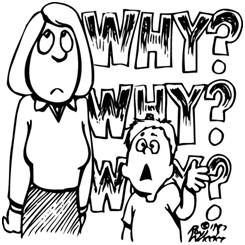
One of the marks of maturity is to stop asking “Why” questions.   

“Why did this happen to me?”, “Why do I always do that?”, “Why does my mother like my sister more?” and “Why can’t they do anything right?” are just a few examples of the whimsy of “Why.”

“Why?” is always a wimpy question that always comes with an unreliable answer. That’s the reason why “Why” doesn’t work; it provides faulty data with which to work. Reminds me of a story . . .

Back in my radio daze I was doing a DJ dance at a ski lodge. It was coming to the end of the evening and people were, as the song says, “Dancing on the Ceiling.” I announced that I had time for only two more songs. This poor soul who had been standing on the sidelines all night came up to me and said he had a request for one of the last two songs. I asked him what he wanted to hear. He replied, “Why Me, Lord?” For those unfamiliar to the song, it’s a Christian, Country Song by Kris Kristofferson.

I told him I wasn’t going to play that song and he wanted to know why. I attempted to explain that I wanted to keep the festive mood going and that song would put out the fire. He wanted to know why. Every attempt at an explanation was returned with the question, “Why?”

People who continually ask “Why?” have no clue that the answers they get will never work for them, yet they continue to ask the question.

“Why?” questions provide the questioned party a license to create, and create we do. “Why aren’t you doing better in social studies?” “Because the teacher doesn’t like me,” “Because everyone in the class is failing,” “Because my seat’s too far away from the window” and the list goes on and on.

The only answer that works for a “Why” question is a one word answer – “Because.” See my blog post from April 14, 2008 for more on that.

The focus today is to provide a strategy for us to grow. “Why” takes us off course and stunts our growth. The person who asks “Why?” will continually be disappointed because the answers only provide more questions. It’s a never ending ride to nowhere.

“Why?” doesn’t work. Ask any parent of a 4 year old if they’ve ever come up with an answer that keeps the child from asking “Why?”

The key to growing out of the immaturity of “Why” is to notice how often you ask the question.

Each time you notice, you move a little further away from “Why” and closer to some actionable data that will help you grow.


All the best,

John

LOSE WEIGHT & KEEP IT OFF
STOP SMOKING FOREVER
SLEEP THROUGH THE NIGHT EVERY NIGHT
IMPROVE YOUR SELF CONFIDENCE
I LOVE MY BODY
RELAX IN 2 MINUTES
FEEL FOREVER YOUNG
VIRTUAL MASSAGE


Be Sociable, Share!


August 11, 2010

Who Won?

Filed under: John Morgan's Blog — John Morgan @ 7:08 am

In the last argument you had with yourself, who won?
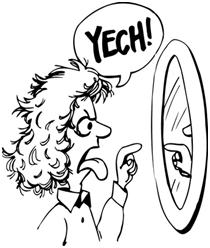
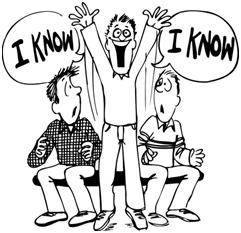
There are no winners of an internal argument; it only delays you from reaching a solution.

The more often you have an internal “Good Cop/Bad Cop” or “Devil/Angel” debate, the longer you delay any action.

It’s a universal law that we continually ignore.

We are conditioned that if we have a “Knock down/drag out,” back and forth argument inside our head that we have done something towards solving our dilemma.

Let’s look at the practice logically for a moment. Most of us are intellectually bright enough to understand both sides of the argument the first or second time it goes around in our head. What is the benefit having it come around for the 23rd time? It’s self-flagellation of the highest order and the only thing this dispute delivers is delay.

Suspending the argument is a much quicker way to a solution.

How do we suspend the argument? Notice that it’s going on.

Have you ever noticed that these debates take on a life of their own? They just take over all your intellectual real estate allowing no room for a solution to pop in.

When you notice an internal argument in progress and you just observe it without taking sides, the wind goes out of each windbag. This practice opens space for a solution to present itself.

I think the real Wisdom of Solomon is getting ourselves back into neutral so we don’t have to split ourselves in half ad nauseam.

It’s the cease fire that delivers the room for real reflection. There is a part of us that acts in our best interest. It’s in our best interest to make room for it to operate.

If you are an attorney prepping for a trial, it may make sense to go back and forth over the opposing arguments, but even there, the debate must stop in order to come forward with a strategy that works.

Noticing that you are arguing with yourself is a powerful strategy that delivers the pause that refreshes.


All the best,

John

LOSE WEIGHT & KEEP IT OFF
STOP SMOKING FOREVER
SLEEP THROUGH THE NIGHT EVERY NIGHT
IMPROVE YOUR SELF CONFIDENCE
I LOVE MY BODY
RELAX IN 2 MINUTES
FEEL FOREVER YOUNG
VIRTUAL MASSAGE


Be Sociable, Share!


August 10, 2010

Parts Per Person

Filed under: John Morgan's Blog — John Morgan @ 7:41 am

The Grasshopper has been on vacation and hasn’t visited for awhile. I heard his familiar chirping this morning and here’s what he said:

“What I know about you reveals a lot about me.”

What you know about someone is recognized by the part of you that knows you have that quality too.

It’s no secret that we have parts of us – like the part that wants to wring someone’s neck and the more peaceful part of us that passes on the opportunity.

When you recognize a trait in someone else, it’s the part of you that has that trait that does the recognizing.

You may not have that trait to the degree they do, but make no mistake it’s a part of you.

Having this recognition lets our judgements pass more quickly and has us act less superior than we deem ourselves to be.

Oftentimes, when someone vehemently denies they have a particular trait, you are witnessing what that person fears becoming.

Reminds me of a story . . .

My mother despised shopping in discount stores. She would say disparaging things about these places and the people who shopped there. One day I asked her where she thought this dislike came from. She said, “When I go into those stores, I feel poor.”

I should mention she was the oldest of a family of 12 sisters and brothers and that she lived through the Depression of the 1930’s. They had nothing. Part of her remembered that and feared that.

We are made up of many parts, and to deny them is to feed them. This fuels a sense a separation that makes us believe that another is nothing like us when, in fact, we have lots of parts in common.

The next time you catch yourself judging and categorizing, (and we all do) just take a moment to notice what you are seeing in them is a part of you.

It’s a preaching worth practicing. The result is a humbler, more approachable you that becomes more than the sum of your parts.


All the best,

John

LOSE WEIGHT & KEEP IT OFF
STOP SMOKING FOREVER
SLEEP THROUGH THE NIGHT EVERY NIGHT
IMPROVE YOUR SELF CONFIDENCE
I LOVE MY BODY
RELAX IN 2 MINUTES
FEEL FOREVER YOUNG
VIRTUAL MASSAGE


Be Sociable, Share!


August 5, 2010

Knowing

Filed under: John Morgan's Blog — John Morgan @ 7:50 am

I was awakened from a dream in the middle of the night last night and heard The Grasshopper say, “I have to give up what I know about you to get to know you.”
The message seemed to be about limitation. I jotted it down and went back to sleep.

No matter how factual your data about someone, you may cloud your perspective and your judgement with the limitation of knowing. It often prevents us from going past the surface with them – the traditional “Knowing the book by the cover” approach.

I have been cursed and blessed with observational skills that quickly put me in the mindset of knowing. I can be in a supermarket or an airport observing a bunch of strangers and know tons about them without having to engage them. It becomes a curse if I have to get to know them better. My “knowing” often translates to “all I need to know” and can shut off any deeper exploration.

The same type of knowing applies to ideas and concepts as well. If someone proffers an idea and you already “know” about it, you may not fully get to know what they know if you cut off the flow by knowing what you know. After rereading that last sentence, I feel like Dr. Seuss.

Knowing is also a limitation on goals and accomplishment. If you already know that it can’t be the way you would like it to be, you’ll be unable to see the potential opening that can lead you there.

How would you approach something or someone if you didn’t know what was possible or impossible? My guess is a lot differently.

You would come from a different angle of approach, which would give you a different perspective and a different set of observations with which to operate. Acting on a different set of facts would get you to know something different about the very same thing you already “knew” about.

Knowing is a subconscious block to accomplishment. If your knowing has become an automated, patterned program that kicks in without thinking, your thinking will remain the same and you will only know what you know.

If you begin to observe your mind knowing what it knows, you shed the light of day on that information and expose it for what it is – only a piece of the puzzle – not the complete picture.

Knowing can hold you back if you treat it as the end game. Knowing can be a catalyst to knowing more if you begin to view what you already know as partial knowledge.

This much I know for sure: Logic can lead to limitation, if it’s the only tool you use.

And regarding people . . . Everyone has a piece of the puzzle, you just have to get to know them better to find it.


All the best,

John

LOSE WEIGHT & KEEP IT OFF
STOP SMOKING FOREVER
SLEEP THROUGH THE NIGHT EVERY NIGHT
IMPROVE YOUR SELF CONFIDENCE
I LOVE MY BODY
RELAX IN 2 MINUTES
FEEL FOREVER YOUNG
VIRTUAL MASSAGE


Be Sociable, Share!


August 4, 2010

Loser

Filed under: John Morgan's Blog — John Morgan @ 7:19 am

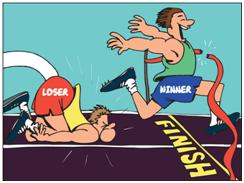
I believe that the word “Loser” is one of the most powerful words in the English Language.

Words only have power through reference, and “Loser” has multiple references in our experience.

Our society has been so focused on winning that losing is not considered an option, yet we lose every day.

Losing and being a loser are two different references, and we rarely differentiate between the two.

“Losing” is a verb and “Loser” is a noun. Losing is something you do through action or inaction. Loser is something you are.

So if, for example, you lose at a sporting event, you have just lost. But if you internalize that loss and consider other times you have lost in the past, you may conclude that you are a loser.

You can see the process of how the label and mindset gets built.

There is no upside to the word “Loser.” That doesn’t mean it can’t be used to achieve productive results. Reminds me of a story . . .

A number of years ago the NBA (National Basketball Association) ran a series of anti-drug ads targeted to their younger viewers. They featured the superstars of the league delivering a “Don’t Do Drugs” message. The problem was the ads weren’t powerful enough. The kids had already heard that message and, for the most part, ignored it.

My thought, at the time, was the message would have had more impact if the star player looked right in the camera and said, “If you do drugs, you’re a LOSER.”

A “Loser” is something no one wants to be.

If we look carefully at people we label as losers, including ourselves, we will find that they/we are not winning at life. That means that we have executed a set of actions or inactions that have caused us to lose time after time.

If we focus on the label versus focusing on the action or lack of it, we stay stuck in “Loserville.”

What actions or inactions are causing you to lose? Be careful not to look at others’ actions as the cause of your repeated losses, otherwise you’ll remain a loser.

There is a set of steps or missteps that have caused us to lose. It’s useful to identify those steps so we don’t repeat the dance. If we get caught up in the concept of “Loser,” we lose our focus and don’t zero in on the way out of being a “Zero.”

We have all lost at something. Whether it’s love or tiddlywinks, it doesn’t make us a loser, unless we fail to notice the slippery slope from losing to loser.

In the song, “How Can You Mend A Broken Heart” the question is asked: “How can a loser ever win?” The answer is to notice and act on the set of actions causing you to lose.

Appropriate action will cause you to lose being a loser.


All the best,

John

LOSE WEIGHT & KEEP IT OFF
STOP SMOKING FOREVER
SLEEP THROUGH THE NIGHT EVERY NIGHT
IMPROVE YOUR SELF CONFIDENCE
I LOVE MY BODY
RELAX IN 2 MINUTES
FEEL FOREVER YOUNG
VIRTUAL MASSAGE


Be Sociable, Share!


August 3, 2010

Got Consciousness?

Filed under: John Morgan's Blog — John Morgan @ 7:05 am

Here is a question worth pondering: Are you conscious of your subconscious?

The answer to the question is revealed when you begin to notice the function of each.

Consciousness, or being aware, is the hallmark of being conscious. That means that your conscious mind observes, asks questions, makes suggestions and formulates plans.

Your subconscious is a reactive mechanism. It’s a reservoir of conditioned routines. It reacts to stimuli and doesn’t think. Consciousness, on the other hand, does lots of thinking.

The conundrum is this: We think we can think our way out of our routines. We cannot. We must act our way out of our routines. That means to become aware of our reactive behavior and act on it.

Most people dismiss their automatic behavior as “just being me.” “Being me” is not a conscious choice; it’s a patterned reaction. The “you” that you think you are, and often defend to the high heavens, is nothing more than a collection of routines that have a mind of their own.

I saw a group on Facebook recently that underscores how thinking who we are is fraught with flagrant, phony logic. It goes something like this: Thinking that being in a house of worship makes you good is like thinking that standing in a garage makes you a car.

As silly as that seems, that’s the reality of how we define ourselves. We become blind to our reactive patterns and defend not changing.

You can dig your heels in some more and get more of the same, or you can become conscious. One method is filled with a lifetime of being on the witness stand; the other leads to something new by becoming aware of what we do.

You are where you are in life by the collective actions you have taken. Many of these actions have been reactions that take you to the same place.

The path to someplace new begins by noticing that your reactions do not do.

Making the unconscious conscious has been the goal of therapy since the time of Freud. But much of modern day therapy is too much talking and not enough doing. We think we are talking about who we are when, in fact, we are defining a conditioned image and ignoring the actions that formed it.

Making the unconscious conscious begins with noticing what we do. Your actions define a “you” that you think doesn’t exist.

Make it a point to start noticing what you do. It will help you to react less and act more.

When you become conscious, you truly begin to appreciate the old axiom: “Actions speak louder than words.”

All the best,

John

LOSE WEIGHT & KEEP IT OFF
STOP SMOKING FOREVER
SLEEP THROUGH THE NIGHT EVERY NIGHT
IMPROVE YOUR SELF CONFIDENCE
I LOVE MY BODY
RELAX IN 2 MINUTES
FEEL FOREVER YOUNG
VIRTUAL MASSAGE


Be Sociable, Share!


« Previous PageNext Page »