GrasshopperNotes.com - Thoughts for inspired living


June 10, 2014

Justifications are Limitations
Filed under: John Morgan's Blog — John Morgan @ 7:39 am

C266600 mThe Grasshopper added a new twist to a rosy old phrase when he offered this: “Limitations aren’t any sweeter when we justify them.”

My takeaway is this: Justifications are limitations. I’m sure there are exceptions to this bold assertion but not enough to justify them.

We limit ourselves when we attempt to excuse what we’ve done under the umbrella of justification.

To me, the most useful justifications happen in print – Left justified, right justified, center justified, etc. But no matter what justification we select for our text, there’s often a period at the end of the sentence.

When it comes to our actions, the period gets replaced by a justification and we limit our ability to take responsibility again.

How refreshing would it be to hear someone admit to something with just a period after the admission? “Your honor, I ran over my lover with my car.” That admission will rarely be heard in court. “I ran over that cheating S.O.B. because he was canoodling with my best friend” is the more likely admission peppered with justification.

We limit our ability to go forward when we allow justifications to take us backwards. Admission with a period is a move forward strategy. It gets you to the next step quicker. Justification is an anchor to past behavior.

No more apparent are the limitations of justifications than when issued in apologies. “I’m sorry I shot at your dog, but he was barking.” As silly as that apology looks and sounds, it’s in the form that most of us use when apologizing. Notice how the justification takes you back into the argument. “Barking is what dogs do, a$$hole.” And the back and forth devolves into more limiting behavior.

The next time you find yourself about to justify a piece of behavior, think of the Mahatma Gandhi quote: “Speak only if it improves upon the silence.”

Here’s a life lesson that will take us forward when applied: Admissions without justifications result in less limitations.

All the best,

John


Be Sociable, Share!


June 4, 2014

You Can’t Get There From Here

Filed under: John Morgan's Blog — John Morgan @ 6:05 am

C536710 mOne thing I love about The Grasshopper is his odd use of language, like this tidbit from the other day: “You can’t start from where you’re not.”

Like all his little gems, I had to reflect on it for awhile.

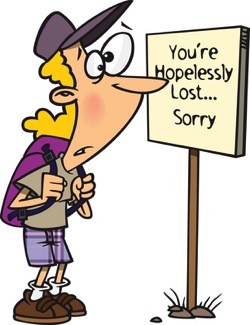
My sense is that we too often don’t know where we are in relation to where we want to go and, thus, start from “where we’re not.”

It’s helpful to know where you actually are in order to get to where you specifically want to go.

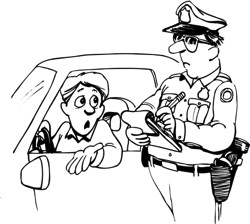
Imagine this call: “Hi officer, I’ve run out of gas on a desert road and need some assistance.” “What road are you on?” he asks “Oh, just one surrounded by a lot of cactus and sand.”

You may laugh at the caller but how many times do we not know where we are in relation to where we want to be? It may also be called, “kidding ourself.”

We think we are at some place on the map but aren’t even close. Triangulating from where we’re not will not get us to where we want to go. It will be a trek to nowhere.

Reminds me of a story from my radio days . . . I had a full time opening on my air staff and many people applied for the job. One particular person was quite vocal about how they were the right candidate and I would be foolhardy not to pick them. The one thing they were unaware of was that their assessment of their qualifications didn’t match up with anyone else’s, including mine. They thought they were at a different place on the scale than they actually were and were quite disappointed when they weren’t hired.

Reminds me of another story . . . This time, I was the one applying for a job and the man who was conducting the interview told me he interviewed 32 candidates and I was his last interview. I asked him, based on his 32 interviews, where I stacked up. He said, “Number 2.” I remember asking, “How do I get to be number 1?” He laid out some specific things I would have to do to jump to the top position. I not only had a clear goal to shoot for; I knew where I was in relation to where I wanted to be.

If you’re having a hard time getting to where you want to go, you may want to more carefully investigate where you are right now. It’s this GPS-like identification of your current location that will help you start from where you are. It will also provide you a clearer picture of the path you have to travel to get to where you want to go.

Kidding yourself keeps you where you’re not and makes getting to where you want to go a long shot.

All the best,

John


Be Sociable, Share!

June 3, 2014

Justifying Anger

Filed under: John Morgan's Blog — John Morgan @ 7:36 am

C332954 m“The hallmark of an often angry person is justification.” That’s what The Grasshopper offered on a walk this past weekend.
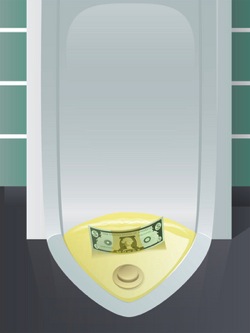
Everyone gets angry from time to time. Even Jesus threw a fit and threw the money changers out of the temple.

What about the person who’s almost always angry? What you will find if you listen to them is one justification after another about why they are angry.

The justification makes their anger all right for them as long as they can assign it to someone or something.

I don’t know about you but I don’t see very many, very old, angry people. It seems that there is an earlier expiration date for the perpetually angry. Not only that, people, in general, are very uncomfortable around angry people and start to avoid them at every turn.

Angry people wind up alone with their anger and they keep it in place with their never ending justifications. Now that’s something to get angry about.

All anger isn’t unproductive. Some people build empires on anger. Others use their anger to structure a hierarchy of rules that provide guidelines for living more efficiently. Others bury their anger so they don’t become out of control.

Anger doesn’t serve you when it’s not serving a purpose. A couple of years ago I met an extremely angry man who is incredibly successful. He had a scapegoat for every bit of his anger and it was beginning to take its toll on him – on edge, short temper, acid reflux, hard to warm up to, and the list went on and on.

I mentioned to him that he was angry and he was angry that I noticed. After he calmed down a bit, I mentioned that anger has its uses but when it’s not serving a purpose, it’s turning on him. I had his attention.

My suggestion to him was to notice his anger, not justify it. Instead of saying, I’m so mad because so and so did such and such, just notice that you are feeling angry without any justification. Just notice the sensation in your body. Just noticing your anger allows it to dissipate. Justifying it just keeps it in place.

I made a connection with him that day. I only hope, for his sake, that the connection continues. He’s truly a creative giant in his field and brings lots of enjoyment to lots of people. My sincere hope is that he can bring more of it into his own life.

We all can. We just have to begin noticing our anger without justification. Justification is a drug that keeps us hooked on anger.

It only seems fitting to end this with one of my favorite quotes from The Buddha: “Holding on to anger is like grasping a hot coal with the intent of throwing it at someone else: you are the one who gets burned.”

All the best,

John


Be Sociable, Share!


May 29, 2014

Worthless

Filed under: John Morgan's Blog — John Morgan @ 5:46 am

C726822 mI’ve been playing with the word “worthless” and the results were more than I expected.
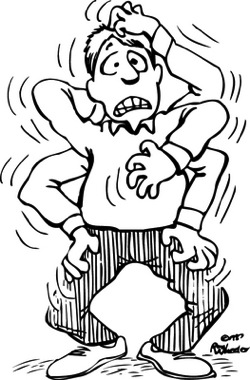
It seems “worthless” is a pejorative word that indicates useless, unless you parse it differently.

Suppose you make it two words instead of one: worth less.

If something or someone is “worth less,” that means it or they still retain some worth.

Think of an aging basketball player. At one time they were worth more, not only in monetary terms but also in their contribution to the team. They could run faster, jump higher and, perhaps, score more points. Now they fill a different role but still contribute worth – just less.

When you deem someone worthless, you have negated any worth they may still have to offer. Is there a role they can still play? Is there a way they can still contribute to your life?

I don’t pretend to know the answer to those questions, but they may be worth our exploration.

We may just discover that a worthless person is worth more than we think.

All the best,

John


Be Sociable, Share!


May 28, 2014

Behavior = Responsibility

Filed under: John Morgan's Blog — John Morgan @ 6:57 am

C279371 m“Behavior may not be your fault, but it is your responsibility.” So said the Grasshopper as he hopped out of the poison ivy while I was walking the dog yesterday.

Suppose you unknowingly walk through some poison ivy. It’s certainly not your fault, but it is now your situation and it’s your responsibility to remedy the itch.

Behavior has consequences whether you’re aware of what you did or not.

Reminds me of a story . . . My stepfather’s biological son caused some property damage while driving erratically many years ago. The authorities came after my stepfather for payment since his son was a minor. He didn’t have the ability to pay, so they suspended his (the father’s) driver’s license until he made restitution.

He had nothing to do with the driving behavior but he did bear responsibility for it.

It’s been a long time since President Truman issued his famous quote “The buck stops here” and many of us have forgotten the reality of responsibility he referred to.

I’m responsible for ending the previous sentence with a preposition. I could easily make an argument that it wasn’t my fault – lousy teachers, persnickety grammarians, etc. but the behavior and the responsibility are solely mine.

Deflecting fault for our behavior just prolongs the remedy. When we grasp that our behavior and the behavior of those under our charge is our responsibility, we step in the direction of a solution rather than wasting time arguing for absolution.

No matter what your age, equating behavior with responsibility is a sign that you have officially grown up.

All the best,

John


Be Sociable, Share!


May 27, 2014

Should, Ought, Must

Filed under: John Morgan's Blog — John Morgan @ 5:23 am

C302164 mThe Grasshopper offered this nugget over the holiday weekend: “Should, ought and must are opinions, nothing more.”

Who hasn’t ever been caught up in a “should, ought or must” conversation? You could be having it with someone else or with yourself and the result is the same: opinions are being offered as truths.

“I/You should, ought, must (fill in the blank). The blank is an opinion based on a rule, not reality. Anytime we utter should, ought or must, we are putting our rules on display.

The more rules you have, the less life you live.

The more time we spend with should, ought and must, the more time we spend on how things should be, and less time with how things really are. How things really are is where life happens, not where they ought to be.

You are one step removed from life when you engage in should, ought and must. In fact, if you inspect those opinions, they are some very old rules that are very “musty.”

Should, ought and must aren’t going away anytime soon. The real question is: How soon will you notice how often they show up in your life? Just by noticing, you give yourself a little space from your opinions and begin to live a little bit more.

If you need a new rule, you “must” try this one on for size: My opinions “shouldn’t” keep me from living.

All the best,

John


Be Sociable, Share!


May 21, 2014

Perfect Day

Filed under: John Morgan's Blog — John Morgan @ 7:25 am

C311256 mHave you ever had the occasion to envision the “perfect day”? It’s a day that goes exactly as you gloriously planned.

I have daydreamed about that day as well but, for me, it’s never gone according to plan. That’s because other people and reality are involved and neither got the memo about my perfect day. Even if they did, they have their own plans.

Perfection becomes an exercise in bending reality to our will – Control.

Here’s a little known secret: every day is a perfect day – one that’s out of our control and never goes according to plan.

Perfection is what happens; imperfect is what we plan.

Does that mean to stop daydreaming and stop planning? No, both are tools that help shape your efforts. The key is to have another tool in your toolbox – Response. It’s the one tool that can smooth over the bumps of planned perfection.

Reminds me of a story . . . Had the occasion to talk with someone on the phone the other day about a position in our company. There were many questions that went back and forth and things were going as “planned.” Then the person on the other end received an answer that was unexpected. You could hear the disappointment in their voice at the answer. There was lots more ground to cover about the position and we did, but the life did not return to their voice. They were not able to respond to a piece of unplanned information. The job requires someone who can respond to the moment, not get caught up in it. The same is true for life.

If you are caught up in your plans, you will encounter even more unplanned circumstances lying in wait. I’m reminded of what my friend Doug O’Brien told me about space rockets on their way to wherever: they are off course over 90% of the time. Part of the plan is course correction. It’s the necessary tool for every successful launch.

Whether you’re planning on going to the moon or planning the perfect get-to-gether, leave room in your tool kit for response. It’s the perfect tool for a “perfect day.”

All the best,

John


Be Sociable, Share!


May 16, 2014

Mediocrity

Filed under: John Morgan's Blog — John Morgan @ 7:06 am

RecipeI passed by a church the other day and their street-side marquee read: “Mediocrity is a well worn path.”

After reflecting on this offering, I was reminded of one of my favorite sayings: “If you always do what you always did, you’ll always get what you always got.”

The revelation was: if we’re always producing mediocrity, we’re on the wrong path.

If you bake, are the cakes you make mediocre or stellar? If you’re not being asked for the recipe quite frequently, your cake may as well be stale.

Mediocrity is a stale path. Our mediocre cake will be the last one sold at the bake sale, if at all.

Whatever you’re putting in the oven on a daily basis is either getting awards or it’s just doing the job. Mediocre is just doing the job. The results mediocre gets are neither nourishing nor tasty.

We’re probably all familiar with the computer phrase, “Garbage in, garbage out.” We may not be aware of this lesser known truth: “Mediocre in, mediocre out.”

The illusion we’re under is that marvelous results can come from mediocre efforts. It’s never been the case. Too often we experience disappointment with our efforts but, sadly, that doesn’t get us to up our game. We’re too busy complaining that our hard work isn’t getting us what we want.

The recipe for success is available; just find someone who’s getting the results you want and follow their lead. Reminds me of a story I’ve told before . . .

My neighbor, Barbara makes world-class brownies. I’ve never had better. Many people have attempted to make Barbara’s brownies, but they never come out like Barbara’s, even though she’s given them the recipe. No one ever went in the kitchen with Barbara and witnessed the process from start to finish. Had they done that, they would never make a mediocre brownie again.

If you want top-notch results, “get in the kitchen” with someone who’s top-notch and do precisely what they do. If you cut corners, you’ll find yourself back on the path to mediocrity in a hurry.

Mediocre is ladened with shortcuts. If you want much better results, you have to walk the more challenging, less traveled path. It’s the pathway out of mediocrity.

All the best,

John


Be Sociable, Share!


May 14, 2014

Behavior Fulfills

Filed under: John Morgan's Blog — John Morgan @ 7:20 am

DreamerThe Grasshopper woke me from a dream and offered this: “A thought may spark your dream but only behavior fulfills it.”

There are many people who have more dreams than me but, like you, I have my fair share of them. I’m only guessing here but my sense is the ones that don’t get fulfilled are either highly improbable fantasies or our behavior doesn’t match the fervor of the dream.

Dreaming is a creative release and we release any hope of it gathering steam when both feet are in the clouds. A return to earth is required to get “boots on the ground.”

The journey leaves dreamland the minute you begin your march.

I may have offered this before but I believe dream fulfillment would be better served by putting together a “behavior list” rather than just a “bucket list.”

I abhor the word “try.” It’s the excuse word of the unfulfilled dreamer. Show me your “behavior journal” on the things you “tried” and your lack of entries will reveal why your dreams remain a dream.

We are world class in making excuses for our behavior or lack of it. We haven’t taken the time to notice how much time we spend on justifications that only reduce our chances of fulfilling our dreams.

I promise you this: Only behavior will get you to the Promised Land.

Please continue to dream your dreams, but do yourself a service: Stop justifying not fulfilling them. All that does is keep your behavior on hold, and behavior is the only pathway toward your dream.

Do yourself this favor: Inspect your behavior. If you’re honest, you’ll find it to be the missing ingredient that’s making your life a boulevard of broken dreams.

All the best,

John


Be Sociable, Share!


May 13, 2014

Robbing the Moment

Filed under: John Morgan's Blog — John Morgan @ 7:22 am

C413512 mThe Grasshopper warned of a stickup the other day when he said, “When you rob yourself of this moment, you rob yourself of life itself.”

Are you forever looking back over your life? Are you continually musing on what your life should be? Whether looking back or projecting forward, you are robbing yourself of the only time life can happen – right now!

Life happens in every moment but if we’re not there to witness it, the past or future has picked our pocket again.

A moment doesn’t need to be momentous to feel life. Just stop at any portion of your day and honor the moment you happen to be in. Do that by feeling the sensations in your body the moment has to offer. That’s the feeling of being alive.

We deaden ourselves to our aliveness and open the door to robbery by being anywhere but where we are.

If you seek to feel your aliveness, it can’t be felt in the past or future. It can only be felt now. Your body is a “right now” feeling apparatus.

Right now there is aliveness in you. Every moment of every day, your aliveness is available. If you are shopping in the past or future looking for the “real deal,” your aliveness will be shoplifted while you’re looking for a “steal.”

Protect yourself from falling victim to robbery by noticing this moment and the sensations it has to offer. Your reward will be an aliveness the past or future cannot offer.

All the best,

John


Be Sociable, Share!


« Previous PageNext Page »