GrasshopperNotes.com - Thoughts for inspired living


February 27, 2015

Silver Lining

Filed under: John Morgan's Blog — John Morgan @ 8:30 am

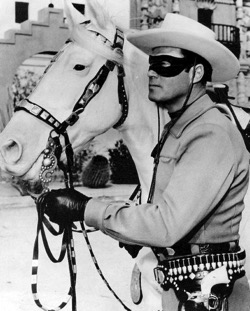
Lone ranger silver 1965The Grasshopper had this to say last night: “Get to the silver lining quicker.”

It sounds like another version of “Hindsight is 20-20” on first blush, but it seems more “proactive” – (a word I’ve come to loathe).

Finding the silver lining before you normally do shortens the storm.

So how do we find the silver lining before we get to hindsight?

Notice that much of the interference preventing us from getting to the silver lining is the mental cloud of dust we foster by focusing on what can’t be done or what can’t happen. That’s a self fulfilling prophecy that feeds on itself.

The silver lining of a situation presents itself when we start asking possibility questions like: “What would happen if I could?” That doesn’t insure that you’ll find your way out of your fix but it certainly presents more options.

“What would happen if . . . ?” isn’t a silver bullet but it will help you hit the mark more often rather than being pinned down by pessimism.

Too many of us wait too long for our silver lining to reflect how a life challenge benefited us. It’s possible to get to the benefit stage sooner. Start asking possibility questions and you’ll kick in your inner masked man and ride towards some action.

Hi-Yo Silver, Away!

All the best,

John


Be Sociable, Share!


February 19, 2015

Thinking like an Employee

Filed under: John Morgan's Blog — John Morgan @ 5:52 am

C208013 mI was struck with another self imposed stumbling block to success the other day – Thinking like an Employee.

I have been an employee and an employer over the years and here’s my experience: The people who remain at the water cooler talking about their lot in life are thinking like employees. The modern day water cooler is social media and the same folks are there complaining.

Employees who don’t think like employees are capable of seeing a bigger picture – one that includes more people than themselves. Employee thinking is generally self-centered and exclusionary of others.

I have been guilty of employee thinking in the past and I can testify that it didn’t serve me well. Employee thinking is loaded with victimization and persecution. As long as you remain in that frame of mind, you’ll stay stuck in “employee-ville.”

I don’t need to know anything personal about some people I see on Facebook to know they’re forever bumping up against life. Their posts give them away. The passive-aggressive striking out that they do lets me know they think like an employee.

People who move past employee thinking leave behind the phrase “It’s not my job.” If you’re an employer, you know that every one of your employees’ jobs is your job. Employer thinking is more inclusionary.

Generally what I find is that employees who don’t think like employees are more successful in their jobs and have more satisfaction in their life. If that sounds attractive you, then consider giving up thinking like an employee.

It may take some work to figure out that “the man” is not out to get you. Once you figure that out, it’s time to start thinking bigger picture. Start thinking past yourself and watch doors of opportunity begin to open. They are always there; they’re just not by the water cooler.

All the best,

John


Be Sociable, Share!


February 17, 2015

Social Grace

Filed under: John Morgan's Blog — John Morgan @ 7:14 am

C282919 mThe Grasshopper left this at my snowy doorstep this morning: “Social grace has left this place.” It almost had the feel of “Elvis has left the building.”

Social graces are packing up and leaving town, sort of like the circus. The only difference is – the circus will be back. I wish I could say the same about social graces but I just don’t see the evidence.

Let me start with “please” and “thank you.” They’re a shadow of their former self. They used to be staples of our culture but have all but disappeared.

A large disappointment for me in the electronic age is someone you know not responding to a personal email, text, etc. You may have sent off a friendly request for this or that or just dropped them a note of thanks, or have sent them an article you saw online that made you think of them. The amount of “no response” is staggering and shows lack of social grace.

Here’s what I’ve found about many people lacking in social grace. They are struggling, usually financially, usually for a lifetime.

You may not have been taught social graces growing up which gives you a legitimate excuse for not having them. But once you learn of their existence and choose not to learn them, you will continue to struggle.

When I observe people on the fringes of life, I notice a lack of social grace which seems to be attached to an attitude of entitlement. They seem entitled to whatever it is that you offered and no thanks or acknowledgement is necessary.

Too bad you can’t live off entitlement because, if you could, these folks would be super rich. But they’re not. They are perpetually struggling.

I learned something from Jerry Stocking many years ago. He said if you change one thing, subtle shifts will take place within you and other things will change as well. I submit that if you start adopting social graces, you will start to reap other benefits as well.

Your sense of entitlement will begin to melt and fade away making room for more benefits to come your way.

There is a two-way street that opens up when you express thanks, rather than a one-way ticket to a life of lack.

I could have made all this up and, frankly, I did. But what if my notion is correct. Wouldn’t it be in your best interest to adopt social graces?

Only entitlement stands in the way of you finding a better way.

All the best,

John


Be Sociable, Share!


February 11, 2015

Caretaker

Filed under: John Morgan's Blog — John Morgan @ 5:55 am

C167121 mIs it better to be the caretaker or the one taken care of? I guess it depends on who you ask.

For me, I prefer the caretaker role but I find it has a huge downside: You tend to not give people the opportunity to take care of you.

I’m certain the reverse is equally accurate: being cared for all the time doesn’t afford you much opportunity to be the caretaker.

Is there a middle ground? If so, how do we find our way there?

I don’t have an answer, just a suspicion. If you want to break out of your current mold, you have to ask for or agree to the opposite of what you naturally do. In the past, it’s been hard to ask and difficult to agree.

It’s hard for a caretaker to ask you to do something because they have been highly conditioned to be the doer. it’s hard for the cared for to ask for the opportunity to be the caretaker, because they have been highly conditioned to receive.

Push can come to shove when we seek the opposite. It’s like the Seinfeld episode where Jerry is arguing with his parents about who pays the check. Most of us have had moments similar to that.

It seems that the asking for the opposite has to come in little chunks and not in one, big, sweeping change. Sticking with the arguing for the check example, it could be something as simple as this: “It would give me great pleasure to be able to pay for our meal and it will give me some valuable practice to be just as generous as you.”

If you are the caretaker, entertain saying “Yes” when you normally say “No.” People will offer you care; you just have to allow them the opportunity to “do for you” from time to time.

We have so much invested in our roles that we forget we bankrupt ourselves and others when we don’t allow for the opportunity of role reversal.

Give it a go and see where it goes. You may discover that more people care about you than you ever knew or that you can take on more responsibility that benefits you.

All the best,

John


Be Sociable, Share!


February 6, 2015

Mark of Maturity

Filed under: John Morgan's Blog — John Morgan @ 6:52 am

C151093 s“Consistency is a mark of maturity” was The Grasshopper’s message this morning.

I didn’t have to ponder this one too long since I attend services regularly and worship at the altar of consistency.

I pray I can be as consistent as the gods I adore, allowing me into the elite club of those I consider mature.

Having been and having raised young adults, I can attest that we were too inconsistent to earn a seat at the adult’s table. We were denied that honor because we hadn’t yet learned that, as my mother-in-law used to say, “trying on new hats” isn’t a way of life.

There’s nothing wrong with trying something new; it’s the constant flitting from one new thing to another that delays our maturity. We are consistently inconsistent.

For the most part, we outgrow our inconsistent behavior but if you’re constantly butting up against life, chances are good that you haven’t.

Watch anyone who is consistently struggling and notice how inconsistent they are.

There is too much magical thinking going on with them. As my hypnosis teacher Dave Dobson used to say, “You’re thinking like a teenager.”

Consistency needs routine, something the perpetually immature abhor.

If you rail against routine, you will remain as inconsistent as a teen.

Invite some routine into your life and watch the fruits of consistency grow before your very eyes. Your harvests will be bigger as you embrace maturity and drop your inconsistent reprise.

All the best,

John


Be Sociable, Share!


February 4, 2015

Addicted Mind

Filed under: John Morgan's Blog — John Morgan @ 11:40 am

C652166 m“Your mind is an addict.” So said The Grasshopper this morning.

My personal view on addiction is that it’s a mental pattern that can be outgrown, not a life sentence.

But we can be addicted to a thought for a lifetime if we don’t stop and notice the addiction.

What is a recurring, nagging thought other than an addiction? Your mind is addicted to that thought. It doesn’t matter how much logic you heap upon your mind to the contrary, that thought keeps coming back and hooking you. That’s addiction.

You can try positive thinking to countermand that thought but that never has a long-term result. Positive thinking has the lasting effect of a pep rally – gone before you get home.

Much like the line from The Godfather: Part III, “Just when I thought I was out, they pull me back in,” we get pulled back in to argue with our mind.

The real addiction is arguing with our mind. Have you ever stopped to notice that you’ve NEVER won an argument with your mind? That fact doesn’t seem to register with us and we keep arguing.

You have to notice an addiction before you can outgrow it.

Notice the addictive thought without engaging with it. Just observe the argument that your mind presents and choose not to participate. The thought will go away because it can’t get you to play. Oh, it will come back again in a “sexy outfit” attempting to lure you in, but if you remain in observation mode each visit, the thought will eventually visit much less.

The thought may never completely go away but its frequency of temptation to get you to argue will dwindle.

We argue for our limitations when we argue with our mind. What addict do you know who doesn’t argue for their limitations?

You can outgrow being addicted to your mind; you just have to start observing it.

All the best,

John


Be Sociable, Share!


January 28, 2015

Who Am I?

Filed under: John Morgan's Blog — John Morgan @ 7:01 am

C114202 mHere was the Grasshopper’s cryptic message this morning: “The time spent defending ‘who you are’ is inversely proportional to the amount of time you spend noticing how things are.”

I got to notice that I didn’t get to spend too much time contemplating who I am while shoveling feet of snow. Reality has a way of grounding you to the way things are.

Who am I in relation to the world? is too big a question. Who am I in relation to what’s right in front of me? gets me closer to who I am.

I am the person doing whatever it is I’m doing in the moment.

If my focus is out there defending who I am to the world, the less I am focused on what’s really happening.

The global “Who I am” is a fantasy. It’s a created image that we’ve made up to measure how we stack up against others.

Just notice how much time we spend defending that image. Every moment spent in that pursuit is a moment divorced from reality.

You will get closer to who you are by noticing what you do, not what your PR says you do.

“I am a snow shoveler” was a more accurate assessment of who I was yesterday than the many mental flights of fancy that my mind made up.

“Snow shoveler” isn’t a permanent label for me but it did accurately define me for the time I was shoveling.

I will say that who you really are is much deeper than what you do, but focusing on what you do gets you closer to who you are than any imaginings of who you are.

Who you are is the light and life force that animates your existence. That’s you in its purest form. When we claim that we’re only a tiny subset of that light, we diminish who we really are. When that subset is a mental fantasy, we have really gone far afield.

A practice that will get you back to appreciating who you really are is to do something focused – a math problem, a rock climb, moving tons of snow with a plastic shovel. In short, put your focus on what you are doing. This has a way of getting us to notice and appreciate our life force which is responsible for us getting things done.

The more we are focused on actual doing, the less time we spend imagining that we’re doing something or being somebody.

My reminder is to be as focused as a pharmacist when filling a prescription when you are doing whatever you have committed to do. It will get you closer to reality and, in turn, closer to the real you.

All the best,

John


Be Sociable, Share!


January 22, 2015

Where Am I Now?

Filed under: John Morgan's Blog — John Morgan @ 7:36 am

C609166 m“Where you are going depends on where you are.” So said The Grasshopper early this morning.

My experience is that the ability to get to where you are going has a lot to do with knowing your current location.

“How do I get to Cincinnati? is a lot easier to answer if you know you are in Louisville.

If you don’t know your current location, it’s a crap shoot as to whether you’ll ever get to where you want to go.

“Where am I now?” is a question we rarely ask ourselves. And if we do, we often make up an answer, making it doubly difficult to get to our desired destination.

An honest assessment of where we are now makes triangulation much more precise and makes the path we have to travel crystal clear.

The difficulty is that we don’t want to see the clear path because we know it’s ladened with work. That “burden” keeps us from pinpointing where we are. We continue to BS ourselves that we’re somewhere where we’re not, and we stay willfully lost.

We are so steeped in magical thinking that we miss seeing the landmarks of where we are. The magical thinking is that we will get to where we want to go without having to put in the effort.

I love learning shortcuts but if that’s all I depend on then I’ll come up short, and so will you.

Where you want to go has to be more than a wish to get you to find your true starting point. Your destination has to be fueled by the passion to do whatever is necessary to get there.

If your desired destination is not compelling, you’ll remain where you are dwelling – pretending you’re somewhere where you’re not.

The three keys to making this trip happen are:

1. Have a compelling idea of where you want to go.

2. Find out where you are now.

3. Be willing to do the work.

Regarding the passion part of this formula, this old adage comes to mind: “Find a big enough ‘Why’ and the ‘How’ will take care of itself.”

Where am I now? If you don’t pursue the answer to that question, your pursuits will remain a pipe dream.

All the best,

John


Be Sociable, Share!


January 21, 2015

Temporary

Filed under: John Morgan's Blog — John Morgan @ 9:01 am

C76601 mI can’t know this for sure but it seems like everything in the human experience is temporary, with the exception of love.

Love seems to be a permanent fixture – not the love of something or someone but the ever-present nature of love itself. It seems that it’s always available.

We expend untold energy attempting to make temporary things permanent not knowing that we are going against the flow every time we do. Reminds me of an expression my mother used to use: “Children are only lent to you.”

They are only temporarily yours before they head off on their own. If you are anything like me, you may rail against that concept because you cherish the family atmosphere of having children around. But that situation, no matter how much you love it, is a temporary one.

Happiness is also temporary. It’s here, it’s gone, it’s back and it’s gone again. It’s in a state of flux – temporary.

In order to co-exist with temporary, we have to recognize its existence so we can take advantage of its limitations. The limitation of temporary is that it will never be permanent. To take advantage is to appreciate the experience you are having while you are having it.

If you are feeling happy, celebrate it while it’s here. Don’t waste your time trying to capture it in a jar, that will only take away from the experience and shorten its visit.

If you are sad, notice it while it’s here and, again, quoting my mother, “If you’re sad, you’ll get glad again.” It’s temporary.

Beginning to appreciate temporary will have you begin to appreciate your experiences more. You’ll begin to outgrow the concept of permanent and the frustration that notion brings.

All the best,

John


Be Sociable, Share!


January 19, 2015

Prejudice

Filed under: John Morgan's Blog — John Morgan @ 8:37 am

P179101 mThe Grasshopper offered this up this morning: “Your most conditioned reaction is your largest prejudice.”

It seems that most of our prejudices are involuntary, until we notice. Even after noticing, we may begin to justify our conditioned reaction. That’s usually when we look the most foolish.

Have you ever watched anyone defend their prejudice? The only people not cringing are like minded morons.

Like most of our beliefs, we got most of our prejudices by accident. They were handed down to us through conditioning. The interesting thing to notice is that they aren’t really our prejudices, just some hand-me-downs we got comfortable wearing before we knew what a hand-me-down was.

Stop for a moment and think about what prejudice you own that your mother or father may have had. Now, perhaps, you can appreciate what kept the Hatfields and McCoys going at it for generations.

You were conditioned into a way of thinking and acting that may not be serving you well today. It could be attitudes about other races or cultures, religions, political parties, sexual preferences, the role of money in life, what other people should or shouldn’t be doing. The list of conditioned prejudices is endless.

The conditioning you got the most is your largest prejudice. What you may not realize is that it prejudices you from progress. Prejudices have the unique ability to keep you stuck where you are.

The first key to outgrowing a prejudice is to notice it in you. The second step is to stop justifying it. This takes continuous application – like home teeth whitening. It takes work on your part.

Here’s an everyday example of the ill effects of conditioning: Every time you post your prejudicial point of view online, under the guise of “the truth,” you have made another argument for your limitations, keeping you stuck and angry. if you like that feeling, keep doing what you’re doing.

If you’re tired of that angry feeling and tired of being held in place, notice that it’s your conditioning that’s arguing for your limitations keeping you stuck and angry.

If you just got angry about this post and went into justification mode about your prejudice, you need attention the most – your attention. Notice that you are the source of your own anger and your own stuckness.

If you ever get that recognition, you are at the threshold of change where prejudice starts to come unglued and you are on your way to no longer being stuck and angry.

All the best,

John


Be Sociable, Share!


« Previous PageNext Page »