GrasshopperNotes.com - Thoughts for inspired living


April 4, 2016

Transitioning to Reality

Filed under: John Morgan's Blog — John Morgan @ 5:42 am

TransitionI tripped over an old Grasshopper Note that reminded me that it’s often quite useful to make the transition from one definition of a concept to another to get the broader perspective and benefit the new description delivers.

Accepting Reality Is An Oxymoron – Grasshopper

It’s right up there with accepting “A little pregnant,” “Acute dullness” and “Boneless ribs.”

Reality, pure and simple, is what happens. It’s an undisputed fact – The vase broke, the building burned down, my husband cheated.

We have bought into the notion that there is an action separate and apart from reality called “Acceptance of Reality” that’s necessary for reality to be validated. It would be like saying “I accept that all living human beings breathe” as a condition of breathing.

Reality doesn’t need acceptance; it needs recognition.

I recognize the vase broke is all that’s necessary.

We have built a false choice when we claim that we can or cannot accept reality. There is no choice. Reality happens.

You may or may not recognize that reality has happened, but that’s fixable with a few training aids – chards from the broken vase, ashes from the burned building, a detective’s pictures of your husband’s canoodling.

The notion that we have to talk ourselves into a position of acceptance is pure theater and keeps too many ineffective therapists employed.

Acceptance is a feeling about a fact. That has nothing to do with reality.

Acceptance is not for sale. It’s like the Christian concept of Grace; it will come, if and when it comes, on its own accord. No donation, stipend or cheerful chit-chat about acceptance acts as a catalyst.

I’m not lobbying for the term acceptance to go away; I’m attempting to have you mentally morph it into recognition.

Recognize, for example, that Self-Acceptance is really Self-Recognition.
One fact that keeps us in our own way is not recognizing that we’re in our own way. We keep looking away from the direction of reality.

Before you can get to a feeling of acceptance, you will have to begin to recognize, not judge, reality.

Many of my CDs, for marketing purposes, are advertised under the concept of Self-Acceptance, but they’re really about Self-Recognition, which leads us to the doorstep of acceptance.

One of the things I have you do on one of my CDs is to notice yourself, warts and all, without judging. There is power in recognition without recrimination. This is a practice of noticing reality which doesn’t require acceptance. The feeling of acceptance comes as a byproduct of recognizing reality.

Accepting reality is a difficult path to walk; recognizing reality is much easier and it’s the quickest avenue towards the feeling of acceptance.

Here’s the reality that will make you more accepting: Notice rather than attempting to accept.

All the best,

John


Be Sociable, Share!


April 1, 2016

Seeking Passion

Filed under: John Morgan's Blog — John Morgan @ 5:54 am

CrowdIt seems to me that passion is like speed in football, either you have it or you don’t; it’s not something you can learn.

You can certainly discover passion but there is no step-by-step guide for learning it.

To me, passion is also like the Christian concept of grace. It’s not for sale and it comes when it comes, or not.

I’ve accomplished many things in my life with and without passion. I can say from experience that the accomplishments without passion have been the most exhausting endeavors I have ever undertaken. They sapped my energy. The things I’ve accomplished with passion were more easily attained and added to my energy level.

You certainly have had the experience of doing something where time disappeared and you forgot to eat. Whatever that was, it had passion behind it. You’ve also had the opposite experience where the hands of the clock seemed like they were glued in place. For me, that was school.

It seems that passion is tied to another elusive “P” word: Purpose.

By all accounts, it seems that when you find your purpose, passion naturally follows. So the shortcut to passion is to find your purpose.

Purpose can shift many times in a lifetime. For example, unless you’re an Irish family with children 25 years apart, raising children is a purpose that has past for most. Something else has to surface in the purpose department or your passion will wane and wash down the drain.

My guess is that one more “P” concept has to be put in place for you to discover purpose: Putting yourself out there.

Purpose doesn’t come-a-knocking on your cave’s door. It’s more likely to show up when you get out and explore.

You can certainly read about how the other half lives on the internet or in magazines or books, but that exposure deprives you of the thing that will lead to purpose – actual experience. Purpose has to be experienced, not dreamt about.

Exposure is the key to finding purpose. There’s infinite opportunity to find purpose but it can’t be found in the stale air of isolation.

I’m reminded of the old joke: “No man is an island but Eugene is a city.”

We have to get off our deserted island and find a more populated place to have a chance of discovering purpose. I can tell you from experience that you won’t find it by pulling the covers over your head again.

Put yourself out there and explore and stop waiting for purpose to knock on your door. Exposure leads to purpose which is something you can get passionate about.

All the best,

John


Be Sociable, Share!


March 31, 2016

Social Media Warning

Filed under: John Morgan's Blog — John Morgan @ 6:20 am

FiredMany years ago I read a quote from Bill Gates regarding a hard lesson he learned from a court case against Microsoft that he lost: “Don’t put anything in an email that you don’t want the whole world to see.”

I’d like to expand his warning to all my friends on social media.

Unless your paid position is to offer your opinions, you would be extremely wise to keep yours off of social media, especially if you are employed by a company. Your personal opinion on any topic is certainly your right to express, but it has great potential to jeopardize your job.

Every day I see postings from friends and family who seemingly have no idea how potentially dangerous their opinions are to their livelihood. Here’s an example from a TV broadcaster: Click here.

You may think you are protected by your free speech. The opposite is true; you are exposed.

If your opinion is an embarrassment for your employer to the point that they have to answer for your “take on the world,” you’re going to be in a world of trouble.

I’m reminded of what I learned in the first week of basic training in the U.S. Navy. When you wear the uniform of the United States Navy, you represent the entire Navy. That meant that anything you did in uniform reflected on your entire organization.

You can argue until the cows come back to the barn about your right to say what you want; I’m just not sure you recognize the consequences that go along with that right. Imagine explaining to your family that the reason you lost your job and possibly your career was because you felt compelled to offer your opinion on Facebook.

For you, social media may serve as a projection of your ideas but it offers you no protection if what you say is detrimentally projected onto your whole organization.

I would never tell you not to express yourself; just be aware that “free speech” can be costly.

All the best,

John


Be Sociable, Share!


Shameless Apology

Filed under: John Morgan's Blog — John Morgan @ 4:16 am

ShameShame on me for not reposting this old Grasshopper Note sooner. It’s an eye-opener.
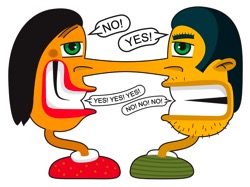
Guilt And Shame Are Not The Same: One Triggers An Apology The Other Cannot Muster – Grasshopper

It has intrigued me for a number of years that a certain portion of the population has trouble apologizing. From my vantage point, it’s always been about immaturity, but it goes deeper than that for some. It’s about shame.

A stubborn, immature teenager avoids apologies more than cleaning their room. That’s par for the course. It’s something most of us outgrow.

But there is something more than immaturity that keeps an apology in one’s pocket for a lifetime. It’s shame.

I perceived guilt and shame as identical twins until I read something from Dr. Paul Ekman. He’s the man the TV show “Lie To Me” was based upon.
He wrote: “Guilt is felt about an action that we know was wrong. Shame is felt not about an action but about who and what we are; if anyone really knew who and what we are, they would be repulsed. Guilt motivates a confession of wrong doing, shame inhibits it.”

What I get from that is that some people are so ashamed that they cannot admit their guilt. It would be like having their dirty little secret go viral on YouTube. Sadly, instead, it goes unwashed to the grave with them.

The cleansing power of an apology is like a rising tide – it lifts all boats.

If you choose to lift the pain of your shame, you also lift the radiating pain for all who suffer from your silence.

Our secret is so encased in our social mask that removing it would mean that we would disappear. Losing this false identity is perceived as a fate worse than death. That’s why we take pains to hold on tightly to our mask and shame.

Life’s biggest secret is that we are not who we pretend to be. We have a conditioned portion of us that has taken on a life of its own, separate and apart from our depth, and it masquerades as us on the surface.

When you apologize, you crack the mask and you crack the code for allowing shame to disappear.

You can still feel guilty about your actions if you choose, but, once released, you’ll never choose the pain of shame again.

Just remember this: You don’t have to apologize for who you are, just who you aren’t. You aren’t a container for shame.

All the best,

John


Be Sociable, Share!


March 30, 2016

The Same Argument

Filed under: John Morgan's Blog — John Morgan @ 5:35 am

ArguingAre you having the same argument again?

It doesn’t matter with whom: yourself, someone else or God. When you engage in the same argument, your relationship with your “arguee” grinds to a halt.

If you’re not evolving, you’re revolving – around the same drain you have circled before.

The main impediment to evolving, as I see it, is the penchant to win the argument. In short, be right.

Many margaritas ago, The Grasshopper said, “Most people would rather be right than happy. And preferring to be right, they are left out.”

If you need to win arguments, study to become a trial lawyer, otherwise arguing to win will stall relationship after relationship until there’s no one left to relate to, only people to argue with.

Begin to notice what you argue about. That’s a problem that needs solving, not more debate about who’s on the side of the angels.

To the point: If you’re arguing, you’re not relating. That doesn’t mean you can’t have differences of opinions; we all do. It’s just arguing about them again and again will have the same result you got the last time: no end to the argument.

The lead character in the Daniel Quinn novel Ishmael gave us a very quotable quote: “There is no argument that will end the argument.”

In order to get back to relating, we have to step out of the argument that keeps that from happening. “Stepping out” means taking a look at it with a different set of eyes as though it was someone else’s situation that we were observing. What sage advice would we offer to another if it was their argument?

My guess is you would request they seek a solution, not give them a lesson on getting the upper hand.

The way to resolve the argument is to resolve the problem. Go to work on it rather than formulating dazzling soliloquies that leave your arguing partner speechless, yet dug in.

Make no mistake, if you’re having the same argument time after time, you have a problem that needs a resolution. Put all you effort there. Get outside help if you need it but make solving the problem your mission, otherwise you put your ability to relate and evolve out of commission.

All the best,

John


Be Sociable, Share!


March 29, 2016

The Pain of Illusion

Filed under: John Morgan's Blog — John Morgan @ 5:50 am

Head in hole

This morning I happened upon a Grasshopper Note written years ago and was once again stopped in my tracks as to how often we contribute to our pain when we reroute away from reality.

Unaccepted Reality Always Causes Pain – Grasshopper

Reality isn’t my truth or your truth; it’s universal truth, and ignoring it or keeping it at arm’s length keeps you in the embrace of pain.

As has been written before, reality doesn’t have versions. It’s truly the most honesty we experience on a daily basis. Reality isn’t a viewpoint; it’s the only point.

When we treat reality as anything other than what it is, we suffer.

You can’t dance around something you’re immersed in. All attempts to do so will keep you drowning in pain.

Resisting reality is a head game, not a body game.

Your body feels, and ignoring or attempting to explain away a feeling is a practice not grounded in reality.

Your body is grounded to what is, while your head is off on flights of fancy away from your body, away from reality.

It’s not your interpretation of what your body feels that is reality, it’s the feeling itself.

When you pay attention to the sensations in your body, you are acknowledging reality.

When you notice that your stomach flutters or your heart beats faster, you are recognizing reality. When you rationalize your sensations, you are resisting reality.

Resisting reality causes pain. The more we resist, the more we suffer.
Many consider accepting reality as defeatism when, in fact, it’s a step towards victory.

You can move forward more easily and quickly when you recognize what is. You don’t spend untold amounts of energy arguing with yourself that what is, isn’t.

Recognition of reality removes the side roads of it should or shouldn’t be this way, and lets you plan more realistically for another reality.

You can change your situation, but not your current reality. It must be accepted to return you to neutral – which is the gear you must go through in order to get to a gear that moves you in a new direction.

You will grind your life to a halt and experience all the pain that comes with being stuck by continuing to resist reality.

Acceptance of reality is the clutch that gets you into neutral. It’s from this gear that your options become clear.

All the best,

John


Be Sociable, Share!


March 24, 2016

Drama Trauma

Filed under: John Morgan's Blog — John Morgan @ 6:37 am

DramaThe Grasshopper had a message for the theatre performer in all of us: “Drama keeps trauma alive.”

Most of us have experienced what the dictionary calls trauma: a deeply disturbing or distressing experience. It’s what follows that determines our level of suffering.

If we go on and on about our trauma, it morphs into drama. The length of drama’s stay is how often we choose to feed it.

Rest assured that the amount of drama we have in our life equals the amount of suffering we experience. Suffering is the result of keeping the story of the trauma alive so it can make us a little more dead each day.

There are dates on the calendar that can trigger past traumatic events in our mind. Think 9/11 as an example. If we go on a story telling binge each time a past, distressing thought enters our mind, we have entered the land of drama where suffering is free for the asking.

We believe, without evidence, that another telling of our story will help end or mitigate our suffering. The real world result is this: it only exacerbates and elongates it.

The drama of our story keeps our suffering in place with no place for it to go as long as we keep it as the main act in our show.

We keep our traumas alive by slipping into drama. Drama is the endless recounting of our story. I’d like to quote author Byron Katie who asks: “Who are you without your story?”

My experience is you’re a person who doesn’t needlessly suffer by your own hand any more, once you let your story walk out the door.

We all have a story that we’ve told too often. What we may not have recognized is that the drama it creates doesn’t serve us; it just continues our suffering.

If you truly want to end your suffering, a good place to start is to stop telling your story. Doing so will never change the fact that your trauma happened; it will just not feed the drama any more, and will keep your suffering from making multiple encores.

All the best,

John


Be Sociable, Share!


March 22, 2016

The Edge

Filed under: John Morgan's Blog — John Morgan @ 4:52 am

The EdgeThe Grasshopper chewed a piece of cabbage twice and spit out this old bit of wisdom that he gave me many years ago. I must need to hear it again and I suspect I’m not alone. “Living on the edge will sharpen your skills.”

If you listen to the conversations in the deli line, at a local bar or to the needs of a person in therapy, the common thread seems to be the goal of an unchallenged life. It’s this quest for the middle that dulls our desires.

You can exist in the middle but you can’t thrive until you visit the edge.

The edge is filled with challenges that keep you alert and alive and at the top of your game. The edge is not recommended as a place to call home, just a place to visit more often than you do.

The edge is just past your comfort zone where new learning is in abundant supply. You are required to get uncomfortable to learn something new, otherwise you are like the library that philosopher Alan Watts refers to.
“If I think all the time, I won’t have anything to think about except my own thoughts. Now, that would leave me high and dry, and I would become like a library to which the only books being added were books about the books that were already in it.”

The edge is putting yourself out there not knowing what to expect but trusting that you’ll know how to respond. The edge is not thrill seeking but self discovery.

Seeking thrills is a never ending end game like drug or alcohol dependence. With those practices you need to maintain a certain level of saturation to feel like you have an edge.

You won’t discover anything new until you make a commitment to live on the edge. Again, it’s more like an occasional weekend getaway, rather than getting a mortgage.

Our comfort zone is just our conditioned patterns on parade. We learned from other non-learners that the safe zone is the only zone.

Life’s lessons are learned at the edge. We then get to bring them back to our normal base of operation to enhance our lives and aliveness.

Just like entering the stock market, there is a risk in going to the edge. You don’t always win but you always get an education. And if life ceases to be educational, you have settled for being mired in the mundane.

If you desire to discover more about you, you have to travel to the edge more often than you do.

I’m reminded of a nonsensical phrase I learned a long time ago: “A noisy noise annoys an oyster most.”

The reality is that an oyster has to be immersed in and irritated by sand to produce a pearl.

We, too, have to leave our comfort zone in order to find the edge of discovery.

All the best,

John


Be Sociable, Share!


March 16, 2016

Vision

Filed under: John Morgan's Blog — John Morgan @ 6:54 am

Man on mountainVision is limited by words.” So said the insightful Grasshopper.

A vision by it’s definition is visual and the words are an attempt to describe a picture. That’s really difficult to do, even with practice. Reminds me of a story . . .

Years ago I volunteered to read the Sunday comics in the newspaper to the blind. What a daunting task. You not only had to read the words that were in each frame but also had to describe the actions and the who, what, where, when and why of each character. I invite you to try it the next time you are reading the comics.

If you do, you’ll own the experience of vision being limited by words.

Let’s say you have a vision for the future: a way of doing things or a service or a product that will be useful to others. Explaining it is not the best, first option. Crawling inside of your vision and feeling it will help generate the emotional oomph you’ll need to eventually fuel your words.

Once you have a picture of your vision and the feelings that go along with it, you can then begin to choose your words. If you speak or write before you have a feel, the words will just be words and the picture you’re attempting to paint will be incomplete.

This may just be another way of saying, “If your heart’s not in it, you’ll deliver a weak message to anyone who’s on the receiving end.”

Here’s the real message: Just because you’ve come up with a vision, just finding words to describe it isn’t enough. There is work necessary to communicate that vision and that takes immersion into your idea. That means you need to get wet with sweat.

Want the real world news? Your vision will die with you if you don’t take the time and effort to breathe life into it now. If it’s truly a vision, it will be front and center on your “take action” agenda. If it’s not, it’s no more than a passing fancy – the eye candy of culture.

If you’re only talking about your vision, you’re being limited by your words. Yes, you’ll always have something to talk about but nothing to show for it.

All the best,

John


Be Sociable, Share!


March 11, 2016

Own What You Sell

Filed under: John Morgan's Blog — John Morgan @ 8:04 am

The GrasSalesmanshopper must have gotten his real estate license recently when he said, “Stop selling what you don’t own.”

I just watched an accomplished photographer telling photographers to stop being angry. What he may not realize is that he sits on a seething cauldron of anger. It’s easy for me to spot his anger based on my training, but it may not be apparent to him. His advice to fellow photographers was sound but he doesn’t own the quality he’s attempting to sell.

How often have you given a piece of advice to someone that would benefit you as well, but you don’t follow? That’s selling something you don’t own.

How often have you preached from someone else’s hymn book without following their tenets?

We all do it.

The key to outgrowing this behavior can be accomplished one of two ways:

1. Cease the practice completely.

2. Take the steps necessary to own the behavior you’re selling.

I can tell you from experience that #1 is the easier path. Just make a conscious effort to stop selling that which you don’t own. You may have been parceling out this advice for decades but you personally have nothing to show for it. If it’s not working for you, stop selling.

#2 is a pilgrimage. It will take consistent effort over a longer period of time than you are comfortable with. You will have to get out of your comfort zone to own.

The benefit to you in outgrowing “selling what you don’t own” is something people long for in others: Authenticity.

Authenticity sells itself.

Just notice the empty feeling you have when peddling rented experiences. That feeling will translate to others when you’re making your pitch and authenticity will be absent. You’ll just be talking for talking’s sake.

Yes, you’ll fool some of the people some of the time but you have to live with your feelings 24/7.

Take what you’re selling out of inventory OR own what you’re selling, and discover that you can’t put a price on owning authenticity.

All the best,

John


Be Sociable, Share!


« Previous PageNext Page »