GrasshopperNotes.com - Thoughts for inspired living


September 2, 2014

The Future

Filed under: John Morgan's Blog — John Morgan @ 6:04 am

C295695 mHere was The Grasshopper’s holiday weekend message: “The only thing we know for sure about the future is that it’s not here now.”

It sounds like it could be a pronouncement from “Captain Obvious” until we dig a bit deeper.

We spend lots of time contemplating a time that doesn’t yet exist and spend too little time in a time that does – Now.

Our future is quite dependent on what happens now. We can have more effect on our future by paying attention to what we’re doing now. Wishing away what’s here now will only insure its future.

The real message is this: You can wish for the future but you can’t count on those wishes if you don’t take any measurable action now.

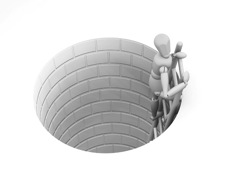
“I wish my _________ would ___________” will have a greater chance of happening if you climb out of the pseudo safe haven of the wishing well into the light of day. The view here is panoramic and presents more choices to act on not found in the dark hole of wishing.

We hear lots of advice about “planning for the future.” It would be more solid counsel if we changed one word – “doing for the future.”

There’s no harm in daydreaming unless it’s your lifestyle. It’s quite fun to craft a magical future from time to time. It gives our imagination a good workout. But things will not work out if that’s all you do.

I’ll end this post with some sage advice from author, Wayne Dyer: “Go for it now. The future is promised to no one.”

All the best,

John


Be Sociable, Share!


August 29, 2014

Sensory Acuity

Filed under: John Morgan's Blog — John Morgan @ 6:37 am

C674389 mIt’s my experience that many people have no clue when they’ve “lost the room.” That means they continue talking but don’t notice that no one is listening.

Successful comedians and successful teachers have developed their sensory acuity to the point that they immediately can tell when they’ve gone off course, and that sensation leads them back to a workable path.

Some people will throw up on you if you let them. That means that their only purpose is to say what they want without any idea that their spewings are alienating you. You’ve got to interrupt them or you’re in for a long, smelly encounter.

Like most flaws, it’s easier to spot them in others than it is to notice them in yourself. The exercise is to start noticing how you’re being received.

We can all imagine the guy at work in the break room telling an off-color joke to someone, not noticing that there are others within earshot who may be offended. But can we begin to notice that lack of sensory acuity in ourselves?

The key is to pay attention while you are speaking. Start noticing others’ reactions in real time. Also, pay attention when someone is speaking to you rather than going inside your head and planning what you are going to say next. That practice is at the top of the list of communication killers.

There is a very successful self-help author who is the worst “professional” public speaker I have ever encountered. He is intent on getting out his message but isn’t getting the message that half the room has disengaged. That’s lack of sensory acuity. Good thing he writes well.

His attention was completely on himself. It never came out to see what others were up to. I’m genuinely surprised he didn’t trip on his way to the podium.

Just giving a bit more attention on how you’re being received will give your message a greater chance of getting through and not have people mentally check out on you.

All the best,

John


Be Sociable, Share!


August 27, 2014

What’s Your Reward?

Filed under: John Morgan's Blog — John Morgan @ 6:43 am

C695058 mWhat’s your reward for doing what you do? That was a question The Grasshopper posed this morning.

We do lots of “necessary” stuff in a day, a week, a year, a lifetime, but do we ever stop and consider the reward?

Is there one?

My guess is that if there wasn’t one, we would eventually find a way to stop doing what we do.

I invite heresy when I assert that Mother Teresa wasn’t entirely altruistic when doing her missionary work for a lifetime. There was a reward in there or she would have stopped doing it long before death stopped her.

Even selfless people get a reward.

Notice it’s easy to complain about what you do, but if you keep on doing it, there’s a likely reward that you’re overlooking.

With the advent of social media, it’s easy to read parents’ complaints about doing what they “have” to do. Rarely do I read about the reward they get for doing it.

We won’t stop complaining anytime soon, but it just may be worthwhile to balance our complaints by considering the rewards.

What’s your reward? If there isn’t one, my guess is, sooner or later, you’ll pursue something else that provides one.

My suggestion is to become a bounty hunter and find out what your reward is. It will tamper down the complaints long enough to have a rewarding experience.

All the best,

John


Be Sociable, Share!


August 21, 2014

I Don’t Care

Filed under: John Morgan's Blog — John Morgan @ 6:36 am

C300316 mThe Grasshopper was singing in the shower this morning and belted out this tune: “I Don’t Care is a Lonely Place to be.”

It dawned on me that the more things you don’t care about, the more isolated you become. The more isolated you become, the less you care about. It’s a downward spiral.

There is a priority to things we care about. For example, #3 on your list may be #497 on mine and vice-versa. But at least we have a list.

People who live the “I don’t care” mantra don’t have a visible list.

There is a new trend going on in Facebook-ville. You are “called out” by a friend or family member to post three things a day you are grateful for and do it for 5 days.

It’s really a focusing exercise to find out what you care about.

The practice forces you to come up with a list, and a byproduct of the exercise is reconnecting you to what you care about.

If you’re lonely, call yourself out and make a list of what you care about. It’s a catalyst that leads you to connection, leaving “list-less” isolation behind.

All the best,

John


Be Sociable, Share!


August 14, 2014

Evolving

Filed under: John Morgan's Blog — John Morgan @ 6:57 am

C429801 mThe Grasshopper offered up a new definition this morning: “Evolving: When new thoughts come more often than judgements.”

I think it is helpful to notice there is a difference between discernment and judgement. My sense is that discernment is fact based; judgement is based on pre-judgement. Based on my definition, that makes judgement an old thought.

When we have a judgement, it’s nothing new, just an old judgement revisiting. We don’t learn anything new with a judgement.

A new thought comes in un-judged. There is no prejudgement to compare it to.

So how do we evolve to new thoughts vs. judgements?

Notice the difference.

When a thought pops in, take the time to notice whether it’s old or new. By doing so, you are putting your thought apparatus on notice that you’re paying attention to what it’s delivering.

Just by noticing the flavor of your thoughts, you set up a filter that makes old thoughts harder to get through. New thoughts are much faster and more porous than any filter can handle, so they just breeze on by, while the older, slower thoughts get stopped at the border.

Want to evolve? Start noticing your judgements.

All the best,

John


Be Sociable, Share!


August 13, 2014

Predestination?

Filed under: John Morgan's Blog — John Morgan @ 6:13 am

C507903 mJust for the record, I’m not yet a believer in predestination, but I do believe there is a mold for us to grow into. Let’s call that mythical shape a “Star.”

I’m not sure we arrived on Earth to do some specific, predetermined thing, but I know for sure we can grow into something specific.

You can be a star at something. You just have to grow into that shape. One is waiting for you to put yourself into and take form.

It takes willingness and effort on your part but you can condition yourself to be a star.

Look to the night sky as an example. There are a zillion stars out there with room for zillions more. The universe sends you a message every night to join the club.

Grow into the mold that’s waiting for you.

You can choose your starring role. It takes more than wishing on a star to make it happen. You have to participate in your own stardom. That means to go to work on something that attracts you. It doesn’t have to be anything major, just something that has some gravitational pull. Reminds me of a story . . .

Some 30 years ago I was on vacation and watching a morning TV show. They had a guest on talking about pain management for childbirth using hypnosis. I was fascinated. I had read a few books on hypnosis and tried my hand at it on an amateur level, but nothing like what I had just seen. I was propelled forward by my interest to contact the producer of the TV show to get the name and contact information of their guest.

I made that call and this fellow told me his former business partner had moved back to Boston and was always looking for good people for his seminar business. I lived in Rhode Island, a stone’s throw away and called this man’s former partner and got an invite to come view his seminars.

I learned quite a bit from watching what he did and within a month, I was working part-time for him. I worked at this new found passion and stepped into a career mold that was waiting for me.

Was I destined to do this? I don’t think so. There were a number of molds out there waiting for me; this is just the one I chose to give effort to and grow into.

There is a star mold waiting for you. It doesn’t matter how young or old you are; it’s there waiting for you to make a concerted effort to pour yourself into it.

You can get moldy if you only think about it. When you take actual steps towards that mold, that’s when you start to take shape.

I’ll leave you with a guiding principle and the signature phrase of the late Casey Kasem, “Keep reaching for the stars.”

All the best,

John


Be Sociable, Share!


August 8, 2014

The Price of Admission

Filed under: John Morgan's Blog — John Morgan @ 6:54 am

Outside looking inThe price of admission is admission.” So said the brown-as-a-berry Grasshopper who must have been vacationing at a seaside resort these past couple of weeks.

I wondered what he meant.

You can’t get in if you don’t know you’re out came to mind. In where? Out of what?

What is it we need to admit? One answer that came to mind is that we can’t do it alone. Thinking that we’re an individual entity keeps us outside looking in. We are not included. That keeps us outside and feeling unloved.

In puts us in the same melting pot as everyone else.

As long as we can’t admit that we’re like everyone else, we will not be admitted and will feel an ever-present sense of exclusion.

If you have ever had the thought “No one cares about me,” you have not paid the price of admission, which is to admit that you’re just like everyone else.

An “excluder” lives in a world of differences. The more difference we can come up with, the more we remain outside.

Setting your differences aside is one step towards inclusion. We have enough innate differences without having to manufacture a litany of additional ones that make joining the human race a lot harder.

Everyone can afford the price of admission; it’s just a matter of noticing that, up until now, you’ve been unwilling to admit that you need to pay to get in.

All the best,

John


Be Sociable, Share!


July 31, 2014

When No One’s Looking

Filed under: John Morgan's Blog — John Morgan @ 5:05 am

C164823 mSeems to me that one of the marks of being an adult is to do the “right” thing when no one is looking.

By “right,” I mean the thing you would do if eyes were on you.

Reminds me of a story . . .

I was a road warrior for many years, traveling to many cities and having to eat at many different restaurants. I developed the skill to tell if the manager was on duty or not. It was immediately apparent to me often before being seated and handed the menus.

Something was off. The music wasn’t suited to the patrons seated at the tables, the wait staff was inattentive, empty tables weren’t cleared of used dishes, etc.

I would casually inquire if the manager was on duty and the answer was almost always, “No.”

It didn’t surprise me because having been a manager of people for many years, I got to see the “when the boss is away, the employees will play” dynamic at work.

But this isn’t about my lame superpower; it’s about growing up.

What is accomplished when you cheat at Solitaire? You cheat yourself out of your dignity, the same as you do when you don’t do what you agreed to do.

Growing up is keeping your agreements. I never took the EST training so popular in the 70s, but the founder of EST, Werner Erhard issued one of my favorite quotes: “The reason life doesn’t work is because people don’t keep their agreements.”

Growing up requires integrity. Every time you give yours a pass, you water it down to the point that you no longer have it.

Who can you count on? My guess is that person’s integrity is intact and is a card carrying adult. Who can’t you count on? That’s a person caught in adolescence who’s always checking to see who’s looking.

Both actions take effort. It’s a matter of where you put your attention. Is yours on avoiding your agreements or is it focused on your integrity?

Our lack of integrity is transparent but we act as though no one can can see it. The main person we cheat is ourselves when we don’t do what we say we’ll do.

Who ever stated, up front, that they’ll over-promise and under-deliver? But that’s exactly what you’ll do if you act differently when eyes aren’t on you.

For me, it’s really this simple: If you want a seat at the adult table, eat your vegetables when no one is looking.

All the best,

John


Be Sociable, Share!


July 22, 2014

Selective Memory

Filed under: Uncategorized — John Morgan @ 9:35 am

One of life’s blessings is not being able to feel physical pain that happened in the past. We can certainly remember the incident but cannot recreate the pain. Anyone who has had a child or kidney stone can relate.

Too bad that’s not the case with emotional pain. It seems we can’t have selective memory when it comes to emotional hurt.

We can attempt to color the past a certain way to recreate an airbrushed history but both the incident and the pain are contained in the memory.

The Grasshopper had this to say on the topic: “Sensing what used to be is always bittersweet.”

There will be enough memories that pop in to our awareness on their own without having to go digging for them. When you purposely dig, you will unearth a pile of unresourceful emotion along with the pictures of sunshine and rainbows.

Living in the past is not possible, but feeling its pain is.

Referencing the past can be useful to add perspective, but past that, it’s often a drama class that keeps you stuck in the first act.

Go to any bar late on a Tuesday night and just listen to the patrons’ stories. The “used to be” and “missed opportunities” soliloquies dominate the narrative. Ask any hairdresser about the stories he or she hears. They punctuate the past.

What is the purpose? My experience is that people believe that if they tell their story just “one more time,” it will relieve the pain. That never works.

Resist the temptation to visit the past on purpose. It can bring you an unadulterated warm fuzzy from time to time, but, by and large, you will inflict more pain than you will experience pixie dust.

I am reminded of the observation of my late teacher, Dr. Dave Dobson who said, “You don’t have to go to the dump to remember what garbage smells like.”

The past is not a springboard forward. That leap can only happen in the present.

Where do you want to go? If you answer “back into the past,” that fairy tale will end with the wolf eating you for lunch, again.

All the best,

John


Be Sociable, Share!


July 16, 2014

Tinted Windows

Filed under: John Morgan's Blog — John Morgan @ 6:45 am

5388023911 a610cc27a6 zI used to think I was special in my ability to see through people. Then I realized everyone owns this skill. My “specialness” faded a bit when I realized I didn’t see that.

Have you ever just known something about someone you just encountered even before they took an action or spoke a word? My guess is you answered “Yes.” That means you own the skill.

If you know this about an other, the corollary must be accurate. They can see through you too. We act as though we have “tinted windows” when it comes to our “secrets,” but they’re on parade for anyone willing to trust their sensations.

That’s the key: Trust your sensations.

When you get a “vibe” or “gut reaction,” resist the temptation to go into debate mode in your mind and just sit with the feeling for a moment and trust its accuracy without having to stockpile evidence to validate your sensation.

Sensations are raw, unfiltered events that arrive well before any evidentiary thought. Adding thought to the sensation waters it down until you start to doubt your own calibrating mechanism.

If you’re getting fooled more often than not, you are ignoring your gut.

I’m not claiming it’s the only tool you own, it’s just the most useful; yet we let it go unused and sit at the bottom of of toolbox.

Gut reactions are not only useful in dealing with others, they’re also a barometer to use for where to head next. I just saw a TED talk from Mangus Walker, an unassuming man who followed his gut to heights he may have never attained had he paid attention to the overabundant logic that would spray water on the fire in his belly.

If you judged Mangus’ book by its logical cover, you may come away with the judgement that you’re dealing with a “long haired, bearded, hippy loser” rather than a highly successful entrepreneur who followed his gut.

We can all learn a lesson from Mangus Walker.

Discover that you own a gut and pay more attention to it than you do now. It will head you in directions that limiting logic can’t see and add to your ability to notice transparency.

All the best,

John


Be Sociable, Share!


« Previous PageNext Page »