GrasshopperNotes.com - Thoughts for inspired living


June 20, 2016

Look Around

Filed under: John Morgan's Blog — John Morgan @ 5:20 am

Japanese Tree 2

Underside of a Japanese Maple Leaf


I got this piece of advice from a photographer: When you are scoping out a scene and it’s just not looking good enough to photograph, turn around and look the other way and chances are you’ll discover something quite worthwhile.

Seems this piece of input goes well past photography. How often do we mistakenly judge a book by its cover?

That’s the time to take a breath, exhale slowly and look in another direction. My experience is you will find something there that dismissal will never discover.

There is more to others than your judgements about them.

I find that I use judgements as a protection mechanism. If I’ve had a lousy experience with someone and come in contact with another who seems to have the same qualities as that person, I look past them. I miss a lot by doing that.

When I explore people past my prejudice, I often find that there is a lot more there. Connections are made when we push past our judgements.
Reminds me of a story I’ve told before . . .

I used to go to this dry cleaner because they did a wonderful job of pressing shirts – the best I had ever experienced. But my experience there was not pleasant. There was this irascible woman behind the counter who could turn “up” into “down” in an eye blink. I always left with well pressed shirts but with wrinkly feelings.

Then one day I had it with her snarly attitude and was about to give it to her with both barrels. Just as I was about to explode, this question came out instead: “You seem to be so unhappy.” That’s all it took. This woman burst into tears and told me the story of her and her brother. They were put in separate orphanages as children. They found each other years later and developed an extremely close bond. He was now dying of cancer and that inseparable bond was about to be broken. This hardened woman softened before my eyes and I got a hug along with my shirts that day. Every visit thereafter was with the person I took another look at.

When you feel an instant judgement come up, “look around.” You will make connections that heretofore went straight to the “Lost and Found.”

All the best,

John
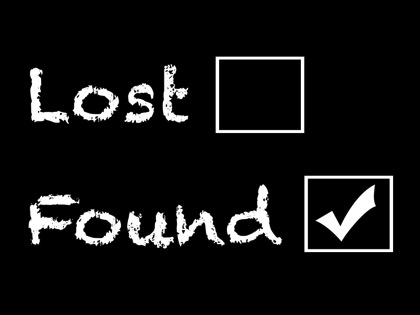
Lost  Found


Be Sociable, Share!


June 16, 2016

Is Better Best?

Filed under: John Morgan's Blog — John Morgan @ 5:41 am

Best

Here’s a Throwback Thursday quote from The Grasshopper from many Thursdays ago:

“Good, Better, Best” Are Words That Cause Unrest – Grasshopper

Who was the best boxer, ice skater, swimmer, artist, singer, actor, guitarist, photographer, philosopher . . . ? Who’s better at (fill in the blank)? What’s a good place to go to eat? All of these questions have multiple answers and they often provide fuel for countless fires.

“Good, Better, Best” can start discussions that often end up as arguments. That’s because they elicit opinions, and opinions are often considered facts by the people offering them.

Just monitor your own conversations and notice how often you offer a “Good, Better, Best” opinion and then notice how the conversation becomes a competition.

There is a workaround. Eliminate “Good, Better, Best” from your questions and responses and replace them with preferences and report on your personal experience.

“The ribs I enjoyed the most were from a place called JR’s in Baton Rouge, Louisiana” is less likely to start a fire than “The absolute best ribs are from JR’s in Baton Rouge, Louisiana.”

Can you see the difference?

When you report on your experience without “Good, Better, Best” you are less likely to stir up unrest.

If you really want someone’s opinion, there is no problem with a “Good, Better, Best” question. But it’s a useful practice to notice how often “Good, Better, Best” leads you down a path of escalation.

I think this is a good way to lead your life for better results and the best possible outcomes. “Them is fightin’ words.”

All the best,

John


Be Sociable, Share!


June 9, 2016

Music to Your Ears

Filed under: John Morgan's Blog — John Morgan @ 4:33 am

Volume

Here’s a Throwback Thursday Jukebox selection from The Grasshopper:

“Turning Up The Volume Reduces Our Ability To Listen.” – Grasshopper

Increasing the volume may work with music, but with human thought it only produces distortion.

There are musical nuances we may miss at lower volumes, but the delivery of cacophony into our mind is in direct proportion to how much we crank up our internal volume.

The louder the volume, the less of an opportunity there is to hear anything but our own thoughts. We become incapable of listening. It’s time for an agreement.

Make an agreement with your mind that when you are only hearing your own thoughts that you turn down the volume. Install a triggering mechanism into your mind that notices when your mind is totally occupied with your own thoughts. Just the fact that you notice, automatically turns down the volume. Reminds me of a story . . .

My late teacher Dr. Dave Dobson introduced us to the concept of “Bad Hypnosis” – Something I’m threatening to write a book on. Bad hypnosis is something we are exposed to every day. If we don’t notice it as being such, we will reinforce the unproductive suggestions being offered.

These suggestions start in childhood and continue throughout our life if they go unchecked. For example, take the proverbial “Money doesn’t grow on trees” maxim as one of your early experiences with bad hypnosis. Every time it gets reinforced, you experience a mindset of lack.

What Dave had us do was take a nice deep breath, exhale slowly and close our eyes. He then suggested as we were in this less stimulated frame of mind to ask the part of our mind that recognizes bad hypnosis to alert us every time we experience it. The exercise took less than a minute and 22 years later I see and hear bad hypnosis everywhere.

The agreement I’m requesting that you make is to ask the part of you that notices full volume to automatically turn it down. After requesting this a few times, something magical begins to happen. You start to notice the process happening on its own without any conscious request on your part. It becomes an automatic response.

When the volume of your internal dialogue is lowered, you have the ability to hear something besides your own thoughts. It’s this ability to hear something new that has us dance off in new directions rather than retracing our steps again.

Take the time to make an agreement with your mind to notice and turn down the noise. It only takes a minute of quiet time and with a little practice, what you hear will be music to your ears.

All the best,

John


Be Sociable, Share!


June 8, 2016

Mind Your Own Business

Filed under: John Morgan's Blog — John Morgan @ 6:19 am

Bed of nailsThe Grasshopper gave me this alive observation last night: “The more mindful you are, the more life you’ll feel course through your veins.”

The amount of life we live without noticing is staggering and life stunting. Mindfulness is recognizing and feeling what you are doing while you are doing it. We just don’t do that often enough and each time we go on mindless autopilot, we miss experiencing our life.

I’m not sure that perpetual mindfulness is attainable. Perhaps someone lying on a bed of nails in some remote corner of the globe has achieved it but I don’t think it will happen for you and me. It’s the pursuit of mindfulness more often that will pay us dividends.

To become more mindful is to become more aware of what we do. That can be as simple as noticing the temperature of the water on your hands when you wash them. Mindful eating is an effective digestion and weight management technique as well.

When we’re in conversation with someone, mindfulness is giving your whole attention to what they are saying. Going into your head and rehearsing what you want to say when they take a breath is about as unmindful as we can be, and it’s an insured way to let our life flee.

Note: If you are “multi-tasking,” your attention will be scattered and your aliveness will be on vacation.

I could be making all this up, so you’ll have to prove it to yourself: that more life is available to you just by paying attention to what you do.

Feeling life is more rewarding than ignoring it. It just takes a bit of mindfulness. Paying no heed to life will cost you; Mindfulness is priceless.

All the best,

John


Be Sociable, Share!


June 4, 2016

Butterflies and Bees

Filed under: John Morgan's Blog — John Morgan @ 8:05 am

Ali

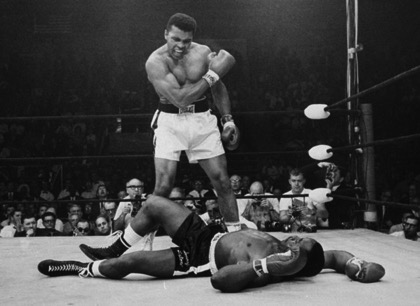
I remember it like it was yesterday. I was lying on my bed with my Emerson transistor radio (which was about the size of a John Grisham hardback novel) listening through the static to a far off radio station broadcasting the Cassius Clay/Sonny Liston heavyweight championship fight.

I wanted to know how my new boyhood hero would fare against the “big ugly bear.”

Also that night, I was introduced to a broadcaster I had never heard of before: Howard Cosell. He unknowingly entertained the pants off me with his post fight interview with former heavyweight champion Joe Louis by using his multi-syllabic words with a man who had obviously taken too many punches. It was pure theatre.

Back to the bout: Imagine my elation when my idol knocked out his opponent in the first round.

It was the beginning of a man crush I had for years for the one they call “The Greatest.”

I was sad to see his skills erode in the ring towards the end of his career, but was even more saddened that he would suffer from a debilitating, neurological disease from his early 40s until his death yesterday at age 74.

Like many people of my generation, I served in the Armed Forces but many of us were not in favor of the war. That’s another way Muhammad Ali captured my attention: standing up for what he fervently believed in regardless of the consequences. He truly was a hero to me.

But like all idols and heroes, he had feet of clay (no pun intended).

No one can stand the scrutiny of a perpetual pedestal. He was human and had his human frailties, but his overarching impression to me was that of an iconoclast who just wouldn’t settle for “the way it was.”

He broke all sorts of barriers and paved the way for other people of color to have an easier time than he did.

I am sad that Muhammad Ali is gone but he will always be remembered by me as the brash young man who said, “Float like a butterfly and sting like a bee.” Rest in peace, Muhammad Ali.

All the best,

John


Be Sociable, Share!


June 3, 2016

How Right Can Be So Wrong

Filed under: John Morgan's Blog — John Morgan @ 6:31 am

Tug of war

Woke up with this Grasshopper tidbit: “‘I’m right’ is an invitation to fight.”

When we display the attitude or position of being right, we invariably make the person(s) on the other end wrong.

Wrong is an experience that none of us wants for ourselves. It’s too painful.

But when we attempt to assign wrong to someone else, they don’t want it either and war breaks out.

A long time ago I was introduced to substitute words for right and wrong. They are “accurate and inaccurate.”

Try these assertions on for size and assess for yourself if one feels better or worse.

“You are wrong.”

“Your information is inaccurate.”

My guess is one lands more softly than the other and promotes further conversation, where the other one draws a line in the sand.

Reminds me of a phone call I was on yesterday . . . I was going over a bill I received and I was clearly overcharged. I was “right.” I could have easily come from the position of right but I knew from experience it had the high potential to set up a fight.

I took another angle instead. I asked the person who sent the bill to “help me figure it out.” I told him I was confused about the charges and needed some clarification. As we talked over the items in the bill, it became clear to him that I was overcharged.

It was a quick and pleasant conversation without either of us having to claim the higher, superior ground and the issue was solved.

Begin to notice how the words and mindset of “right and wrong” are alarms that send you and others to your battle stations.

I won’t claim to be right about this – just accurate. Take this new idea out for a spin and discover for yourself that you don’t always have to go to war to win.

All the best,

John


Be Sociable, Share!


June 2, 2016

Coincidental Happiness

Filed under: John Morgan's Blog — John Morgan @ 5:43 am

Broken hummel Edit

Here’s a Throwback Thursday reminder from The Grasshopper from 5 years ago:

Happy Accidents Are Realities That Are Labeled As Coincidences – Grasshopper

The best definition I ever heard for coincidences came from Wayne Dyer in his book, “The Power of Intention.” He wrote, “The word coincidence does not describe luck or mistakes. It describes that which fits together perfectly.”

I’m not yet an aficionado of Astrology but I do like one of their phrases: “The planets are aligned.” When reality lines up in our favor, it’s a happy accident – all things fit together perfectly.

If we go a bit deeper than the surface, we find that all things fit together perfectly at all times. Life is one big happy accident below the surface. It’s when we filter life through our conditioning that we only get to see the “perfection connection” from time to time.

The Grasshopper reminded us long ago that “Reality is Perfect.” Even Ivory Soap doesn’t measure up.

Who would deliberately arrange to break a treasured, family heirloom so that it had even more intrinsic value after the break? We could never assemble that logic. Reminds me of a happy accident . . .

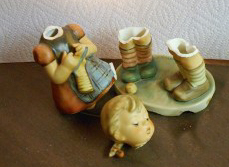
About 15 years ago my grandson, who was 4 at the time, was secretly playing with a figurine that my wife’s deceased mother had left her. It had more sentimental value than worth, but he dropped it and it broke. My wife burst into tears. It was one of the few, tangible things she had to remind her of her mother. We assured her we could glue it back together but nothing could console her until . . .

My grandson, who had recently seen “The Lion King” went over to his sobbing grandmother and said, “Grammy, hakuna matata, no worries.” More tears ensued but these were tears of joy that came from the words of comfort offered by a little boy.

The figurine took on new stature and had more value than it ever enjoyed before because of one of life’s happy accidents.

There is a connection to everything below the surface. We just don’t have the intellectual apparatus to be able to see it at all times. We get glimpses but not much more. It’s only when we bypass our critical consciousness that we’re able to make connections that are consciously invisible.

Our intellect, no matter how developed, can only take us so far. It’s when we temporarily suspend its mighty computing power that we get to visit the land of coincidences where things fit together perfectly. It’s here that we get to see that all things are connected. Nothing is separate and apart.

Just knowing that the “Land of Coincidence” exists makes it possible for more happy accidents to show up in our everyday world.

Any mind calming practice will take you to the place where all things are connected because mind calming is the gift that keeps on giving. We collect more evidence with each visit that connection is everywhere at all times. Just knowing that connection is present breeds confidence – confidence that you’ll be guided to more “coincidental” connections.

Reality happens in every moment. It’s truly the only thing we can count on. We can continue to rail against it, or we can decide to explore the connections it offers. It’s exploring the connections that have us bump into coincidences that turn into happy accidents.

All the best,

John


Be Sociable, Share!

May 26, 2016

Dancing with the Dominos

Filed under: John Morgan's Blog — John Morgan @ 5:16 am

Dominos
Since it’s Throwback Thursday, here’s a Grasshopper tidbit from years ago:

“Small Adjustments Start Big Changes” – Grasshopper

“Our routines run us” is the foundation of what I believe, and when our routines don’t serve us well, we opt for wholesale change. That practice rarely works, and if it does, it’s often short lived.

Starting with too big a piece is what I refer to as “eating a whole cow at once.”

I’m saying more than “start with baby steps” here; I’m advocating for adjustment rather than preaching lock, stock and barrel change.

Let’s pretend that you have no rhythm and are a lousy dancer. You set out to change that. You take your two left feet and head to the Johnny Castle Dance Studio. I don’t care how many dance lessons you take you’re not going to wind up on “Dancing With The Stars.”

Your wholesale change strategy is to be a top dancer rather than enjoying dancing. If you are just focused on change, you miss the fun dance steps that can take you there. That’s where adjustment comes in. Change needs a new angle of view.

We get boxed into one way of seeing things and we think the only way to get out of our predicament is to make a major change – to be someone different than who we are. That desire causes us untold pain. We don’t want to work with who we already are, but want totally to be someone else.

When you go for wholesale change, it’s like being in the witness protection program. You are forever looking over your shoulder at the person you really are while pretending to be someone else. It causes lots of strain.

We rarely shift our position a few degrees and take another look. That’s adjustment.

Adjustment is taking time to look at you from another angle of view. Doing so is the catalyst for big changes.

You don’t need to change who you are; you just have to adjust what you do. Your routines are what need to be adjusted, not you. You’re fine; it’s your behavior that keeps you stuck.

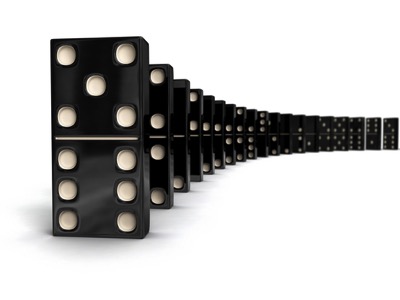
Here’s the best news: You don’t have to adjust the behavior you want to work on; you can adjust any automatic behavior you have and it will have a domino effect.

Just start noticing things you automatically do and slightly adjust that behavior. Then notice something else that you automatically do and adjust that too. What you are training yourself to do is to notice your automatic pilot approach and making slight adjustments. You are looking at you from a different point of view – as an outside observer.

When you notice any routine that you run and make an adjustment, you are making an adjustment to your whole automatic system. After some practice, you’ll start to notice other things changing, slowly at first, and eventually they’ll reach a tipping point.

The key is to start noticing any automatic behavior and then adjust the routine slightly. Adjust every time you notice and before too long, you’ll notice changes happening everywhere.

It could be as simple as noticing that you say, “God bless you” when someone sneezes. Make a small adjustment and say something else or nothing at all.

Routines hold our behavior together. Looking at these routines from another angle (as that of the observer) and then making a slight adjustment causes these routines to come apart over time, making room for change.

It’s a highly effective and indirect method of going after change that’s different and much gentler than the way we pursue change now.

When you observe your behaviors from another angle of view and adjust what you do, you make change about the behaviors and not about you. That’s when big changes happen.

All the best,

John


Be Sociable, Share!


May 24, 2016

Died in Prison

Filed under: John Morgan's Blog — John Morgan @ 6:44 am

Leaf

This isn’t meant as a political statement, just a personal revelation about how I feel when I see or hear news about the death penalty being administered: I feel awful.

I can’t explain it or tell you its origin. I only know that I get a visceral response even when it’s given to some of the nastiest people you’ll ever read about.

I also get a similar feeling about people who are given life sentences with no possibility of parole.

I remember famed attorney Mark Geragos arguing at the sentencing phase for his client Scott Peterson who was convicted of murdering his wife Laci. Geragos argued to give him a life sentence instead of death by painting a vivid picture of how awful a life sentence would be. Here are just a couple of excerpts from his plea to the jury:

“Prison is an awful, awful place. Scott Peterson, if you vote to spare his life, will be placed into a cell that is roughly the size of a king size bed. Roughly encompasses you four jurors right here. That’s the size of his cell. And he would be in that cell roughly the size of a king size bed for the rest of his life. He will die in that cell.”

“This is not a minimum security facility. He will be at the highest Level 4 of the California Department of Corrections every day for the rest of his life. And one of those days some guard is going to walk by, and some guard when he walks by six months from now, or a year from now, is going to knock on the cell and say, Peterson, your mom is dead. And a year after that, six months after that, another guard is going to walk by and bang on the door. Peterson, your dad is dead. Six months, a year after that, five years, ten years after that, your brother John is dead. He’s not going to be out there enjoying anything. It’s not any kind of a picnic for him.”

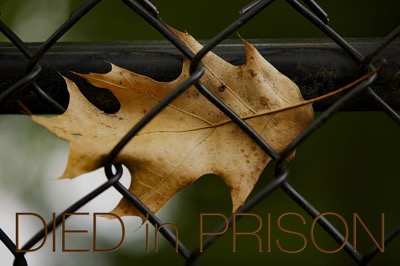
This is not a lobby against the death penalty or an argument to improve prison life. I’ll leave that to the more qualified. My mission is to highlight that many of us are in self-made prisons and our sentence can extend until our death if we let it.

It’s my experience that many of us will argue that we had nothing to do with how we got into this prison. We will point the finger out there somewhere and rail against the bars of reality until we “rale” our last breath.

The first step towards parole is to recognize that you are your own jailor. It’s you who locks the door that keeps you from experiencing more. You put yourself here, and if you want to be there, it’s going to take more than a fervent prayer.

It takes recognition that you are the judge, jury and executioner of your own life and responsible for your own imprisoning actions.

Once you admit to your part in your sentence, it gets lighter. Light begins to form at the end of the tunnel and you’ll gravitate towards it like a plant in a dark place grows towards even the tiniest bit of sun.

Taking personal responsibility for our situation is freeing.

It’s a big step to admit that you had a large hand in being where you are because it’s so easy to blame others and ignore our part. That finger pointing strategy doesn’t work and insures a life sentence.

Your chance to be free is to recognize that your situation is “on me.”

Once you cop to your part, options you have blinded yourself from show up and pave the way to the straight and narrow path towards freedom.

All the best,

John


Be Sociable, Share!


May 20, 2016

Organized Mess

Filed under: John Morgan's Blog — John Morgan @ 6:02 am

It seems like an oxymoron, but I find that “OrganOrganized Messized Mess” best describes many functioning lives that I’ve witnessed. It is certainly a descriptor I would use for my own life.

I’m one of those people who yearns for an organized desk and from time to time I make the effort to make it look that way. Yet, most of the time, it looks like the aftermath of a ticker tape parade. (Do they still have those in the computer age?). But the good news is I know what pile of rubble I need to look in.

The same is an accurate description for many of our lives. To a portion of the outside world, we may look like organized messes but if you look at our production, we’re doing just fine.

This is a round about way of saying that there are many ways to get to heaven.

If you give someone a step-by-step formula and insist they follow it, they may get the same result, but you will not get access to their creativity or inspiration. Left to their own devices, they may have a “messier” way that delivers the same or better results.

Having rules for everyone is an exercise in control and my experience is that control doesn’t work well with the messy.

If someone’s way is not working, it may be beneficial to introduce them to your way, but if you petulantly insist, the downside of messy is likely to persist.

Everyone raises their family differently and may I be so bold as to say, “There is no ‘right’ way.” Yet upstanding citizens come from those differing approaches which brings me to the point of this writing: We all approach life from a different angle and the only “right” angle is found in geometry.

The only question we need to ask ourselves is: Is my angle of approach working? If the answer is “No,” seek out a new angle. If the answer is “Yes,” stick with your organized mess.

All the best,

John


Be Sociable, Share!


« Previous PageNext Page »