GrasshopperNotes.com - Thoughts for inspired living


March 10, 2009

Culture

Filed under: John Morgan's Blog — John Morgan @ 7:46 am

Culture has a lot to offer and so little to give.

Culture is always a reflection of what’s happening in peoples’ minds. It’s the reflection of our “Wants and Desires” Fairy on steroids.

If you gave a child everything they pointed to in the candy store, they would quickly become ill. Such is the case with too much culture.

Advertising is the mouthpiece and drug dealer of culture. It attempts to keep our wants and desires juiced up and whetted so that we convince ourselves that we can’t live without what culture offers. Sadly, culture becomes a way of life – a glitzy, cheap imitation of real life.

I have a Facebook friend that’s so caught up in culture that they wouldn’t know real life if it handed them a business card. It would be amusing to read the postings of this person if they weren’t so sad. Their life is a like a comic book filled with action galore and frustration at every turn of the corner. The continuing message they send is, “It’s out there somewhere and I’m going to find it.” The difficulty is that one empty quest turns into another. They’re not enjoying the step they’re on, they’re just using it to get to the next step, and then to the next step towards the empty promise of culture.

The Grasshopper offered a concise phrase to sum up the cultural trap.

“Going everywhere and doing nothing.”

They have confused activity with life. Because you’re running in place at 60 miles an hour doesn’t mean you’re getting somewhere.

Our current economic situation is the result of too much culture. Yes, the brilliant people who have pinpointed the causes for chaos are all accurate. They all have a piece of the puzzle that lead to the current collapse. The table beneath, which holds the puzzle, is culture gone amok.

People have been chasing rainbows that promise a pot of gold at the end. It’s always been a fairy tale but we just found out it’s not real. Who really needs a Hummer?

The American Dream is collapsing because it’s been turned into a nightmare by culture. We’ve begged, borrowed and stolen to purchase something that will never deliver – culture. We’ve maxed out.

The false promise is always this: That something out there will give you more life.

Many people are being forced to awaken from this bad dream. This is the silver lining in today’s economy – opportunity. It’s an opportunity to notice that you’ve been chasing the horizon, and an opportunity to take steps to find another route towards life. You have enough evidence now to realize the cultural highway won’t take you there.

Yesterday is not returning. Our values are changing. We are at a crossroads.

Reminds me of a story . . .

I was in the broadcasting business when AM radio was dying. We had hints of its demise but we were in denial. Then it reached the tipping point where FM became the norm and AM became the thrilling days of yesteryear. We were resisting change in something we thought was forever.

Culture is cracking and those hanging on will crumble when it falls.

The carrot of culture has been gnawed down to a stub. Real sustenance happens when we discover we can feed ourselves from the harvest that real life provides. Real life is peaceful, internal satisfaction that doesn’t need any outside agent to propel its existence.

Find that internal peace and you’ll find the missing piece that culture has been promising all these years.

All the best,

John

http://JohnMorganHypnosis.com

http://GrasshopperNotes.com

http://cdbaby.com/cd/johnmorgan

http://www.cafepress.com/grasshoppernote/3580301

http://HypnosisForDogs.com


Be Sociable, Share!


March 9, 2009

The Point of Peace

Filed under: John Morgan's Blog — John Morgan @ 7:56 am

A point is a place in space. Think of planet Earth as a point in a vast universe.
Now think of another round object – a circle. Some ancient math wizard determined that a circle has 360 degrees. Using a circle to represent all of space, we camp out on a specific arc of that circle, at a certain degree number, and that represents our point of view.

We don’t realize that we can adopt any point on the circle, at any time, to change our angle of view.

The reason we don’t change angles that often is because the one we’re on has become comfortable. We, in effect, get stuck there.

When we encounter others stuck on a different point than ours, we have a difference of opinion.

Notice how a difference of opinion escalates into judgements about the people viewing life from a different angle than ours.

That difference of opinion generates more opinions. This has us dealing with the layers of opinions about the person, rather than with the person themselves.

These judgements are comparative in nature. You compare them to you or to your ideal. They are viewed as “less than” which makes you or your cause “more than.” This adds kerosene to an already hot fire. They do the same thing.

The story of the general on the hill best illustrates how a broader view can save the day. The soldier at his point on the battlefield can only see what’s right in close view. His only mission is to battle for that point. He doesn’t have the vantage point of the general who can see the entire field and can call for a retreat to consider other points.

No one likes a protracted war, not even trained soldiers or wizened generals. They, like you, want to find a way to peace with people who are taking up other points.

Here’s a starting point offered by The Grasshopper:

“Not less than . . . Not more than . . . Same as.”

This is the point of peace.

When we start to feel judgements creeping in, that’s the time to remind ourselves that others are not less than us, more than us, but simply the same as us. Our sameness is disguised by the layers of opinions that we’ve built up defending our particular arc of the circle.

“Not less than . . . Not more than . . . Same as” is an approach that opens us to explore more of the circle and see different angles of view. This makes us whole. Whole in relation to another is “Same as.”

It’s easier to entertain another’s point of view when we become them – “Same as.”

The truth is we are them, only our coverings are different.

This “Same as” approach doesn’t mean differences won’t continue to crop up. They will.

“Same as” gives you the greatest opportunity to explore a solution from the common ground known as the point of peace. More can be accomplished from this vantage point than can ever be seen while on the battlefield.

This is a view you’ll want to practice during times of peace so it becomes second nature during periods of war.

I’m not asking you to believe this approach works. I’m requesting that you test drive it and see if it can take you to the top of the hill.

All the best,

John

P.S. Beginning today, you can have my weekday blogs automatically E-mailed to you. Just enter your email address to the right of my blogpost and click the SUBSCRIBE button. It’s that simple.

http://JohnMorganHypnosis.com

http://GrasshopperNotes.com

http://cdbaby.com/cd/johnmorgan

http://www.cafepress.com/grasshoppernote/3580301

http://HypnosisForDogs.com


Be Sociable, Share!


March 6, 2009

Pursuit

Filed under: John Morgan's Blog — John Morgan @ 8:17 am

What’s your dream?

It’s a question worth pondering.

Many have stopped dreaming because they are convinced they’ll never get what they were dreaming about. There is a lot of truth in that conviction. You may never get what you’re dreaming about, but when you stop dreaming you stop your life.

Dreams are the incentive that keeps life pouring through you. You allow life to dam up in a stale pond when you leave the dream behind.

The Grasshopper prompted this blog yesterday when he piped up out of the blue and said:

Having a dream is as important as achieving a dream.”

It instantly made sense.

Life is really all about the individual steps and has little to do with the planned outcome.

Life flows when we have a pursuit. It stagnates when we stop taking steps.

There are those who abuse their dreaming power and entertain so many, that the sheer number paralyzes them not to pursue any of them. They’re caught in the cultural land of “nice to have.”

“Nice to have” has little passion behind it and will have you start and fizzle each time. That’s not dreaming; that’s wishing.

Dreaming has juice behind it. It’s something that you really desire. It’s something worth pursuing because it’s the pursuit that keeps life’s juices flowing.

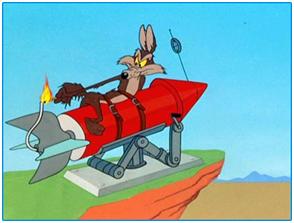
There is an aliveness in Wile E. Coyote. His dream is to catch the Road Runner. The chances of that happening are nonexistent, but it doesn’t prevent him from reveling in each step he takes while pursuing that dream.

It may dawn on you one day that a particular dream no longer makes sense for you and decide to set it aside. That’s prudent assessment that helps you streamline your pursuits. It’s when you decide to stop riding altogether that it’s most appropriate to saddle up again. Reminds me of a story . . .

When I was a teenager there was an older guy named Bernie who came to the community swimming pool one day. He was a trick diver – a stuntman on a diving board. He did all sorts of pratfalls and choreographed slips, and he was quite entertaining and talented.

He was giving some of us younger guys tips on our dives. He was coaching me on doing a back flip, a dive I had desired to do but never attempted. I did do the flip but hit my head on the board. It was a minor graze but it scared the heck out of me. I had no interest in ever attempting a back flip again.

Thank God for Bernie. He got up on the diving board and explained to me, and then showed me why my mishap happened. He replicated my dive including the slight graze on the board. He then got me up on the board with new instructions to do it again. I did fine. My back flip dream came true.

You may or may not achieve your dream, but when you give up the pursuit, you deaden your life.

Here’s my suggestion. Dust off an old dream you’ve stored away and start stepping towards it. You may or may not get there, but the pursuit of it keeps life flowing. It’s a much better feeling than being frozen with fear that you may never reach your dreams.

All the best,

John

http://JohnMorganHypnosis.com

http://GrasshopperNotes.com

http://cdbaby.com/cd/johnmorgan

http://www.cafepress.com/grasshoppernote/3580301

http://HypnosisForDogs.com


Be Sociable, Share!


March 5, 2009

Your Gift

Filed under: John Morgan's Blog — John Morgan @ 8:18 am

What’s your unique gift?

What is that you do just about better than anyone you know?

Don’t be modest. You know that you have something that comes to you so easily, to the point that it causes many people to notice or comment. That’s your gift.

The Grasshopper describes it this way:

“Gift: Something you didn’t work at.”

Did you ever notice that your gift comes to you naturally?

You see things other people don’t see, you hear things other people don’t hear, and you sense things that others don’t feel. That’s a gift.

There are skills that you consciously build that may make you gifted, but that’s not your gift. Let’s pretend that you are a world class wine taster. You can easily identify the oak cask from which the specific tannins you taste came from. That’s a talent but not your gift. You had to work at that.

What present were you handed that you’re not taking full advantage of? This discovery often leads people to the second career or avocation that recharges their engine.

How many people do you know who are good at what they do but don’t like what they are doing? You don’t have to raise your hand, you’re in the majority. Reminds me of a story . . .

I had a gifted friend who went to art school and excelled. Upon graduation, he was offered a job by Hallmark in New York City as an artist. Quite the gig. Six months later he came back home and announced he had quit his plum job. Everyone wanted to know why. He summed it up this way, “I got tired of drawing fuzzy bunnies.” In this case, his gift was misapplied. He discovered that he liked the connection he made with people during live drawing sessions and has had a stellar, rewarding career as a portrait artist.

He could draw without effort well before anyone showed him how. It was his gift. Reminds me of another story . . .

I had another friend who could play any musical instrument soon after picking it up. He could pick out a tune on a washboard. He had perfect pitch and was an incredible play by ear musician. He honed his music reading skills by additional study, but he was gifted well before he knew what an instrument or an F# was. The sad part of this story is he drowned his gift. To say he is a hopeless drunk would be a compliment. He didn’t capitalize on his gift. To hear him tell it, it was his parents’ fault that he never succeeded to the heights that matched his skill level. He wasted his gift.

Are you keeping your gift under wraps?

How can you best use your gift?

These are questions to take with you into your quiet time. There is something that is a perfect match for your gift. Engage your curiosity and start the process of finding that form fitting glove.

The process begins by noticing you have a gift. We all do. You may have been hiding it under a rock or downplaying its value, but it’s there.

Next, ask yourself, “What is the purpose of my gift?” You will get answers. You just have to be open to letting them come through.

Finally, it’s time to put your gift on display. You can start slowly until you get more comfortable showing your stuff, but show it you must.

If modesty or fear gets in the way, remember this confidence boosting phrase: “You were given this gift for a reason.”

If you are already using your gift, you can hear my applause in the background.

If you haven’t found your gift, get off your duff and start looking. It’s in plain view for anyone who makes the effort.

This gift doesn’t belong to anyone but you, and only you can use to its best advantage.

When you show the world your gift, you’ll truly appreciate the phrase: “The gift that keeps on giving.”

All the best,

John

http://JohnMorganHypnosis.com

http://GrasshopperNotes.com

http://cdbaby.com/cd/johnmorgan

http://www.cafepress.com/grasshoppernote/3580301

http://HypnosisForDogs.com


Be Sociable, Share!


March 4, 2009

Holding the Bag

Filed under: John Morgan's Blog — John Morgan @ 10:20 am

Did you ever play musical chairs? As you may remember, there is always one less chair than the number of people playing the game. The objective is to walk around the chairs in a circle until the music stops, and when that happens, you are to scramble to sit down in one of the open seats. There is always one person left out.
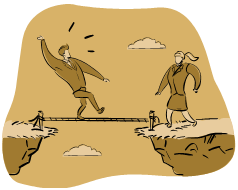
That’s called “Holding the bag.”

The feelings of isolation set in when you realize there’s not a spot for you. It happens in the game of life as well.

One of the saddest songs ever written is: “Who Can I Turn To?” (see lyrics here)

One of the saddest lines is, “But who can I turn to if you turn away?”

We have all been left holding that emotional bag, whether through death, divorce, deceit, denunciation and other words that don’t begin with “D.”

The coping strategies we use when left holding the bag usually don’t work. Here are a few of the more popular ones:

“Time heals all wounds.”

“It’s really not that bad.”

“There are other fish in the sea.”

“You need a hobby.”

One that does work is one that I would have never imagined – Feeling sorry for yourself.

I’m not referring to getting locked into a “poor me” conversation in your head, or ad nauseam story telling about your dreadful situation. That’s just putting more s**t in the bag you are holding.

The operative word is “feeling.”

Can you imagine living next door to someone for 30 years and never saying, “Hello”? That’s how many people treat their feelings. It’s as though they are not there.

Men have a tendency to talk over their feelings and women tend to talk about them, but relatively few people, men or women, explore their feelings in the only place they can sense them – in their body.

Your body is the only place you can feel a feeling.

There is a feeling that goes along with bag holding. You can pretend it’s not there, talk about it in therapy for years, endure the pain because you’ve become accustomed to it OR you can feel the feeling.

We are so accustomed to running away from our feelings that staying with them seems so foreign a strategy. May I remind you that a foreign film won the Oscar this year.

When we refuse to feel our feelings, we turn a thunderstorm into a lifetime of rain. Thunderstorms pass quickly and so do feelings when we feel them. When we ignore, deny, or run away from them, the storm cloud follows us wherever we go.

I encourage you to read this week’s Grasshopper Note for a strategy to meet your emotions.

There is a sensation in your body that corresponds to the label you carry around in your head for holding the bag. Locate that sensation and stay with it – feel it. It may take a minute or it may take an hour to fully feel that sensation. And you may have to do it several times to get the hang of it. You will notice a difference. The result? Your bag either becomes lighter, you drop it, or you find a chair to sit in before the music stops.

Real change will come when you decide to feel those feelings. That’s when you find out the real truth of your situation – your bag was holding you.

All the best,

John

http://JohnMorganHypnosis.com

http://GrasshopperNotes.com

http://cdbaby.com/cd/johnmorgan

http://www.cafepress.com/grasshoppernote/3580301

http://HypnosisForDogs.com


Be Sociable, Share!


March 3, 2009

ClosetheGap

Filed under: John Morgan's Blog — John Morgan @ 10:14 am

There is only one gap worth keeping – the gap between your thoughts. All other human gaps are designed to be closed.
When there is a gap between you and something, that something remains elusive. It seems the closer you get to it, the more it moves the same distance away. Reminds me of my childhood . . .

Back then a common sight was Scottie dog magnets. I’m sure they came in different breeds but I only remember Scotties. When you brought these magnets closer together, a magnetic field formed between them and they repelled each other. The closer one dog’s nose got to the other’s, the further the second dog would move backwards. The gap remained the same. If you forced them together, you could get them to touch, but they immediately separated once you removed the pressure.

Forcing connections is not closing the gap. That’s the proverbial “you ought to meet my cousin” scenario, which NEVER works.

The gap between you and the something you desire remains in place because of resistance. It’s easy to say the resistance is provided by the other, but if you check real closely, it’s coming from you. You generate the resistance and the something you desire mirrors it back to you.

The resistance is formed when you consciously plan a strategy for closing the gap. The resistance is created in your mind, as is the gap. There is no real gap between you and anything. Everything is connected, except in your mind. When your mind perceives a gap between you and something, you create the resistance that keeps the illusion of the gap alive.

The connection to all is invisible, but it still exists. A laptop computer’s connection to the internet is invisible, but it still exists. The only time the connection doesn’t appear to exist is when we turn it off. It’s always available.

The way to make more connections with people and things is to know the connection already exists. This method is hard to grasp because of all the resistance we create by consciously planning to get something that we already have.

There are methods that would have you specifically envision what you want as already in your possession as the way to close the gap. It’s a very popular methodology that has an unreported high rate of failure. My sense is the low rate of fruition is due to envisioning the connection to something specific. The more specific you desire the connection to be, the more it seems to move away.

Focusing on the connection to everything keeps connection turned on. I encourage you to use your quiet time to focus on connection. Leave the specifics out of it, just focus on the feeling of connection. This is a meditation of inclusion. When you get too specific, you are making an attempt to mold reality to your conscious plan – a plan that keeps resistance alive and excludes most of the playing field. This has less success than hitting it off with the cousin.

When you include everything, your connections increase exponentially. When you exclude, you keep the perceived gap alive and stay disconnected.

Want what you want. Make your lists, daydream until your heart is content, but when it comes time to quiet your mind, make your mantra “Connection.”

It’s the difference between having access to the local Dollar Store or the entire internet.

Close the gap that doesn’t exist by focusing on connection. This is a process, and like any process it takes effort and repetition to get results. When you focus on connection to everything, prepare for welcome surprises that would have never shown up if you stayed focused on specifics.

Connection creates flow; specifics produce resistance.

Close the gap by getting connected.

All the best,

John

http://JohnMorganHypnosis.com

http://GrasshopperNotes.com

http://cdbaby.com/cd/johnmorgan

http://www.cafepress.com/grasshoppernote/3580301

http://HypnosisForDogs.com


Be Sociable, Share!


March 2, 2009

Debate

Filed under: John Morgan's Blog — John Morgan @ 9:27 am

Debates rarely change minds. Think back on the recent presidential debates. You most likely went in with a horse and came out with the same horse. Anything that your candidate said that resonated with the crowd, you underscored; anything they said that made the people meter dip, you ignored.

If you’re the debater, you’re so focused on making your points and solidifying your position that you don’t make room to learn anything new.

Reminds me of a story . . .

Many years ago I attended a focus group that was being held for the radio station I worked for. Four of us who worked at the station were seated behind a one-way glass in another room, apart from the focus group participants and moderator.

Every one of us entering that room had a stated idea of what the station should be doing to be more successful – more music, more personality, less commercials, less talk, more sports reporting, etc.

After viewing and hearing the group participants answer questions and offer opinions about our station and the DJs who worked there, the four of us went across the street for a bite to eat. Not surprisingly, each person brought out of that focus group a comment that made their aforementioned point. There may have been 10 points to the contrary made by the group, but that’s the one they remembered and continued to argue for.

Reminds me of a more recent story . . .

I was talking to a friend over the weekend who was debating whether to attend an upcoming workshop. She had been going back and forth in her mind all day about whether to attend or not. I offered that debating for that long is similar to debating who’s going to win a professional basketball game for the whole game. The statistics are that victory in an NBA game comes down to the last two minutes. My point was that she was taking up her entire day with an activity whose outcome could be arrived at more efficiently and with less debate.

Then The Grasshopper hopped in to the conversation and said this:

“Anytime you have a debate in your head, you’re stalling a decision.”

Debating does nothing to change anything; it just prolongs the debate. The sad thing is that when presented with this reality, we give it temporary props, and then go back to the debate.

We’ve been conditioned that if we talk about it long enough, we will make a better decision. Here’s the logic to kick that logic to the curb: You were smart enough to appreciate both sides of the debate after it ran through your head a couple of times. The continuation of the same debate after that point is abuse of the highest order, and it delays deciding.

How do you stop abusing yourself and arrive at decision more quickly? Stop debating. It’s that simple.

But how?

Notice the debate while it’s going on. The mere noticing of your internal ping pong match will interrupt the debate. The more often you interrupt the debate, while it’s happening, the quicker you’ll arrive at a decision.

Decisions make you – you don’t make them. Look at your decision history. Just notice that, in the past, when you arrived at a decision, the decision just showed up. It never comes out of debate. It comes from the quiet place that has no room for debate.

Yes, the debate may start the decision process but it never completes it – it prolongs it.

I can think of nothing more boring than watching congress debate something on C-Span. The posturing and feigned bipartisanship speeches are as predictable as the first 46 minutes of an NBA game. The debate doesn’t change anyone’s mind and delays the vote – the decision.

You can decide more quickly and efficiently by cutting off the debate. This happens more easily when you trust that there is a part of you that decides. Hint: It’s not the debater.

Think of the process like a bench trial in court. The jury is waived and the judge decides. Present each side of the debate to the judge and then go have lunch. The judge will let you know when they’ve arrived at a decision. They always do.

You have lots of practice debating and very little interrupting. Practice improving your weakness until it becomes a strength and notice how quickly you decide.

I’m thinking of creating a bumper sticker to reinforce this post – ABATE THE DEBATE!

All the best,

John

http://JohnMorganHypnosis.com

http://GrasshopperNotes.com

http://cdbaby.com/cd/johnmorgan

http://www.cafepress.com/grasshoppernote/3580301

http://HypnosisForDogs.com


Be Sociable, Share!


February 27, 2009

Your Perfect Blend

Filed under: John Morgan's Blog — John Morgan @ 10:41 am

It seems as though everyone is looking for the ideal mix. We keep tinkering with the formula in search of the perfect blend.

What are we looking to combine for this ideal potion? – Our human nature and our spirit.

There is a not a perfect blend that works for everyone. It’s quite individual, but when you taste it, there is no mistake that this is the infusion that had to be in the Holy Grail.

Like a car going over a pothole, we get out of alignment from time to time. That’s the time to check your balance and make sure your parts are in the appropriate proportions.

There is no getting away from being human. It’s a part of us that’s to be honored and celebrated. It’s when we are tilted too far in the human direction that we experience the hopelessness of being an isolated individual. We have no real connection with others because we deem them separate from us. Our relationships are superficial, and when we realize they aren’t working, we add more dashes of human to the mix in order to rescue them. That never works long term. It may get you over the hump, but that camel is eventually going to bite you in the rump.

The secret to the ideal blend is to always infuse more spirit. It is the counter balance to human’s weakness of adding too many ingredients. This practice stems from the false premise that “more is better.”

Reminds me of a story . . .

A radio consultant named Lorna Osmon has a terrific technique she uses to have radio personalities reel in their habit of using too many words to say very little. She records one of their talk segments and transcribes it word for word. She then edits out all the unnecessary verbiage without changing the message. She then asks the radio personality to record her edited version and then she plays back both the original and edited versions for them. The difference is like night and light.

Adding more spirit happens automatically when you subtract an overabundance of human. Spirit is like water; it’s always ready to flow towards a void.

The practice that always adds too much human to the blend is summed up in a phrase I coined a few years ago – “Chasing the Horizon.”

At least if you chase a carrot and catch it, you have something to eat. When you near the horizon, you only get more horizon and continue to hunger. The only way to sate that hunger is with spirit.

To make room for more spirit it’s necessary to have more spaces show up between your human thoughts. There are many ways to get to that condition of calm and there’s one that will work for you.

If you haven’t already done so, find a practice that quiets your mind and engage in this practice every day. The sensations that come out of the silence of spirit intermingle with your human nature to concoct your perfect blend.

You can keep searching for ingredients to add to your latte until you wind up in an urn, or you can start sipping the serenity of spirit and find your perfect blend today.

All the best,

John

http://JohnMorganHypnosis.com

http://GrasshopperNotes.com

http://cdbaby.com/cd/johnmorgan

http://www.cafepress.com/grasshoppernote/3580301

http://HypnosisForDogs.com


Be Sociable, Share!


February 26, 2009

No Time

Filed under: John Morgan's Blog — John Morgan @ 8:53 am

Einstein had no time for time. I may have no time for American Idol and you may have no time for watching Tiger Tiger Tiger Tiger Tiger Woods Y’all! play golf, but we seem to make time for lots of other things.

Time is a perceptual construct. We take our limited senses and attempt to cram infinity into them and come up with the notion of time. It’s all quite logical, and like all logic it lives in a box that we only perceive the inside of.

Let’s look at the concept of time regarding the word “happen.” “Happened” is in the past and “will happen” is in the future, but the only time the action of happening can happen is right now in the present.

Think of right now as the space where action happens. It was the same space that something happened in, in the past, and it is the same space that it will happen in the future. The space remains constant and is not subject to the limitations of time.

Indulge me one more metaphor. Think of a clock face as the space where action happens and then think of the hour, minute, and second hands as time. Time happens in the same space all the time. The space is right now, the only time there is.

All things happen at once in the space of right now, but we sequence them through a limited perception filter that we call time.

This brings up the question that Facebook and Twitter ask: “What are you doing right now?”

This is a focusing question that takes time out of the equation.

The action you take right now is the only one that can effectuate change. The actions you’ve taken in the past and the actions you plan to take in the future don’t exist right now. So permit me to ask the question again: “What are you doing right now?”

If you have something in mind that you want to change, the only space that change can happen in is right now. You can’t change yesterday and you have the opportunity to change tomorrow, but only by acting in the space of right now.

If you can open yourself to the idea that action can only take place right now, you will get more done in the space we call time.

Notice the question isn’t: “What should I be doing right now?” nor is it “What should I have done back then?” The question is: “What am I doing right now?”

If you can ask the question and suspend your judgements about the actions you are taking at this moment, you insert a catalyst into the process of change.

The observation of right now will get more accomplished than any 5 year or 10 step plan. They focus on what you should be doing versus what you are doing. When you continually notice the actual action you are taking right now, it reveals the space where more and different actions can take place.

It’s really this simple: Focusing on right now suspends time and shows you the space where action takes place.

This isn’t a treatise intended to have you throw away your watch or to miss scheduled appointments. It’s a focusing exercise that allows change to happen quicker.

I wonder how quickly you’ll make time to ask, “What am I doing right now?”

All the best,

John

http://JohnMorganHypnosis.com

http://GrasshopperNotes.com

http://cdbaby.com/cd/johnmorgan

http://www.cafepress.com/grasshoppernote/3580301

http://HypnosisForDogs.com


Be Sociable, Share!


February 25, 2009

At Stake

Filed under: John Morgan's Blog — John Morgan @ 8:54 am

The Grasshopper was gushing on this topic yesterday.

He had a couple of things to communicate:

  1. “To play your best, something has to be at stake.”
  2. “For a game to be interesting, something has to be at stake.”

It reminded me of a story . . .

About 13 years ago my friend Chris and I were on a supply run to Office Max. There was a basketball in the back seat of my car. I spotted an empty Office Max shopping cart next to a light pole in the parking lot and suggested we play a game of “Carriage Ball.” It was a lot like basketball, only the basket was bigger. I made up the game on the spot and we went right into competitive mode to see who would be crowned “Carriage Ball Champion.” I really don’t remember who won; I only remember the fun we had – two goofs all over each other in the Office Max parking lot playing a game that had something at stake – our aliveness.

When there is nothing at stake, no risk, our performances can be lackluster and devoid of life.

The pervasive penchant to not risk results in a flatline existence. It’s the middle ground of mundane. There are few highs and few lows – just a “steady as she goes” banality that has us die a slow, painful death that we call life.

Our willingness to risk is the catalyst to activate our aliveness. It’s only at the edge that we learn something new. When we refuse to leave the cocoon of our comfort zone, we stagnate and wither.

This isn’t a suggestion to become a thrill seeker because that just becomes an addictive drug that has you make risk an end game instead of a springboard to life.

Practice risking in low risk situations so you get in the habit of risking. Taking minor risks conditions you to invite in more aliveness to your life. When you get the hang of it, you can proportionately move to the next level.

Risking has to become synonymous with trust. You have to trust that there is a part of you that knows how to manage risks so that you get the proper return on investment. That doesn’t mean you win all the time. That would be as unexciting as playing in a fixed sporting event. Reminds me of another story . . .

My childhood pal, Gerry had a pinball machine in his basement. All of our friends in the neighborhood would play against each other to see who could compile the highest score. The bragging rights were at stake. We had fun whether we won or lost. Adrenaline was pumping in either case. Then we got the bright idea to go into the machine and disable the “tilt” function. There is a mechanism within pinball machines that automatically ends your game if you shake the machine too much. It was one of the risk factors you had to consider while playing.

When the “tilt” function was no longer a risk, we could lift the machine up, turn it on its side, and execute many other maneuvers that kept the ball in play. It was no longer a challenge and no longer fun. We quickly found out, as young boys, that when you remove the risk, you remove aliveness.

If you have nothing at stake, you can’t win. When you have something at stake, you experience aliveness whether you win or lose.

When you refuse to risk, you allow your succulent grapes to die on the vine.

There is a popular expression that I would like to amend. Please change “No risk, no reward” to “No risk, no life.”

I’m betting that if you invite in more risk, you’ll be more alive everyday of your life.

All the best,

John

http://JohnMorganHypnosis.com

http://GrasshopperNotes.com

http://cdbaby.com/cd/johnmorgan

http://www.cafepress.com/grasshoppernote/3580301

http://HypnosisForDogs.com


Be Sociable, Share!


« Previous PageNext Page »