GrasshopperNotes.com - Thoughts for inspired living


July 14, 2014

Planning to Be Upset

Filed under: John Morgan's Blog — John Morgan @ 7:24 am

Island GreenI can think of no bigger waste of energy than planning to be upset, yet we all do it.

“If so and so doesn’t give me the answer I’m looking for, I’ll be upset.”

“if my team doesn’t win the big game, I’ll be upset.”

“If he does what I’m expecting he’ll do, I’ll be upset.”

Notice that the focus is on upset in a time that doesn’t yet exist. That’s the lunacy of planning to be upset.

Not only does it become a self fulfilling prophesy, it upsets us now when there are no actual conditions present.

When you rob yourself of the present, you can’t help but rob yourself in the future. It becomes a patterned way of doing things.

It’s helpful to notice that you’re planning to be upset. It can actually be very comical when you consider the absurdity of it. My step-mother had an expression she used that sums up this upsetting practice: “You holler before you’re hurt.”

Planning on how you’re going to feel at a future date contaminates and limits the actual choices you’ll have in the future.

Look no further than professional golf. These are the best players in the world but watch what happens to them when they are presented with a water hazard. Their accuracy percentage goes way down. Let’s say it’s a 130 yard shot over water to hit the green. If you compare all their 130 yard shots without water present to the ones where it is, you will find them missing the water shot more often.

What happened? They were planning to be upset. That water hole will be there every round. What would happen if they just played the hole when they got there rather than having it be the focus of attention well beforehand? Ask any golfer, professional or weekend hacker, who has played a course where there is an island green, when they started thinking about that hole.

You lose life enriching spontaneity when you plan to be upset. Be upset when you’re upset, just don’t throw an engagement party for it.

There will be enough upsets in our lives without planning them. Just begin to notice how often you engage in this practice. Just noticing the pattern, while it is happening, is often enough of a wedge to keep you from going in the water.

All the best,

John


Be Sociable, Share!


July 10, 2014

Peace Out

Filed under: John Morgan's Blog — John Morgan @ 6:46 am

C734733 mThe Grasshopper must have been watching the United Nations on CSPAN just before he offered this: “There won’t be peace out there until there’s peace in here.”

I’m sure we can all agree that world peace is a noble goal, but the probability is that it’s unreachable.

That’s not being a “Negative Nellie”; it’s just an educated projection based on world history.

Does that mean we stop making attempts? No, because the actual pursuit of something delivers more results than attainment. That’s because we spend more time pursuing than we do attaining and if our pursuit is peace, we experience it every step of the way rather than once as a result.

The question then becomes where do we pursue peace – in here or out there?

“Out there” seems to be trying to convince others to do something “our” way. Peace is an internal process first. You can’t tell others about your peace; you have to show it to them before you can offer it to them.

Would you want to go to couples counseling with a therapist that’s in a contentious relationship? Yes, they have lots of counseling experience and will probably say all the right words, but they’re more likely to project their angst rather than show you their peace.

Internal peace is more transferrable. That’s why pursuing peace “in here” is a more productive choice.

You will make more connections when you bring peace with you. It’s more powerful than any debatable logic.

Here’s a little experiment to practice: Go into an every day interaction you have with someone holding a place of peace for them inside of you. Pretend that you have a little space inside of you that’s just filled with peace and is dedicated exclusively to them. Then just go and have your interaction.

My experience is that they will sense your peace. It’s the same sense a person gets when they know an approaching dog is friendly.

Pursue your peace daily and reap the rewards. The added benefit is this: You’ll have a much better chance of turning the world inside out.

All the best,

John


Be Sociable, Share!


July 9, 2014

The Lesson of the Ant

Filed under: John Morgan's Blog — John Morgan @ 6:48 am

Ant LessonWas reminded of an old lesson by an ant yesterday.

I was sitting outside on my front steps having a snack as an ant was making its way towards me. I put my middle finger and thumb together and then just flicked it away. The ant landed one step below and continued on its trek from where it landed.

The Lesson of the Ant is simply to pick up from where you land.

How often do we get flicked by reality and ignore the Lesson of the Ant?

It seems we want to pick up from where we were, not where we are. That’s a strategy that will keep our destination forever on the horizon.

Reminds me of a conversation I was having with someone the other day. This person peppered our exchange with the phrase “I’m working really hard.” The intent was to let me know that their lack of reaching their destination wasn’t due to a lack of “hard” work.

Hard work is not an insurance policy to get what you want. You can be working hard on the wrong thing and falsely expect that it will deliver you to your destination.

At the core, this person wanted to begin from where they weren’t and no amount of hard work was going to make that happen.

That reminds me of another story I’ve told countless times. Years ago, I was out of work and looking for another job in broadcasting. I finally got an offer but my concern was the pay was less than I was making at my previous job. I was lamenting this fact to my friend Paul who succinctly delivered the Lesson of the Ant when he said, “It’s more than you’re making now.”

The illusion is that we can begin from where we were; the reality is we can only pick up from where we are.

Where have you landed? That’s has to be your starting point otherwise you’ll have a never ending series of frustrating fits and starts.

I’m grateful the ant showed up at my front porch picnic. His geography lesson was a refresher course that will get us back on course after a rough landing.

All the best,

John


Be Sociable, Share!


July 8, 2014

Living is Responding

Filed under: John Morgan's Blog — John Morgan @ 6:28 am

C641342 mThe Grasshopper offered this post 4th of July firecracker this morning: “If you want to live more, respond more.”
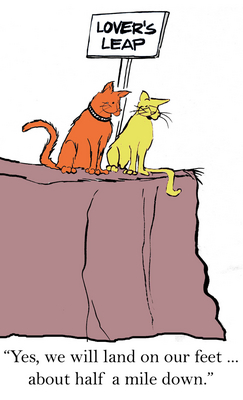
Are you getting caught up in your life story? That’s what most of us do and that’s not living; that’s existing.

The difference between existence and living is the same difference that’s between reacting and responding.

A reaction is just that – a re-action. We’ve offered it so many times before that we already know the stale state of affairs it delivers. There’s nothing new in a reaction. It takes on a predictable life of its own. That’s existing.

Responding delivers something new and that’s living.

Responding to life is a way of life that’s worth cultivating. It delivers a fresh crop of living each time we remember to dig deeper than a reaction.

Austrian psychiatrist and Holocaust survivor, Viktor Frankl said it this way: “Between stimulus and response there is a space. In that space is our power to choose a response. In our response lies our growth and freedom.”

Want to remain in a miserable existence? It’s easy, keep offering the same reaction to a given stimulus.

But if you’re looking for more living, there’s nothing more lively than a response.

You have the ability to choose how to respond; you just have to recognize that you own that ability, and then take the next step and use it.

The space that Frankl refers to comes about when you pause and let your reaction just pass by. Right behind it are a bevy of, heretofore, unseen choices that haven’t been considered. Choose one of them and offer it up and feel life come back into your daily existence.

Living more life is choosing a response; reacting robs you of that opportunity.

All the best,

John


Be Sociable, Share!


July 3, 2014

The Evolution of Belief

Filed under: John Morgan's Blog — John Morgan @ 7:25 am

C668736 mThere is a school of thought out there that if you believe in something fervently enough, you can make it happen. My experience with that notion is that it has the win ratio of a lottery ticket.

My experience with believing is that the following conviction is more accurate: Not believing something is possible keeps it from happening.

Sounds like a Lose-Lose proposition: Believing won’t get you what you want and not believing also lessens your odds.

It’s not my intention to set up a debate, only to look at results.

What have you been believing in that isn’t delivering results? Multiply that belief by the number of years you’ve been believing it and you have your own personal scorecard. When you subtract your belief from the equation, you will notice that the raw data reveals that your belief isn’t working. You now have the personal proof that you need a new belief.

Let’s look at the other side of belief. You notice that something is possible for lots of other people, but you don’t believe it’s possible for you. There is really nothing standing in the way of you getting that something too, other than the belief that you can’t have it. Often, this “I can’t have” belief is below the level of consciousness – a conditioned mindset that acts like a governor on our actions.

Again, it’s helpful to look at the data. On paper, there is nothing blocking you from getting what you want but, in fact, you’re not getting it. That should immediately suggest to you that you have a belief standing in the way. The biggest example of this I know of is people and money.

Others with the same education (oftentimes less), same opportunities, same background have found a way to make more money than you. You wonder about that. What is it that has them succeed in that area that you are lagging way behind in? You will immediately look to circumstances as the culprit but upon inspection, that doesn’t hold up. You can illustrate to these folks, in no uncertain terms, that it’s their mindset towards money that keeps them behind, but they dig in their heels and look for more circumstantial evidence.

Until they pull apart their belief, piece by piece, they will remain a slave to it. Are rich people really more evil? Is buying something top-notch really extravagant? Is buying that kind of car really showy? The list of prejudices goes on and on and contributes to your ongoing lack of money.

Evolution of beliefs is a two step process:

1. Inspect your long held belief that’s not working and adopt a new belief.

2. Find the ones that are working, but not so well, and pull them apart.

You won’t have to look far for either.

Changing beliefs is rarely instantaneous; it’s a process. it takes inspection and dissection before you get to the point of inflection.

In order for your beliefs to evolve, you have to do more than believe.

All the best,

John


Be Sociable, Share!


June 30, 2014

Arguing

Filed under: John Morgan's Blog — John Morgan @ 5:52 am

C166059 mThe Grasshopper must have been channeling Aristotle over the weekend when he asked this: “Do you argue to win or to solve something?”

You may have answered “both” to this question but the more emphasis you give to winning, the longer the life of the argument.

Winning is a mind based concept; solving something involves action past intellectually arguing who’s right. The longer you hold on to being right, the longer the argument will be, delaying any chance of solving the dilemma.

Like you, I’ve witnessed and have been involved in countless arguments that go nowhere. The need to win is the culprit. It blinds us to solutions. When our focus is on victory, we can’t get close to a solution with someone because we are so prickly.

The telltale sign of someone looking to win is when most of their effort is to make someone else wrong. That is pure petrol for keeping an argument going. Reminds me of two words I learned years ago: accurate and inaccurate.

I certainly knew these words but using them in an argument was a lesson well learned from the late Dr. Dave Dobson.

He claimed that it would be useful to update the words “right” and “wrong” in our vocabulary to “accurate” and “inaccurate.” The updated versions just don’t have the same emotional baggage. Try these sentences on for size and see how soon you’ll agree with Dave:

1. You’re wrong.

2. That’s an inaccurate statement.

“You’re wrong” sets up a polarity response of “I’m right” from another with a guarantee that this argument will go on into the night.

“That’s an inaccurate statement” puts the emphasis on accuracy and the statement, not the person.

Arguing, for the most part, gets bogged down in being right or not being wrong. When either of them is your focus, the argument will be long.

Start to notice where your focus is when you choose to argue. It will be a great predictor as to whether you’ll arrive at a solution or not.

Best as I can tell, some people just like to argue. I hope they have the good sense to become trial lawyers because outside the courtroom, arguing to win is a losing strategy.

All the best,

John


Be Sociable, Share!


June 26, 2014

What’s Possible?

Filed under: John Morgan's Blog — John Morgan @ 5:44 am

C515616 mWhat little piece of creativity is itching to get out? That’s a question The Grasshopper asked this morning.
Everyone is creative; we all create, all the time. But there are some pieces of creativity that we keep bottled up. We keep them at arm’s length by crowding our attention with notions of “not able.”

When our consciousness is focused on what we can’t do, our creativity has a more difficult time getting through.

What is it that you think you can’t do? Once you rule out world-class ballerina or Olympic swimmer, there is a lot we’re capable of creating that’s not seeing the light of day, simply because we keep it locked in with limitation.

Here’s something to try on for size: Start asking yourself, “I wonder what’s possible?” Make possibility inquiry part of your daily routine. My experience is that our subconscious mind works well with questions. The answers we receive aren’t instant – something the conscious mind demands and rarely gets. This other-than-conscious part of us does its work in the background but it does need something to work on to spur its creativity.

Take the time to create some physical reminders for yourself. Put a 3 x 5 card or Post-it note by your bedside with the question “What’s Possible?” on it. Stick one on your bathroom mirror or on the refrigerator. Put one in your wallet or purse. Surround yourself with possibility.

The secret to receiving is asking. Ask “What’s Possible?” often and watch your creativity begin to flow and your notion of “not able” become an outdated fable.

All the best,

John


Be Sociable, Share!


June 18, 2014

Approach

Filed under: John Morgan's Blog — John Morgan @ 5:44 am

0I was attending a seminar 12 years ago when the seminar leader said something profound: “The way you do one thing is how you do everything.”

He was suggesting that how someone held the microphone when asking a question gave away more than their mike technique; it showed you their approach strategy to everything.

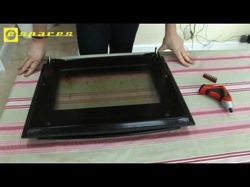
Reminds me of my sainted mother . . . When she ran into an every day problem, like the stove not opening easily, she approached it with the force of a Category 5 hurricane.

She didn’t have a “gentle” approach to anything. I will admit that some of that strategy has “rubbed off” on me and to one of my sons.

While the hellfire approach is very effective in certain situations, it has its limitations.

Is your approach limiting you?

It’s worth noticing. Are you a one-trick pony? Most people answered “No” to that question when, in fact, the evidence points in the direction of “Yes.”

Just stopping to notice your approach presents you with more options. If you don’t notice, you’ll continue on automatic pilot and every approach will be on the same runway – one that’s on a collision course with reality.

There are two immediate benefits to noticing your approach:

1. It makes you more flexible.

2. It keeps your oven door from being ripped off.

All the best,

John


Be Sociable, Share!


June 12, 2014

“A” for Effort?

Filed under: John Morgan's Blog — John Morgan @ 7:31 am

C167557 mIt seems to me there is a difference between effort and pursuit. I haven’t arrived at any conclusion yet but let me give it a little effort and pursue the topic.

It seems the main difference is how you feel when making an effort. Effort suggests getting past inertia and doing something, and that something can be taxing to your mind and body. For example, there is an expression you may have heard from someone after their exercise routine: “It’s a good hurt.”

The effort taxed them when they pursued exercise but the sore muscles the next day indicated to them that they were on to something – thus, “good hurt.”

For me, “Good hurt” sums up pursuit.

Let’s pretend that you did a “selfie” video of you doing something nondescript that brought you enjoyment and you posted it online. Many people may call your video lame but you got a warm fuzzy pursuing your expression. Contrast that with a video that you thought you “had” to make to make a point. A lot of effort may have gone into it, but there was no feeling of reward after posting it. It’s just something that “had” to be done.

The effort you expend in pursuing your goal is colored by the way you feel during and after making the effort. If it’s a non-rewarding feeling through and through, it can’t be categorized as pursue.

Winning is an end game. Pursuit is enjoying playing the game.

If you are expending a lot of effort without some feeling of reward, you may get an “A” for effort, but not enough reward to feed your soul.

I’m guessing that’s why we have hobbies – to feel the reward of pursuit.

I’m a lousy golfer. I only play 10 times a year at most, but I have enjoyed every round I have played since taking up the game in 2002. I have played with many people over the years and I can tell you many of them put in lots of effort but were not feeling the reward of pursuit. To paraphrase Mark Twain, “They ruined a 4 hour walk.”

I have expended some effort putting out this point of view and feel rewarded even if this makes no sense to you. I think that is the essence of pursue.

In life, there are many unrewarding things we have to do. The thing to get curious about is: “What’s pursue for you?”

All the best,

John


Be Sociable, Share!


June 11, 2014

Outgrowing Labels

Filed under: John Morgan's Blog — John Morgan @ 8:23 am

Bumper stickers 620bThere is a concept I learned many years ago that says, “Once you label it, you limit it.”

The labeling makes it one thing and, by doing so, makes it difficult to be another. After all, suppose a hammer wanted to be a saw, what chance would it have with that label?

“But a hammer is a hammer and a saw is a saw,” you say. Yes, that’s accurate, and assigning them labels may pigeonhole them into being used only one way. How creative have you gotten with a hammer or saw when you used it for something other than the purpose the label implied?

But I’m not lobbying for removing the labels from our tools, just outgrowing our labels in life. We have stuck on so many that we look like an old car with a zillion bumper stickers.

Once you are labeled as something, it’s hard to be something other than that label – especially someone with no labels. The person with the fewest labels has unlimited potential for growth – just like a child before they get limited by labels.

Ask a pre-school class who’s the best artist in the class and just about all the hands go up. Ask the 2nd grade class the same question and watch the significant drop off in hands being raised. The labeling process begins early.

The roles we play in life are labels and also limiting. Father’s Day is coming up this Sunday and I will admit that, for me, “Father” is the hardest label to outgrow. I, like you, have identified with a label and that makes it even stickier.

I love being a Dad and now a grandfather but the role is limiting. If you continue to treat your grown children as children, you limit them as well. I’m sure that if Bill Gates’ mother was still alive and he was visiting her, she may be asking him if he had money for the tolls for the drive home.

So how do you outgrow a label? Begin to notice how identified you are with it. If you justify it, you just put more glue on it. Just noticing the identification starts the un-labeling process.

The purpose of outgrowing our labels is to give us room to grow. Identifying with our labels just keeps us stuck.

All the best,

John


Be Sociable, Share!


« Previous PageNext Page »