
GrasshopperNotes.com - Thoughts for inspired living


November 4, 2014

Outgrowing

Filed under: John Morgan's Blog — John Morgan @ 8:23 am

1085519 peter pan 782 superThe Grasshopper offered this “for adult eyes only” tip: “Outgrowing is growing up.”

Many years ago I was introduced to a phrase by the man who taught me the seminar business. He would say, “Outgrow the old way and grow into a new way.”

I took that to mean that severe, monastic changes are less likely to stay in place. Change is a growth process that takes place over time.

Apply that notion to bringing up children. It seems our job is to get them from a complete stage of dependency to independence in X amount of years. It doesn’t always happen on our timetable.

For me, I didn’t grow up until I was in my 30s. I was married and had a family and tons of responsibilities that I tended to, but part of me was still an “I don’t see the big picture,” resistant teen. I hadn’t outgrown the patterns that kept me immature.

It’s my experience that you have to notice the patterns you want to outgrow before growing up can begin. People can point them out to you, but that’s not as successful as noticing them on your own.

Sometimes it takes a seminal event to get you to notice. For me, it was the death of my father-in-law. I didn’t realize it until he died that I owned the pattern that he would be there to take care of my wife and our children if I fell on my face and couldn’t provide for them. He was my safety net.

I noticed my pattern that sad day and began the process of outgrowing the old way and growing into a new way, long before I even heard that phrase.

Here’s what I discovered on my path to growing up: Resistance is a telltale sign of immaturity that will keep your patterns in place. What is it that you’re resisting? That’s what needs to be outgrown in order to grow up.

Reflect on the question and you will discover, in due course, what it is you need to outgrow.

Asking “What am I resisting?” will open your eyes to a growth plan that, if followed, will get you a seat at the adult table.

All the best,

John


Be Sociable, Share!


November 3, 2014

Advancing Hate

Filed under: John Morgan's Blog — John Morgan @ 6:29 am

C718004 mThere are so many ways to get your message out there with the advance of social media.

My question is: What are you advancing?

You may answer, “A point of view.”

The real question is: What ingredients are contained in that point of view?

Too often, I see that one of those ingredients is hate. If you are espousing hate in your point of view, it not only reflects on you, it poisons you.

What you may be unaware of is that putting hate out there doesn’t rid you of it; it just amplifies it in you. Advancing hate is not cathartic. It’s like rabbits and coat hangers; it just multiplies.

Not only do you announce your viewpoint to every one of your followers, you also give them a look into your soul that’s tortured with hate.

You can have a position or preference for or against something without being hateful. It just takes some noticing.

Notice, first, that your anger doesn’t dissipate when you post or repost a hateful message. It just becomes more entrenched. Second, become aware of the anger in you. Don’t judge it; just notice it. Just noticing feelings without justifying or castigating them has a way of getting them to metabolize. Finally, retire your poison pen. It will be much easier after noticing because you’ll have much less hate to spread around.

I don’t have statistics to back this up but it’s my experience that people who advance hate are more ill and die sooner than those who don’t. I’m sure there are exceptions, but too few to count.

Don’t stop advancing hate because it’s the “right” thing to do. Do it because it’s good for you.

All the best,

John


Be Sociable, Share!


October 31, 2014

Election Day Strategy

Filed under: John Morgan's Blog — John Morgan @ 6:38 am

C559800 mI’ve come up with a new election day strategy that I’ll be using on Tuesday.
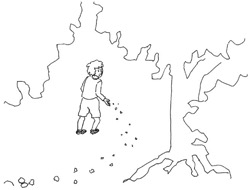
It’s an elegant strategy that only has you ask yourself one question before you pull the lever for or put a pencil mark next to a candidate’s name.

I came up with this strategy while watching TV ads featuring the candidates or seeing them in a debate. The best news about this strategy is that you really don’t need to know their party affiliation or position on any topic to make your choice.

If you vote a straight ticket, this strategy won’t appeal to you because you’ll be too lazy to employ it.

I know there’s a bumper sticker strategy out there already that says, “Vote the Candidate.” That may get you to vote for a person you like or vote for them because they’ve adopted a position you agree with, but that’s not a guarantee they’ll perform well when in office.

My strategy doesn’t guarantee their performance either, but I’m certain the odds are better for them doing so if you use this strategy.

So what’s the one question you’ll want to ask about a candidate before you vote for them? It’s simple. Just ask yourself, “Would I follow them up a hill?”

If the answer is “yes,” vote for them. If the answer is “no,” don’t. If you wouldn’t follow either of the candidates up a hill, don’t vote for either one.

An unquestionable experience I own in life is this: The people who will disappoint you the most are the people who don’t follow through.

Based on that philosophy, Would I follow them up a hill? will get you more leaders who will follow up when they get to Capitol Hill.

All the best,

John


Be Sociable, Share!


October 30, 2014

Making Mistakes

Filed under: John Morgan's Blog — John Morgan @ 7:40 am

Bread crumbsSeems to me that the biggest mistake we all make is not knowing we’re making a mistake.

The karma of that action is summed up in any TV courtroom drama: “Ignorance of the law is no excuse.” We’re going to pay a price.

What laws are we breaking that we’re oblivious to? Too many to count.

So how do we home in on the mistakes we’re making that count the most? It’s easy. Look to where you are losing in life.

There is a trail of breadcrumbs that leads up to that loss. Do some reverse engineering on the loss and you will find a set of steps that lead you there. They are your mistakes.

The key to outgrowing mistakes is to recognize them and take steps away from repeating them.

A side road that will lead you away from discovering and owning your mistakes is to assign the blame for them to someone else. “If he/she hadn’t done that, I would have never found myself here.” That’s the statement of a person destined to continue to lose.

Another side road to keeping our mistakes in place is to defend them. It’s amazing to me how vociferously we argue for our limitations. That is always a losing argument.

As long as we draw breath, we will make mistakes. That’s right up there with death and taxes. So avoiding mistakes isn’t the goal; owning up to them is.

Once you own your mistake, the odds are in your favor that you’ll repeat it less often and increase your winning percentage.

Too proud to admit your mistakes? Don’t make me quote the bible as to what “goeth” before a fall. The good news is you don’t have to admit them to anyone but yourself. Own them and outgrow them. It’s a winning combination.

All the best,

John


Be Sociable, Share!


October 28, 2014

Become Optimistic

Filed under: John Morgan's Blog — John Morgan @ 7:56 am

Horse blindersIf you’ve read anything that I’ve written over the years, you know I think that positive thinking is positively putrid as a strategy. It just doesn’t work that well.

It’s a sexy idea that has worse odds than flipping a coin.

I know this sounds like heresy and, since it’s close to Halloween, you may want to burn me at the stake, but let me have my say before you light the match.

Thinking happens and then we label it. That’s how our mind works. We have a thought and the labeling process happens after the fact. Positive thinking is a process where we want to feed our mind thoughts from the outside in order to change our thinking. Thinking is an inside out process, not the other way around.

Positive thinking is like attempting to control the dialogue of a prerecorded TV show. Your thinking, like the dialogue, is just what shows up on the screen and you can only label it after it happens.

I will readily admit that positive thoughts feel better than negative thoughts, but you can’t change your thinking by force feeding yourself positive thoughts. You may come up with a positive affirmation like “I am healthy, wealthy and wise” and repeat it over and over again and each time you say it, it is offset by your subconscious conditioning which often counters with “You’re sick as a dog, poor as a church mouse and dumber than a stump.”

Just look at your track record with positive thinking. If you get a positive outcome, you give credit to the process. If you don’t, which is most of the time, you say something negatively inane like, “I didn’t think positively enough.”

Putting a St. Christopher’s medal in your car doesn’t make you a better driver and thinking positive doesn’t deliver positive outcomes.

So, what the solution? May I suggest optimism. It has a much better track record.

Optimism is a mindset worth conditioning.

Optimism allows you to notice and see past the blinders of negativism and opens your vision to a broader perspective. Optimism isn’t denying that negativism is there, it just considers it as another option. Positive thinking denies negativism and only gives you one option, one that rarely works.

Being optimistic isn’t wearing rose colored glasses; it’s recognizing all that’s out there. Negativism denies there’s anything out there past what its limited vision sees.

Optimism opens your eyes to the entire playing field and lets you see things that would have been missed if you didn’t remove the blinders. Positive thinking just limits your options to things that are unlikely to happen.

If you are going to develop a habit, I highly recommend that you develop one that will broaden you, not limit you. Develop the habit of optimism. It has two major benefits:

1. You’ll see more clearly.

2. Believe it or not, your natural thinking will become more positive as a result.

All the best,

John


Be Sociable, Share!


October 24, 2014

Wising Up

Filed under: John Morgan's Blog — John Morgan @ 4:39 am

C647531 mIt’s amazing to me the number of things that pop in when your mind gets quiet or is otherwise occupied. That’s when the creative part of us I refer to as The Grasshopper goes to work.

Yesterday, when I was totally engaged in a project, The Grasshopper sauntered in and offered this: Aging is insured; maturity is optional.”

Every day we get a little older but not necessarily wiser. Best as I can tell, maturity is wising up.

We’ve all been exposed to the notion that history repeats itself. What might not be as apparent is that we can stop that trend by wising up.

What is wising up? For me, it’s noticing and correcting behavior that’s not working. I don’t know about you, but I still have a lot of wising up to do.

I don’t think I’ll ever notice all the behaviors and probably will correct even fewer of them, but I find that it’s in the pursuit of correction that I find the reward.

You find out a lot about yourself and gain maturity when you go to work on a behavior that’s not working. You won’t have to look very hard to find one. They’re like dog poop – they’re everywhere.

Reminds me of a story . . . I met this man a while back whose babbling would make brooks jealous. He rambled on and on about whatever was on his mind, never noticing that he was making everyone within earshot disappear. He never noticed that no one was listening and that he had a hard time getting through. This fellow is quite accomplished and very knowledgeable but he would benefit greatly by wising up to his immature behavior of throwing up on people and not noticing.

He will age and continue to prattle and his life will continue to be a communications battle . . . unless he notices. Then and only then will he have the opportunity to mature.

What’s not working for you? If you don’t know, summon the courage to ask someone close to you; they do.

Once you get past the denial that you don’t do that, you can go to work on that behavior. Notice it every time it comes up and interrupt it. The interruption puts you at the crossroads of change. The more often you interrupt it, the more mature you get.

In closing, the words of George Bernard Shaw come to mind: “We are made wise not by the recollection of our past, but by the responsibility for our future.”

All the best,

John


Be Sociable, Share!


October 23, 2014

Kidding Yourself

Filed under: John Morgan's Blog — John Morgan @ 7:20 am

C166285 mI plead guilty to the following charge: Finding something you don’t own.
You’re totally innocent if you find something and don’t claim ownership, but you are the worst of guilty if you claim ownership but are only renting.

Have you been introduced to a new way of life? You are enthusiastic and excited by your finding. That’s an intoxicating feeling and one that’s to be cherished.

But suppose that your outcome doesn’t match up with your enthusiasm – meaning that you can talk about an experience but you don’t own it.

I know I’ve told this story before but it bears another go-round.

My boyhood friend’s mother was the dietician at the local hospital. She could cite all the ingredients in any consumable product and would preach what was good and bad for you anytime she had the opportunity. She also weighed 300 pounds. She found something she didn’t own.

I’m reminded of the Ralph Waldo Emerson quote: “Who you are speaks so loudly I can’t hear what you are saying.”

In the past, I’ve been guilty of preaching what I didn’t own. I let my enthusiasm get in the way, but at the end of the day I was mostly talk and no action.

That amounts to the time honored phrase, “Kidding yourself.” The problem is if you let it go on, the joke is on you.

What are you preaching that you’re not following? The remedy is this: Either follow your own advice or retire that sermon.

You don’t have to make a formal announcement, just take down your soapbox and wash your mouth out with experience. Then what you say will have an air of freshness and authenticity.

All the best,

John


Be Sociable, Share!


October 22, 2014

Logic

Filed under: John Morgan's Blog — John Morgan @ 7:13 am

C158086 mThe Grasshopper showed up at the gym yesterday wearing his “Pepsi Generation” headband and had this to say: “Logic won’t get you through an emotional jam.”

How many times will we attempt to solve an emotional situation with logic before we finally get the gift of awareness that it never works?

Emotions are emotions and logic is logic and the trains will never meet because they run on separate tracks. That doesn’t prevent us from trying to hook the two of them up.

Since we’re probably never going to completely stop doing this, let’s explore an alternative.

Years ago, I heard my friend Jerry Stocking say, “Judge quickly.” My takeaway from that was that we are going to judge anyway, so do it quickly and let it go before it turns into drama. “Look at that supercilious S.O.B over there holding court for anyone he can corral to listen to his sanctimonious and worthless drivel” becomes “Look at that S.O.B.”

We’ve shortened the storm and we move on without letting it take on a life of its own.

The same quick approach can be applied when we catch ourselves attempting to negotiate our way through an emotion with logic. Notice that you are attempting to put a logical band aid on an emotional gash and then let the logic go.

You are then left with only the emotion.

The way through an emotion is to feel it without comment. Feel where it physically resides in your body and sit with it without attempting to logically chase it away. Emotions have transformative power when they are fully felt.

To transmute an emotion you have to go through it, not around it as logic would suggest.

Logic will keep you churning out ways to avoid the emotion, thereby keeping it in place.

“Logic quickly” doesn’t have the same je ne sais quoi as Jerry’s phrase but the lesson is the same: Avoid the drama by acting quickly.

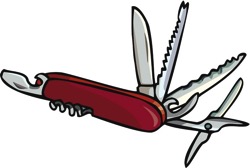
Logic is the Swiss Army Knife of rationality but it will never fix a broken heart.

All the best,

John


Be Sociable, Share!


October 21, 2014

In Shape

Filed under: John Morgan's Blog — John Morgan @ 7:20 am

C167739 mI was talking to my sister on the phone over the weekend when The Grasshopper unexpectedly popped into the conversation and said, You don’t know how out of shape you are until you attempt to get back in shape.” I think it’s more than a physical reference.

How out of shape are you? You truly won’t know until you make the effort to get back in.

What is shape? There are too many definitions to settle on one answer, so let me give you one I’m comfortable with: Performing at an optimum level.

The dictionary defines optimum as “most conducive to a favorable outcome.”

My takeaway is this: You will have more things go your way when you are in shape.

What have you let slip? Is it something that you were once better at but, now, due to lack of activity, you’ve let it atrophy?

It will take some work to get it back, and once you do, you’ll wonder why you ever let it go away.

Let’s pretend that you used to send off notes to people for no reason other than to make contact and let them know you were thinking about them. For whatever reason, that practice stopped. You’ve thought about starting up again, but inertia keeps your pen unclicked. You’re not likely to have a favorable outcome keeping your cute little note paper in a box. What to do?

START!

All beginnings have a first step. Take it and then see if you can put one foot in front of the other.

Hint: Start slowly enough so that you can easily replicate what you’ve begun.

The Grasshopper could have just as easily said, “You don’t know how deep the hole you’ve dug for yourself is until you attempt to climb out.” I can personally attest that the effort is worth it.

One eye-opening thing I’ve discovered on my trek to get back in shape is this: You miss a lot by staying holed up.

All the best,

John


Be Sociable, Share!


October 17, 2014

What’s Not Happening

Filed under: John Morgan's Blog — John Morgan @ 8:28 am

C671166 mHow much attention do you give to what’s not happening? If you’re anything like me, too much.

I must admit that I’m way better than I used to be but still give much attention to things that aren’t happening. The lesson I’m learning is if it’s not happening now, it’s rarely worth my attention.

When my attention drifts to the past or future, I’m missing giving attention to the building blocks of my future which are right in front of me now. Not only that, I’m also missing the richness of this moment.

Keeping your attention current does not prevent you from planning for the future or reaching back and pulling a useful building block from the past. If you attentively go into the past or future in these instances, you will stay present rather than getting lost in what’s not happening now.

Like you, I like to daydream. It’s my guilty pleasure. But if it becomes the mainstay of my mental diet, I starve out my future by pigging out on what’s not happening.

What’s not happening is often scary. It can drum up fear that immobilizes you from moving forward. It can also produce a longing for what used to be that has zero chance of happening now. These scenarios happen to all of us. The trick is to notice that you are in “What’s Not Happening Now Land” and shift your attention to what is right here, right now.

In sports you will hear players and coaches use the phrase “we have to go back to the basics” when things are not going well. Back to the basics in life is giving attention to what’s happening now. It’s the only thing really happening. The past happened and the future isn’t here, so giving them your undivided attention gives you a life that’s not happening.

Pay attention to your attention. It keeps you hip to what’s happening.

All the best,

John


Be Sociable, Share!


« Previous PageNext Page »