GrasshopperNotes.com - Thoughts for inspired living


May 17, 2016

Desertion of Assertion

Filed under: John Morgan's Blog — John Morgan @ 6:33 am

OpinionatedHere’s something I know I can benefit from, and, perhaps, you can too: The Desertion of Assertion.

The dictionary on my computer defines “assertion” as a “confident or forceful statement of fact or belief,” as in: “His assertion was that his father deserted the family.”

Most often I find that my assertions fall into the opinion category. With a bit of investigation, you may find that yours do too.

My friend Jerry Stocking defines assertion this way: “An assertion is a fact about the past: most people make a lot of these and use them to protect and defend positions they have adopted.” Notice that his definition is an assertion. It will be up to you to investigate your own assertions to find out if Jerry’s statement is factually correct. My assertion is: He’s right on the money.

But why do we have to have assertions desert us?

Because defending them keeps us on the battlefield.

Whether we’re battling with others or ourself, notice the amount of assertions that fuel the war.

When you are rigid in your thinking, notice that you’re an assertion machine. Rigidity is the enemy of fluidity which is the escalator to the level where peace lives.

Begin to observe what you’re forcefully defending that you can’t prove and you’ll find yourself stuck in the assertion groove. That means the war continues and the attendant rigidity makes us assert that staying as solid as a boulder is a life preserver. That’s an assertion worth investigating.

I can only speak for me and guess about you, but I find the “desertion of assertion” removes the glue – from the opinionated Post-it© notes in our thinking, that keep us solid as a rock and keep us sinking.

All the best,

John


Be Sociable, Share!


May 10, 2016

Something Old, Something New

Filed under: John Morgan's Blog — John Morgan @ 4:34 am

NK2A2247 EditThe older I get the less I buy into the adage “Out with the old, in with the new.”

I’m all in favor of getting rid of what isn’t working – old or new, but as a blanket policy, OWTOIWTN is kind of short-sighted.

A wise old man once said, “The more dials you have on a washing machine, the more things that can break down.” The problem with new is that it has not stood the test of time, yet “New” is the biggest word used in marketing.

Too often, “New” is attempting to sell you something new that old does just fine.

Take your car as an example. Do you really need a new car? You may want a new car but do you really need one? Car buying is typically not a logical choice. Logic will tell you that the new car smell is the most expensive aroma you’ll ever buy, but we’re usually smelling with our emotions.

This is not a plea to hoard; those people make me exclaim, “Good Lord!” This is more of an exercise in appreciation for that which you already have.

Old can inform new, so that new has a shelf life longer than the attention span of . . . (Squirrel).

Old has lots of information that new forgot to tap into – a practice that makes a lot of new stuff outdated in a hurry.

My car is 12 years old. I bought it new and by most standards, it’s now old, but it works just fine. I did hear a loud noise last week and took it to an old-time mechanic. He said that the pipe that goes into the catalytic converter had rusted out. The easiest thing to do was to replace the catalytic converter and it was also the most expensive. Instead, he got a piece of pipe and his old welding machine and just replaced the piece that was malfunctioning. I saved a bundle. I guess I should really put it into a fund for when I actually need a new car.

Yes, rid yourself of old if it’s stale and outdated, but resist the temptation to the allure of new, especially when old is tried and true.

All the best,

John


Be Sociable, Share!


May 9, 2016

A Cause for Pause

Filed under: John Morgan's Blog — John Morgan @ 5:37 am

PauseIt seems any day can be a “throwback day” if we label it that way. Here on “Throwback Monday” is something that flowed through me a few years ago:

“A Pause Precedes Wisdom” – Grasshopper

There is a difference between knowledge and wisdom and when you discover the difference, you’ll pause more often.

One of the hardest lessons to learn is that wisdom comes through you, not from you.

When we precipitously spout out our answers to life’s questions, we may have our facts lined up, but there’s no room for our wisdom, unless we pause.

That prefabricated information is coming from us. That type of information can be Googled or looked up in a library. Wisdom comes through you.

In order for that to happen, you have to pause what you know in order for wisdom to flow.

There is a need for pat answers, but when we use them for every question, life becomes stale and so do we.

Wisdom isn’t arrived at logically. Wisdom comes from a different place than facts and figures. I like to imagine wisdom sitting in a creative cauldron below the surface. In order for it to bubble to the top of our mind, we have to make room for it. That space we are making for it is called silence.

It’s necessary for us to pause our pat answers to make a silent space for wisdom to enter. When we pause our instant reactions, there is a moment of silence. It’s in that moment that creativity fills the void and wisdom can flow through us.

How many of our answers do we automatically push out without pausing to consider what else is available? – Almost all of them, until we learn to pause and be silent.

Acting is the delivery of rehearsed lines; spontaneous life comes from the unrehearsed response to any reality that’s presented.

That organic reply is what gives fullness to our lives.

“Pause it and they will come,” – Answers, that is.

Prefabricated retorts have all the polish of a slickly packaged political candidate. When’s the last time you heard any wisdom in one of their orchestrated sound bites?

We are no different. Our “stump speech” is attracting less and less listeners each time we forget to pause.

The people I learn the least from are those who won’t let me breathe. They talk seemingly without pause and don’t give me time to process what they are saying. They may have valuable information but I have to work too hard to glean any wisdom from it when it comes without pause.

We, and those around us, learn more when we make space for wisdom to flow through us.

If you’ve grown tired of hearing the same answers, glean some wisdom from a wise old advertising slogan from Coca-Cola – “It’s the pause that refreshes.”

All the best,

John


Be Sociable, Share!


May 6, 2016

Marketing to Morons

Filed under: John Morgan's Blog — John Morgan @ 5:55 am

TurkeyThis is a warning! Get ready for an onslaught of political advertising (TV, Radio, Print, Robo Calls, Social Media) that will be targeting the lowest common denominator in all of us. I call it the “Moron Factor.”

I’ve spent my entire adult life in some form of marketing and advertising and have seen and heard some moronic ads, none of which will measure up to what we’re about to witness from our candidates for President and their surrogates.

I marvel at ads and quite often ask myself, “Who’s buying into this?”

Perhaps you’re still getting emails from some foreign prince who wants to leave you his fortune. I know I still get them. What that tells me is that this scam is still working on a segment of the population or they wouldn’t be wasting their resources and efforts.

Are you a moron? The answer is “Yes” if you don’t probe this question: What button are they attempting to push in me with this ad?”

Earlier this year I deleted some people from my Facebook friends list. They were the ones who reposted obvious, unvetted information for or against a political figure. If they were stupid enough to buy into what they were reposting without any hint of investigation on their part, any future posts from them would be too moronic for me to read.

Most of the upcoming ads will pander to our prejudices. If you just said, “I’m not prejudiced,” you’re a moron. We all have prejudices and that’s what these ads will target.

O.J. Simpson was acquitted during his first trial. Was it due to how spectacularly the defense rebutted the factual case? No, it was how well they pandered to the prejudice of the jury. They knew exactly what they were doing and so do the marketers who will be crafting the ads you’ll know by heart by the time Election Day rolls around in November.

I, frankly, don’t care who you vote for; I just want you to avoid being a moron. Take the time to notice what “hot button” an ad is attempting to push and give yourself a choice before you decide to push it or not. It will be in that moment of clarity that you’ll separate yourself from the masses of morons.

All the best,

John


Be Sociable, Share!


May 3, 2016

Settling Dust

Filed under: John Morgan's Blog — John Morgan @ 4:58 am

DustThere seems to be a “throwback” feature on many social media sites these days. Here’s The Grasshopper’s contribution from years ago:
“For dust to settle, you have to stop kicking it up.”

It’s what’s NOT said or done right after a dust-up that leads to a solution.

After all is said and done, we feel the need to say and do more. That’s more than adding fuel to the fire; that’s jumping into the flames and burning yourself up.

Time may not heal all wounds but it certainly can cause them to be less deep.

We gain perspective when we give what’s been said or done time to settle.
It’s the ability to resist saying, “. . . and another thing” and give what you’ve already communicated time to be processed.

When we are under siege or launching a frontal assault we are only focused on surviving or winning. Once the battle is over, we have an option we don’t often consider: To broker a peace.

We can’t arrive at that option without a settling retreat.

One of the biggest mistakes we make as communicators – professional or amateur – is not giving what we say or what is said to us time to be processed.

My experience is that the salesman that talks the most makes the fewest sales. That’s because he or she is assaulting you and not giving you time to breathe. They can’t understand why what they’re selling isn’t being bought. Their mystified thought may be, “After all, what I’m saying is factual.”

People need processing time. All learning is done in between the words. Iftheyarecomingatyoulikethis, you can’t be sold.

You can’t buy into another’s point of view if they are continually giving it to you. The corollary is also true.

We seem to miss the obvious: If we stop adding logs to the fire, the fire will go out. When the heat goes out of a communication, the process of settlement begins.

It may not always be settled to your satisfaction but it will be settled. The dust will cease.

It’s my experience that some people always have to be fighting to feel alive. Hire them as your attorney because they’re like a dog on a meat wagon. They won’t stop, they won’t settle.

Our personal peace is dependent on settlement. Tit-for-tat has to come to an end for any chance of peace to begin.

They say the mark of a great painter is knowing when the painting is complete. If you are only focused on getting the last word, you may continue painting over a masterpiece.

All the best,

John


Be Sociable, Share!


April 28, 2016

Changing Your Past

Filed under: John Morgan's Blog — John Morgan @ 3:16 am

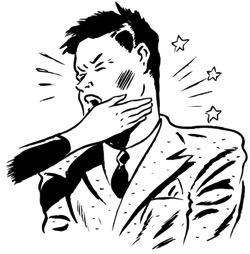
SlappingThe Grasshopper offered this piece of wisdom about 4 years ago: “You can’t change your past, only update your response to it.” Here’s the back story:

What if you could touch up parts of your past and see them in a new light, wouldn’t that be helpful? It can be done even if you’re a lousy painter.

I learned a long time ago that we often respond not to “here and now” but to “there and then.”

How often have you had an inappropriate or over-the-top response to something trivial? Chances are it had nothing to do with here and now, but with the events of there and then.

I heard Dr. Robert Anthony back in 1975 say something that has stuck with me since: “You’re never upset for the reason you think.” “Never” may be too strong a word but the concept is accurate more often than not.

We respond to the conditioning that happened there and then even though our response has nothing to do with the current stimulus that’s happening here and now.

The key is to begin recognizing that your response often has nothing to do with the current stimulus you are reacting to.

Reminds me of a story that was all over the media a few years ago . . .
News anchor, Katie Couric, as the story goes, was slapping her news editor repeatedly on the arm for using a word she detested –”Sputum.” “I sort of slapped him around” Couric said to New York magazine. “I got mad at him and said, ‘You can’t do this to me. You have to tell me when you’re going to use a word like that.'” She went on to say, “I was aggravated, there’s no question about that.”

She didn’t come out of the womb with a reaction to the word “Sputum,” it was conditioned along the way. It was also highly reported on that she cared for her gravely ill husband until his death. One could easily hallucinate that her response to “Sputum” wasn’t about the story on tuberculosis she was about to report on, but rather episodes she had with her severely ill husband.

Whatever caused her conditioned response may remain a mystery, but it wasn’t the here and now story. Her response was about there and then.

What are you responding to as though it’s happening now, but is really about there and then? More stuff than you think.

So how do you retouch that old picture so it gets updated? Use a technique I learned from a dearly departed wizard of hypnosis Dr. Dave Dobson.

Find something from your past that you are still reacting to as though it’s happening now. Go back to that time in your mind, but go back as the person you are now. You have more insight now than you did then. It’s a more mature you going back to visit a scared, confused you.

The objective of this mild fantasy is to reassure the younger you that everything will be all right. Let them know you have survived that scary time and that you are going to help them forward. You are not painting over the picture; you are retouching their response to it by assuring your younger self that you are there for them every step of the way. Let them know they are not alone.

The result of this simple exercise is a more peaceful you, today. You can do the exercise a number of times and what you will find is that each time you do it, the “there and then” event releases its hold on you so you don’t respond as though it’s going on “here and now.”

You are not changing your past, just updating your response to it.

Retouching your life has a touching effect.

All the best,

John


Be Sociable, Share!


April 20, 2016

The Anemia of “Why”

Filed under: John Morgan's Blog — John Morgan @ 5:28 am

Cotton candyThere may be a weaker, information seeking word than “Why” but, if so, I’m not aware of it.

“Why” is an anemic word and one that has been taught in Journalism 101 since the beginning of time. I believe it’s time to excise the word from the world of reality because it only works in the world of illusion.

Seems to me that the psychological counseling model is based on the premise of why. That’s probably “why” so few people get answers from that model. “Why” attempts to elicit rational answers for irrational behavior. That’s madness!

“Why” will always get you a “spun” answer. We will never run out of reasons to a “why” question. If you don’t think that’s an accurate statement, ask any teenager why they flunked a specific test. They can create excuses by the truckload, none of which will get you to an actionable answer.

If you’re seeking a lie, ask “why?”

“Why” will get you a story – one that has no information you can act upon.

If you like getting “cotton candy” answers, keep asking “why” questions because the answers you’ll receive will keep you on the circus grounds for a lifetime – where you’ll be treated to one side show after another, never getting to see the main event.

I hope I’ve sparked your curiosity as to why “why” is a waste of time and a giant delaying tactic towards taking action.

Paraphrasing poet Alfred Lord Tennyson: “Ours in not to reason why, ours is but to do or die.”

All the best,

John


Be Sociable, Share!


April 19, 2016

I Don’t Need The Practice

Filed under: John Morgan's Blog — John Morgan @ 6:01 am

ViolinThere’s something I’m totally proficient at that I don’t need to practice anymore. I suspect you are too, yet we keep practicing.

If there was ever a more true assertion than “practice makes perfect,” I am not aware of it.

It’s hard for me to say I’m perfect at something without losing my false sense of humbleness, but here I am saying it and meaning it.

“Nobody’s perfect,” you say, but I say, “I am and so are you.”

“OK, Mr. Braggypants, what is it that you’re so perfect at and claim that I am too?”

Before I reveal the secret of perfection, let me remind you that you may keep practicing even after you discover that you don’t have to. We’re so conditioned to the practice that it’s hard to let it go.

One more thing: pretend you are a musical virtuoso. You are the world’s best at playing your instrument. You have practiced more diligently than most and the thought of giving up practicing is foreign to you, even though you now know it’s not in your best interest to do it any more. That’s how you may feel when I show you the ripe banana under the peel.

(Please cue the drumroll) The thing that I’m perfect at and so are you, the thing that we’re so practiced at that we no longer need to do, and the thing we’ll have a hard time saying, “fond adieu” to is this:

Railing Against Reality

Congratulations! You have perfected this skill and you’re world-class at it. Now the challenge for all of us is to stop practicing, so our skills will erode.

I never thought I would drink a toast to the erosion of skills but, hey, even old dogs learn new tricks.

Here’s the promise: If you give up practicing this practice, you’ll stop giving up your peace.

You give away a piece of your serenity every time you fuss and fume about what is.

Start small and, as an example, stop railing against the reality that dishes in the sink need to be washed. Do you really want to give away your peace because you have to use a tiny bit of elbow grease?

It gets easier from there and, as a result, you become less perfect.

So the remedy to railing against reality is to practice being less perfect at it. It not only calms the mind, it relieves the pressure from the the daily grind.

All the best,

John


Be Sociable, Share!


April 13, 2016

Unwanted Help

Filed under: John Morgan's Blog — John Morgan @ 3:47 am

Help copyThe Grasshopper offered this helpful tidbit yesterday: “Most people with major problems need the help they don’t want.”
It’s easy to go to the world of abuses to see the wisdom of this observation: drugs, alcohol, overconsumption, etc. What’s not as readily apparent is the addiction to the idea, in other problem areas of our life, that we don’t need help.

Denial is the biggest demon I’ve encountered in this lifetime – personally and professionally. From my vantage point, denial that we aren’t in need of help is a global pandemic.

Sound solutions are available for most of our problems, but if we don’t acknowledge or recognize them, we don’t want help because, frankly, in our mind, we don’t need it.

One of the things I’ve developed over the years is a keen eye and ear for broadcast talent. I’m currently like the high school student of finance who picks an inordinate amount of winners and identifies a truckload of losers when doing mock stock picks. I know who is going to win and lose in broadcasting. I have a sense for up and coming stars as well as who will flame out. On one TV network alone, I predicted seven people who would go bust and three that would make it. This in a period of a year and a half.

This sense I get comes from the perceived attitude of these performers which suggests that they don’t need help. Most of the ones who were fired had an air of “I’ve arrived” about them but were in serious need of help to keep their new jobs. I can’t imagine I’m the only person who suggested they needed help. They, more than likely, heard it countless times but repeatedly ignored the counsel.

Having coached broadcast talent for a living, I can tell you there is a category of performer who thinks they are God’s gift to broadcasting who have very few gifts. They believed they didn’t need help to improve because they didn’t need improvement.

I was reminded the other day of an old piece of wisdom from writer Saxon White Kessinger called “The Indispensable Man.” She wrote:

Sometime when you’re feeling important;
Sometime when your ego’s in bloom
Sometime when you take it for granted
You’re the best qualified in the room,

Sometime when you feel that your going
Would leave an unfillable hole,
Just follow these simple instructions
And see how they humble your soul;

Take a bucket and fill it with water,
Put your hand in it up to the wrist,
Pull it out and the hole that’s remaining
Is a measure of how you’ll be missed.

You can splash all you wish when you enter,
You may stir up the water galore,
But stop and you’ll find that in no time
It looks quite the same as before.

The moral of this quaint example
Is do just the best that you can,
Be proud of yourself but remember,
There’s no indispensable man.

My version of her poem was more succinct and less tactful. I would offer these indispensable talents this: “If they can forget about Johnny Carson, they can forget about you.”

If you’ve heard it from a number of sources that you’re “that way,” and they’re suggesting that it’s getting in your way, may I suggest taking one of those helping hands before your denial, again, has you pay.

All the best,

John


Be Sociable, Share!


April 12, 2016

Wrong Place – Right Time

Filed under: John Morgan's Blog — John Morgan @ 6:26 am

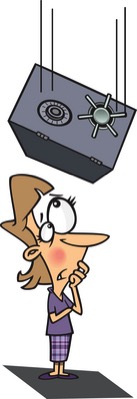
SafeI have never heard anyone say, “I was at the wrong place at the right time.” It got me to wondering if this location scenario exists. I believe it does.

Suppose you were at a 7-11 when it was being robbed. Luckily you were not hurt, but you did manage to purchase a winning lottery ticket while there. Seems that would qualify as “Wrong Place – Right Time.”

What about in life? What “wrong” place have you been in that produced a “right” time?

I don’t think there is a shortage of wrong places to be. We’ve all been in them on many occasions.

My realization is this: We’re always in the right place whether we label it “wrong” or not. Think about it. Where you are right now is the only place you can be. Yes, there are other places you could have been had you made different choices, but the choices you made brought you this place. It’s the only place you can be right now. And reality shows us that the only time there is, is “right now.” So now is always the right time.

Wrong doesn’t exist in reality – only in the man made rules of math.

You can only be where you are right now. You can lament that it’s the wrong place to be and you can cite all the wrong choices you made or the wrong set of circumstances that got you here, but that’s only useful when writing the story of your life after the fact.

Your job right now is to get yourself right regardless of the place you find yourself. You know what needs to be done. You’ve known it for a long time. This may be your last chance.

Getting right is your only chance of getting out of a wrong place.

Your best chance for staying wronged is to stand on a soapbox and argue that you shouldn’t be there. That will just attract a group of wrong minded people who will agree with you and vote for you. Your prize? You become the lifetime mayor of “Wrongedville.”

Getting right is your ship out of town. Right now is the only time to get on board and your passage requires leaving your wrongs behind.

Citing past circumstances will always take you back to harboring wrong. Getting right is noticing where you actually are now and setting sail in another direction.

Hanging on to wrong will always produce a noose. The way to loosen its hold is to right your ship and leave wrong in your wake, and discover that now is always the right time to leave a wrong place.

All the best,

John


Be Sociable, Share!


« Previous PageNext Page »