GrasshopperNotes.com - Thoughts for inspired living


November 25, 2016

Tick Tock Rot

Filed under: John Morgan's Blog — John Morgan @ 12:40 am

TimeHere’s a Grasshopper musing worth revisiting:

Ripening Is A Reality; Time Is A Concept

We are all aging. You can take that to the bank. “Age is just a number” we’ve often heard said. Yet, too many have become focused on how many minutes they’ve been alive or how many they have left until they’re dead.

Aging happens; time is an illusion.

We didn’t make up aging but we did invent something to explain it – Time.

It takes so many sunrises and sunsets to determine how ripe an apple is. The time it takes has nothing to do with the apple ripening. Aging is a process that happens all on its own, independent of whether we have a measurement or not.

An apple will come into this world, grow and decay without a clock in the orchard.

Moments can’t be measured in minutes. “We had a moment” often means time had stopped. We stopped measuring our experiences for a moment and just lived them.

Time is a useful invention. Where it becomes counterproductive is when we treat it as real. That’s when we cheat ourselves out of moments. How long was that unforgettable embrace? When you start to measure it, you come out of the moment and back into time where you clock watch from birth ‘til death.

The way to miss a moment is to time it. It feels so much better to live it.

Take a moment to live your moments and watch time go away. You’ll begin to live your life rather than measuring it day to day.

All the best,

John


Be Sociable, Share!


November 23, 2016

Sorry, You Are Responsible

Filed under: John Morgan's Blog — John Morgan @ 8:20 am

ResponsibleAs we head into Thanksgiving, it may be valuable to reflect on this old Grasshopper musing that brings responsibility back home for the holidays.

Life’s Biggest Cop Out: I’m Not Responsible For Me

The truth is: We’re always able to respond. We just keep picking the response that says we’re not responsible.

What you do is on you. It’s that simple.

If we focus on our actions vs. our reasons, we see clearly that the onus is on us.

How much of our life is spent attempting to explain away our actions? It’s a diversion from ownership that keeps us renting reasons that have the strength of wet cardboard.

Spend some time around prisoners, people who have been convicted beyond a reasonable doubt, and you will see how rampant this universal denial of responsibility is in the face of hard, cold facts.

There is freedom that comes with responsibility. When we begin to own our actions, we start taking action to become unshackled from our lies.

Telling the truth is a response that releases us from copping out.

Take ownership of your response and you become responsible — something in short supply in a world steeped in cover stories.

It’s almost certain that if you lean in the direction of taking responsibility, you’ll take one on the chin. It’s often the blow we need to loosen our denial and finally own this un-refuted truth: I’m responsible for me.

All the best,

John


Be Sociable, Share!


November 18, 2016

How Important is “Important”?

Filed under: John Morgan's Blog — John Morgan @ 4:57 am

ImportantOn “Flashback Friday” I found this “important” concept from The Grasshopper: “Importance Only Exists In Our Mind.”

How many things are important? I’m sure you have a list. But did you ever stop to consider that importance doesn’t exist. It’s something we made up.

Just sample the assertions below and start to get a feel for the nonexistence of importance.

“It’s important that we go to work on this.”
“We are doing important work.”
“This is the most important issue of our time.”

Says who?

And how many debates have you been in about the importance of something? You were debating something that doesn’t exist: Importance. It’s just a concept in our mind.

How many other concepts are we in endless debate about? “Essential?” “Imperative?” “Fair?” “Right?” The list goes on forever.

Concepts mean different things to different people but we treat them as though they are solid things set in concrete.

I’m not lobbying for the eradication of concepts, just for the noticing of them. Notice that they aren’t real things.

I also have a suggestion about a phrase to use when discussing concepts. This phrase will end the debate about the universal concreteness of the concept and shine a light on what you are truly attempting to communicate.

The phrase is: “To me.”

“It’s important to me that we have this done by Friday.” “It only seems fair to me that we pay them the full amount.” “That feels right to me.”

By adding “to me” to the concept, you have taken the debate away from an illusionary concept and shifted the focus to your desires. It takes the conversation to a more personal level. You are no longer debating about something “out there” but rather something “in here.”

It takes some noticing and some practice to make concepts less concrete and more personal, and the effort is “worth it” to me.

All the best,

John


Be Sociable, Share!


November 16, 2016

Everybody Lies

Filed under: John Morgan's Blog — John Morgan @ 5:45 am

TruthHere’s an old Grasshopper Note I found Lying around:

“How Useful is Your Lie?”

What do you know for sure that you’re not so sure about? Is there something you spout as “Truth” that you may be unknowingly lying about? Perhaps it’s time to separate truth from usefulness.

Let’s face it; most of our beliefs are a bunch of half-truths. That’s another way of saying that just because we believe something doesn’t make it true. Reminds me of a story . . .

My mother used to call visible pollen floating through the air “Money feathers.” Her claim was that if you grab it out of the air and put it into your pocket, you would come into money.

I’m embarrassed to admit that I still do that. I will also admit that after decades of doing this, I haven’t come into any windfalls. I no longer believe I’m going to come into money with this practice, but it is useful. I get to remember my mother every time I do it.

The question becomes: How useful is your truth? Are you using it as a wall of separation between you and others who don’t believe what you do? That’s not very useful. For example, do you have the one “true” religion? That creates a wall of exclusion between you and others who have their own religious truth.

The message here isn’t about religion; it’s about usefulness. How useful is your truth if you are alienating people with it even though you can’t validate it?

It’s time to recognize that our truths are half-truths. As The Grasshopper reminded us in the past: “Truth has no opposite.” If someone has an opposing truth, neither one of you has the real thing.

How many times have you heard, “If you put your mind to it, anything is possible”? There is too much evidence on the other side of that assertion (truth) that makes it a lie. But what if you believe that lie and succeed? Then your truth is useful.

More often it would be useful to hear people say, “Here’s what worked for me.” They aren’t wrapping it in the cloak of truth; they are just relating their experience. They aren’t saying, “This is the truth”; they are communicating, “This is what I did” minus the lecture about it being the truth.

Perhaps it’s time to inspect your truths and find the ones that are useful and retire the ones that only cause conflict. Here’s a hint that your truth is a lie: Anytime you hear you or someone else start a sentence with, “I’m a firm believer that such and such is the truth,” it’s a pretty sure bet that you are only hearing their version of the truth, not the truth itself.

From my vantage point, the only thing I can claim as truth is reality. Reality has no opposite. Learning to respond to reality rather than create alternate ones in our mind is one of the most useful things we can do, even though I can’t claim that what I just said is true.

All the best,

John


Be Sociable, Share!


November 15, 2016

A Reality Waiting To Happen

Filed under: John Morgan's Blog — John Morgan @ 5:32 am

FreudI just read a story about a 4-year old who “accidentally” shot herself and her mother with a loaded handgun that was in a bedside drawer. I sense that even ardent gun rights people will say that it was a careless adult who set up a situation where an accident was waiting to happen.

This isn’t a treatise on proper use of firearms or the rights of people to own them. Please debate that somewhere else. The quibble I have is with the word “accident.”

Let me backtrack to my radio broadcasting days for a moment. It was around 20 years ago that traffic reporters stopped using the word “accident” and replaced it with “crash.” “There is a 4 car accident on Route 95 north” became “There is a 4 car crash on Route 95 north.”

It was more descriptive of the incident and took the fluffy word “accident” out of the conversation.

“Oh, Billy had an accident in his pants.” No, Billy took a dump in his underwear is a more accurate description.

The word accident has come to mean it’s no one’s fault.

The word “reality” is not fluffy. Reality communicates that it either happened or it didn’t, and it doesn’t ascribe or absolve blame.

In my view, keeping a loaded handgun in the nightstand in a house with children is a reality waiting to happen. It’s not an accident. No one is absolved from creating this reality.

Again, my intention is to get you curious about the word “accident” and how it has become an excuse word in our culture. I encourage you to monitor your use of it and notice how often your intention is to shift blame and not to confront reality.

I’m not a big fan of Sigmund Freud and his philosophy but he did say something worth repeating: “There are no accidents.”

You’ll start to get a firmer grip on reality and personal responsibility when you hear this announcement on the supermarket loudspeaker: “Clean up on aisle 4,” and know it wasn’t an accident.

All the best,

John


Be Sociable, Share!


November 9, 2016

Post Election Musing

Filed under: John Morgan's Blog — John Morgan @ 5:43 am

Chocolate  VanillaThe following Grasshopper observation was just as relevant after the election of George Washington as it is today:
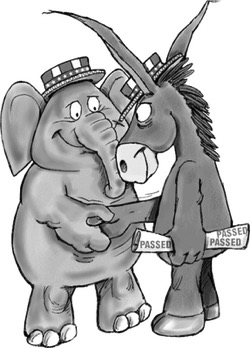
“Pick One: Be Right or Be Happy”

Lots of us have an investment in being right. I just wonder if we ever did the arithmetic on how much happiness it costs us.

There is an old axiom in product sales: Price/Quality/Speed. You can only have two.

– If you want price and speed, quality will be sacrificed.

– If you choose price and quality, it will take a bit longer.

– If you want quality and speed, you will pay a hefty price.

My experience is we pay a hefty price for being right. I’m certain there are times when we are both right and happy, but I’m just as certain those times are as rare as “Steak Tartare.”

So, basically, if you want one, you have to give up the other. So what do you want? Do you want to be right or do you want to be happy? You can’t have both.

It may surprise you that many people cling to being right even when faced with the reality that they can’t have both. Somehow, they think they are special and that reality will give them a pass and allow them to have both. They suffer.

“But I’m right,” you argue. That argument will continue for a lifetime with little happiness in between.

Some years ago The Grasshopper reminded me, “Some people would rather be right than happy. And preferring to be right, they are left out.” It remains truer now than ever before. There is a lot of heel digging going on and happiness has turned on its heel and left town.

The price of happiness is giving up being right. I, like you, have numerous Facebook friends who post the “right” thing constantly. Sadly, they aren’t very happy people. Some of my most unhappy times had me being right more often than not.

I’m not suggesting that you give up your point of view; I’m suggesting that you needn’t be so right about it. How many arguments have you had about being right? Years later, you may forget the content of the argument but you won’t forget how right you were.

Right is a repellent. My mother used a great phrase when she was at odds with someone and knew that it wasn’t going anywhere. She would end being right by saying, “I guess that’s why they make chocolate and vanilla.”

Are you willing to sacrifice being right to become happier? There is no right or wrong answer, only consequences.

All the best,

John


Be Sociable, Share!


November 8, 2016

Believe It or Not

Filed under: John Morgan's Blog — John Morgan @ 6:55 am

ElectionThe following classic Grasshopper Note has nothing to do with election day . . . or does it?

Beliefs Get Results

Before you go and put The Grasshopper’s words on a bumper sticker, let me caution you that you may not like the results.

Most of us have heard that we act in accordance with our beliefs. Best as I can tell, that’s pretty close to the truth. What we may not be aware of are the results our beliefs deliver.

If you pretty much find yourself in the same hole over and over again, you can bet it’s the result of a belief you have. The converse is also accurate: If you find yourself in a place of peace over and over again, it’s the result of a belief.

Ask any person you consider to be serially “lucky” and you will find a belief in luck. They filter their experience for luck. The same is true for “the glass is half empty” person. They will continually find life to be half empty. It’s the result of a belief.

If beliefs get results, the question you want to be asking is: “Are my beliefs getting me the results that I want?”

Warning: We steadfastly hold dearly to our beliefs in spite of overwhelming evidence they aren’t getting us the results we want. It’s like trying to keep from drowning by holding onto an anvil.

Socrates left us with an assertion worth pondering: “The unexamined life is not worth living.” It could easily be extrapolated that his saying equally applies to our beliefs.

What results are you consistently getting that you can tie back to a belief? Our belief about money is one that’s most apparent to me in our culture. Reminds me of a story . . .

I used to work for a man who had an uncanny knack for making money. Some would call him “Lucky” but his good fortune went deeper than random luck. What I found after having numerous conversations with him on the topic was that he had a belief that he deserved to make a lot of money. I remember jokingly saying to him that he could parachute nude into an unfriendly country with a derogatory saying about that country’s leader tattooed on his chest and, within a week, he would own a business there.

Beliefs get results.

What results are you getting? Are you willing to examine your beliefs?

I know people who get what they pray for and I know just as many who don’t. What’s the difference between the two? The successful ones are the people who examine their beliefs and bravely let go of the ones that are taking them down.

You have to be willing to entertain that you’re wrong about something, even if you’ve shouted its merits from the rooftops your entire life. Willingness opens the door to inspection. From there, it’s pure deduction. Either your belief is working for you or it’s not.

True or False? Your life is pre-destined. It is if you believe it is; it’s not if you believe it’s not.

Are you willing to do what’s necessary to get the results you want? It’s a matter of belief.

All the best,

John


Be Sociable, Share!


November 1, 2016

The Addiction to Superficiality

Filed under: John Morgan's Blog — John Morgan @ 11:36 pm

RootsI came across a quote from the Persian Poet Rumi that gives insight to why superficiality never satisfies.

“Maybe you are searching among the branches, for what only appears in the roots.”

It seems to me that during the first half of life, what I affectionately refer to as the “trip out,” we branch out and scour the earth for things to add to ourselves. We add beliefs, labels, titles, partners, possessions and a whole host of shiny objects that are supposed to complete us. But most of them never can.

Once we turn the corner and start the “trip home,” we begin to drop off some ideas and things that once seemed so meaningful and recognize these subtractions for what they were: superficial. In the process we begin to discover our roots and leave our addiction behind.

It’s a hard turn going from out to in because the artifacts of out, because of our conditioning, seem so necessary. The whole notion of “keeping up with the Joneses” is on a snapping branch that falls to earth where we get closer to our roots.

Our addiction to the notion of what’s “out there” as being the answer to our problems is so embedded in our conditioning that we rarely question its validity. We are addicted to addition. We become so top heavy with superficiality until we can’t bear the weight any longer and fall to the ground where our trip out grinds to a halt.

We have to lighten our load in order to start the trip back – back to who we are without all our labels and possessions. The trip home is the road to recovery where we find ourselves in the roots.

Your longings aren’t for the next new things to add; they’re for the feeling that’s only possible in the rich soil of the roots.

The way home begins with subtraction. Drop off superficial additions one-by-one and notice how you begin to feel more warmth from the sun.

Going home is going back to our roots where we find what we’ve been looking for all along – our depth.

All the best,

John


Be Sociable, Share!


October 26, 2016

Avoid the Bait

Filed under: John Morgan's Blog — John Morgan @ 9:48 am

DebateAs election day approaches, I found this tidbit from The Grasshopper from moons ago that seems just as relevant today.

“End The Debate Before Your Life Ends.”

The debate you’re involved in will still go on long after you’re no longer involved, in fact, forever.

Debates are never won, just endured.

Somewhere along the way, I found that debating is just another way to stay stuck. It’s just us arguing to be right and as The Grasshopper reminded us years ago: “Some people would rather be right than happy. And preferring to be right, they are left out.”

It seems we are left out of life more often when we are involved in debate. When you boil it down, we are debating the way it “should” be according to our conditioned beliefs, our bible. We don’t enter a debate to learn anything new, only to defend something old.

Reminds me of a story . . . Some years ago, a family member that I don’t see that often attempted to engage me in a political debate. I, like you, had a point of view and so did he. He began by making assertions about a candidate I casually mentioned that I liked. I felt the hooks of debate sinking in and had watched enough of the TV talk shows to issue a litany of talking points that would have countered what he just said. Thankfully, I got the gift of awareness that I was about to engage in a debate that was going to go nowhere and said this: “You know, I could go down to any local bar and have this discussion with any stranger in there. What do you say, instead, that you tell me something new going on with you? I’d much rather hear about that.”

We had the most pleasant conversation and you could feel the life in each of us flowing back and forth, rather than it shutting down to defend the castle.

Avoiding the hooks begins with noticing. When you notice that you are about to enter a circular debate, that’s the time to throw in the clutch and wonder what else you could do or say. It gives you the opportunity to save the day rather that looking for another dragon to slay.

Arguing is life draining and, for many, it’s a way of life. My sense is that we argue to let people know we exist. It’s as though we are saying, “Notice me! I’m more than a bag of bones covered in skin.” I submit there are more life enhancing ways to get noticed than arguing.

Let your point of view be judged by your actions rather than your words. Put your life force into advancing your cause, not debating its merits. I’m only guessing here but I’ll bet Mother Teresa never defended her work; she just did it. I’m sure someone along the way said, “Why go into diseased villages and risk your health for people who are probably going to die anyway?” I also think it’s a good guess that she didn’t stop and argue her position. She was too busy living her life and conducting her life’s mission.

Debate is death by another name. My suggestion: If you want to do more living, engage in debate less often.

All the best,

John


Be Sociable, Share!


October 24, 2016

Reflection Gives Direction

Filed under: John Morgan's Blog — John Morgan @ 4:28 am

BathtubHere’s one from The Grasshopper’s “Golden Grooveyard”:

“Reflection Is Different Than Thinking Things Over.”

“Thinking things over” means you go over and over the same territory; reflection offers an exit strategy to a remedy.

Many people like to do the “pro & con” thing – a benefits analysis of their current situation that needs a solution. That would work fabulously well if our decisions were made intellectually. Most of them are emotional decisions that we rationalize with our intellect after the fact. The key to removing both the pros and cons and the emotion from our decision making is to reflect.

Reflecting is letting go of thinking. Your thinking will take you to the same place it took you before, because thinking is repetitive.

Reflecting is recognizing you have a situation and not attempting to “figure out” a solution. Once you’ve recognized your difficulty and you’ve noticed that your thinking is taking you the same place as before, it’s time to reflect.

Reflecting begins with acknowledging there’s a resourceful part of you that will come up with an answer once you set your thinking about the situation aside. Then it’s time to let that part of you go to work. It works best when you are doing something else. Did you ever notice how often your “good” ideas come to you when you are otherwise occupied? – Taking a shower or bath, sitting in your favorite chair, walking the dog, washing the dishes or car, or some other way of occupying your time.

One of my favorite ways of reflecting is dedicating a specific task to solving my problem. Let’s say that before I take a walk, I dedicate that walk to coming up with an answer. During that walk, I purposely think of other unrelated things or pay careful attention to the things I encounter on my walk. That frees up the creative part of me to fully use its resources to work on my dilemma. It doesn’t need my help, only my absence of thinking about the problem.

When you focus your conscious attention elsewhere, you unleash your internal resources to go into “Mission Mode.”

Once you figure out you’re not the smartest person in the room, you turn things over to the part of you that is. That’s reflecting.

All the best,

John


Be Sociable, Share!


« Previous PageNext Page »